
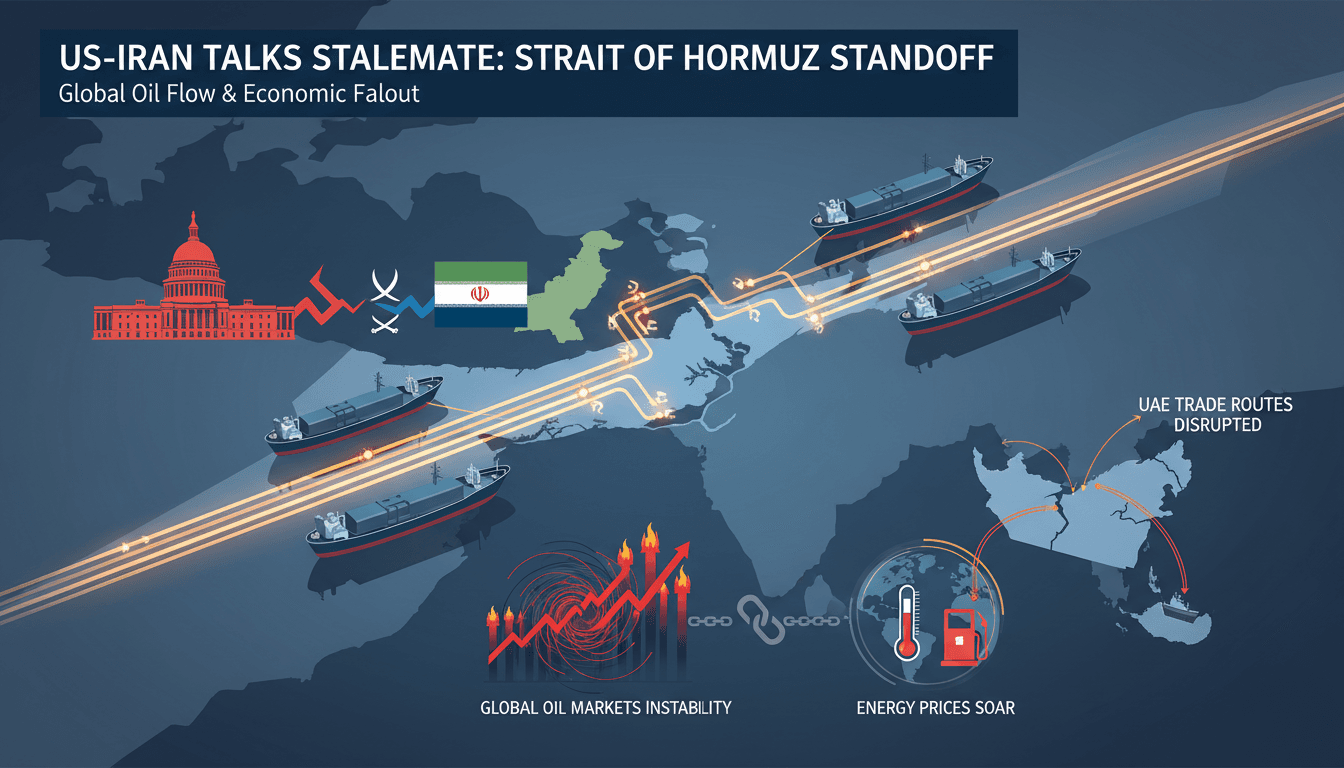
US-Iran Trilateral Negotiations in Islamabad Stalemate Over Strait of Hormuz Control
Here's what it means for you.
The outcome of these negotiations could significantly impact global oil prices and shipping routes, affecting your energy costs.
Why it matters
The Strait of Hormuz is a critical chokepoint for global oil supply, with 20% of the world's oil transiting through it.
What happened (in 30 seconds)
- Negotiations began on April 11, 2026, in Islamabad, aiming to establish a ceasefire and address nuclear issues and Strait of Hormuz management.
- Stalemate reached as Iran linked reopening the strait to a final peace agreement, while the US presented demands that Tehran found unacceptable.
- Military posturing escalated with US warships transiting the strait during talks, raising tensions further.
The context you actually need
- Ongoing conflict: The negotiations occur amid the 2025–2026 US-Iran war, which has seen escalations including Israeli strikes and Iranian responses.
- Economic stakes: The Strait of Hormuz is crucial for global oil, with disruptions potentially leading to price spikes and increased shipping costs.
- Previous talks: Earlier discussions via Pakistani mediation focused on Iran's nuclear program and sanctions relief but failed to yield significant breakthroughs.
What's really happening
The third round of trilateral negotiations in Islamabad reflects a complex interplay of geopolitical interests, economic stakes, and military posturing. With the US and Iran at an impasse, the stakes are high for both parties. The US insists on maintaining navigation freedom in the Strait of Hormuz, a vital artery for oil transport, while Iran seeks to leverage its control over this chokepoint to gain concessions in the broader peace framework.
The negotiations are set against the backdrop of a volatile regional landscape, where military actions by both sides have escalated tensions. The US has deployed warships to assert its presence in the strait, conducting mine-clearing operations that Iran has denied. This military posturing complicates the diplomatic efforts, as each side attempts to project strength while also seeking a resolution to the conflict.
Iran's insistence on linking the reopening of the Strait of Hormuz to a final peace agreement underscores its strategic leverage in the negotiations. By controlling access to this critical maritime route, Iran can exert pressure on global oil markets, which could lead to significant economic repercussions. The US, on the other hand, is navigating a delicate balance between military dominance and the need for a diplomatic resolution that addresses its security concerns regarding Iran's nuclear program.
The failure to reach an agreement in Islamabad could lead to further military escalations, impacting not only the immediate region but also global energy markets. Oil prices have already surged due to fears of disruptions, with the Dubai benchmark crude nearing $170 per barrel. This volatility affects not just traders but also consumers, as rising oil prices can lead to increased costs for energy and imports.
As the negotiations continue, the involvement of Pakistani mediators highlights the complex dynamics of regional diplomacy. Pakistan's role as a mediator reflects its strategic interests in maintaining stability in the region, but it also places it in a challenging position as it navigates the competing interests of the US and Iran.
Who feels it first (and how)
- Oil traders: Fluctuations in oil prices directly impact profit margins and trading strategies.
- Shipping companies: Increased insurance premiums and potential delays affect operational costs and logistics.
- Consumers in the UAE: Rising energy prices could lead to higher costs of living and inflation.
- Global markets: Investors may react to volatility in oil prices, affecting stock markets and economic forecasts.
What to watch next
- Negotiation outcomes: Watch for any breakthroughs in talks that could stabilize the Strait of Hormuz and ease oil price volatility.
- Military movements: Monitor US and Iranian military activities in the region, as escalations could disrupt shipping and oil transport.
- Oil price trends: Keep an eye on fluctuations in global oil prices, particularly in response to developments in the negotiations.
The Strait of Hormuz is crucial for global oil transport, with 20% of the world's oil passing through it.
Continued military posturing by both the US and Iran will complicate diplomatic negotiations.
The long-term impact of these negotiations on regional stability and global oil prices remains uncertain.
Frequently Asked Questions
- Why it matters?
- The Strait of Hormuz is a critical chokepoint for global oil supply, with 20% of the world's oil transiting through it.
- What happened (in 30 seconds)?
- Negotiations began on April 11, 2026, in Islamabad, aiming to establish a ceasefire and address nuclear issues and Strait of Hormuz management. Stalemate reached as Iran linked reopening the strait to a final peace agreement, while the US presented demands that Tehran found unacceptable. Military posturing escalated with US warships transiting the strait during talks, raising tensions further.
- What's really happening?
- The third round of trilateral negotiations in Islamabad reflects a complex interplay of geopolitical interests, economic stakes, and military posturing. With the US and Iran at an impasse, the stakes are high for both parties. The US insists on maintaining navigation freedom in the Strait of Hormuz, a vital artery for oil transport, while Iran seeks to leverage its control over this chokepoint to gain concessions in the broader peace framework. The negotiations are set against the backdrop of a
- Who feels it first (and how)?
- Oil traders: Fluctuations in oil prices directly impact profit margins and trading strategies. Shipping companies: Increased insurance premiums and potential delays affect operational costs and logistics. Consumers in the UAE: Rising energy prices could lead to higher costs of living and inflation. Global markets: Investors may react to volatility in oil prices, affecting stock markets and economic forecasts.
- What to watch next?
- Negotiation outcomes: Watch for any breakthroughs in talks that could stabilize the Strait of Hormuz and ease oil price volatility. Military movements: Monitor US and Iranian military activities in the region, as escalations could disrupt shipping and oil transport. Oil price trends: Keep an eye on fluctuations in global oil prices, particularly in response to developments in the negotiations.
Arabic-language coverage of political affairs and current events.
"Okaz political coverage typically follows mainstream Saudi framing on national and regional affairs."
— A47 Editor
جولة مفاوضات ثالثة بين أمريكا وإيران.. وجمود حول ملف «هرمز»
A third round of negotiations between Iran and the United States has commenced in Islamabad, with the participation of Pakistani mediators. Key figures in attendance include Iranian Parliament Speaker Mohammad Baqer Qalibaf and U.S. Deputy Secretary ...
24/7 international news from a French perspective in multiple languages.
"France 24 is viewed as a globally focused outlet with balanced coverage and a European perspective."
— A47 Editor
Who is Iran's Chief negotiator Ghalibaf?
A 70-member Iranian delegation, led by Parliament Speaker Mohammad Bagher Ghalibaf, is participating in negotiations in Islamabad, Pakistan, aimed at concluding the ongoing conflict in the region. These talks follow a two-week ceasefire that was rece...
Arabic-language coverage of political affairs and current events.
"Okaz political coverage typically follows mainstream Saudi framing on national and regional affairs."
— A47 Editor
يتكون من 71 مسؤولا.. وفد إيران يملك صلاحية الانسحاب أو إبرام اتفاق
Iran has sent a delegation of 71 officials, led by Parliament Speaker Mohammad Baqer Qalibaf and Foreign Minister Abbas Araghchi, to Islamabad for negotiations with the United States. The delegation has the authority to either conclude an agreement o...
English-language reporting on Saudi politics, policy, and society.
"Saudi Gazette reflects mainstream Saudi institutional perspectives."
— A47 Editor
Iran approaches Islamabad talks with ‘good intentions but no trust’: Qalibaf
Iran's Parliament Speaker Mohammad Baqer Qalibaf stated that Tehran approaches upcoming negotiations with the United States in Islamabad with 'good intentions but no trust,' citing past failures and breaches of contract by the U.S. during negotiation...
Arabic-language UAE newspaper coverage focused on domestic affairs, public institutions, business, society, and regional developments.
"Al Khaleej coverage generally reflects a mainstream UAE editorial lens with strong attention to public affairs, institutions, and regional developments."
— A47 Editor
وفد إيران التفاوضي مع أمريكا يصل إلى باكستان
An Iranian delegation led by Parliament Speaker Mohammad Baqer Qalibaf has arrived in Pakistan ahead of scheduled talks with the United States on Saturday. This visit marks a significant diplomatic engagement as Iran seeks to address key issues with ...
Pan-Arab news coverage spanning politics, business, sports, and regional affairs.
"Asharq Al-Awsat reflects a broad Arab editorial perspective with strong attention to regional geopolitics."
— A47 Editor
وفد إيراني في إسلام آباد... وباكستان ترى المحادثات «فرصة حاسمة»
An Iranian delegation led by Parliament Speaker Mohammad Baqer Qalibaf has arrived in Islamabad to engage in peace talks with the United States, contingent upon Washington accepting Tehran's preconditions.
English-language reporting on Saudi politics, policy, and society.
"Saudi Gazette reflects mainstream Saudi institutional perspectives."
— A47 Editor
Lebanon is ‘inseparable part’ of ceasefire deal, says Iran's parliament speaker
Iran's parliament speaker, Mohammad Bagher Ghalibaf, has asserted that Lebanon is a crucial component of the ceasefire agreement with the United States, warning that any violations would provoke a strong response. This statement follows recent Israel...