
Central Banks Pause Interest Rate Adjustments Amid Iran War and Energy Price Surge
Here's what it means for you.
If you’re in finance or energy, the current monetary policy landscape could significantly impact your investments and operational costs.
Why it matters
The ongoing Iran war is reshaping monetary policy across major economies, influencing inflation and growth forecasts.
What happened (in 30 seconds)
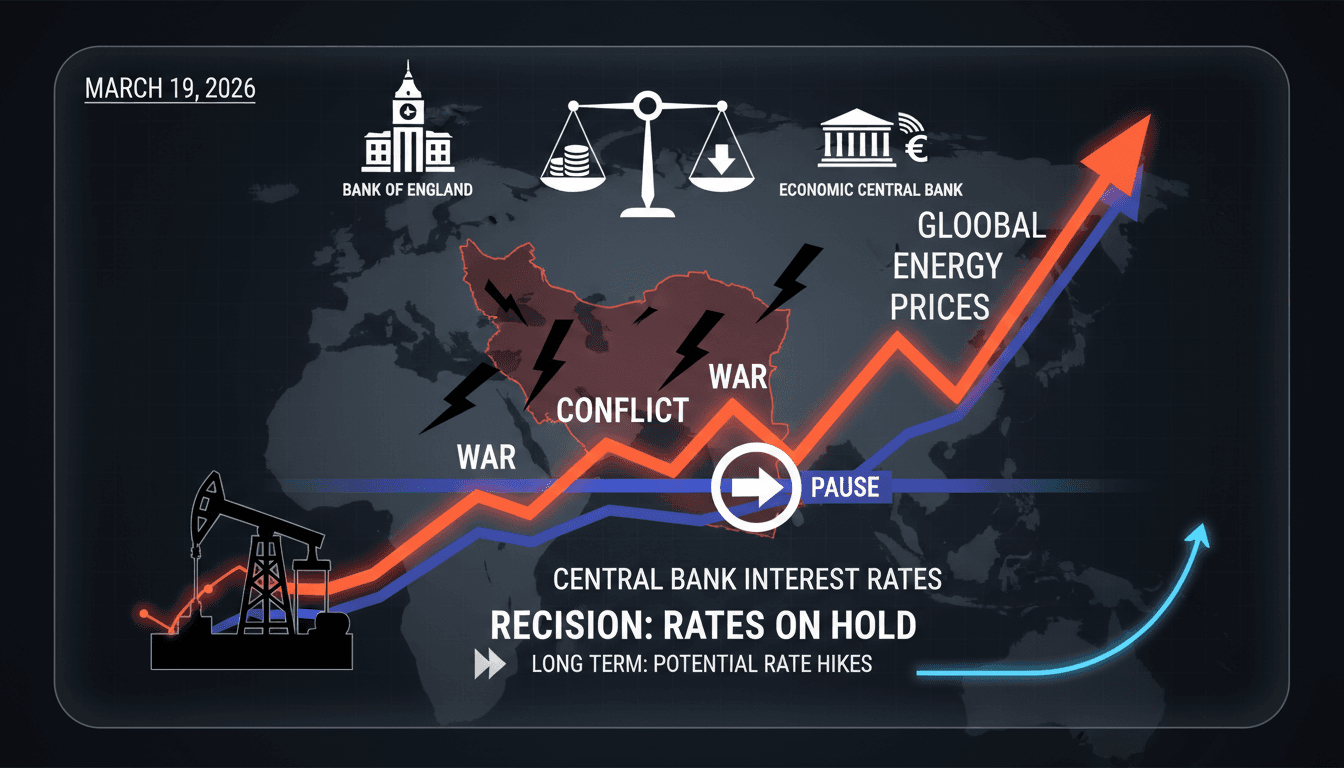
- Central banks paused rate changes: On March 19, 2026, the Bank of England and European Central Bank held interest rates steady amid rising inflation risks.
- Energy prices surged: The Iran war has nearly doubled European natural gas prices, echoing past geopolitical shocks.
- Market reactions shifted: Global bond yields rose and stock prices fell as investors recalibrated expectations for future rate hikes.
The context you actually need
- Geopolitical tensions escalated: The Iran war, which began in early March 2026, has disrupted supply chains and heightened energy price volatility.
- Inflation forecasts increased: The European Central Bank raised its inflation forecast to 2.6%, indicating a potential severe scenario of 5% due to the war.
- Central banks are on alert: Officials from the Bank of England and European Central Bank signaled readiness to adjust rates if inflation persists, marking a shift from previous expectations of rate cuts.
What's really happening
The Iran war has triggered a complex interplay of geopolitical and economic factors that central banks are now grappling with. As the conflict escalated in early March 2026, global energy prices surged, reminiscent of the price spikes following the 2022 Russia-Ukraine invasion. This surge has nearly doubled European natural gas prices, creating immediate inflationary pressures that central banks must address.
Prior to the war, central banks were leaning towards rate cuts to stimulate growth. However, the onset of the conflict has flipped this narrative. The Bank of England, European Central Bank, and other major institutions are now focused on managing inflation risks while navigating the potential for economic slowdown. The ECB's revised inflation forecast of 2.6%—up from 1.9%—reflects this shift, with a severe scenario projecting inflation as high as 5%.
Central banks are faced with a delicate balancing act. They must respond to rising inflation without stifling economic growth, particularly in energy-dependent European economies. The pause in rate adjustments indicates a cautious approach, as officials like ECB President Christine Lagarde and Bank of England Governor Andrew Bailey emphasize the need for vigilance against prolonged energy shocks.
Market reactions have been swift. Bond yields have risen globally, and stock prices have fallen as investors reassess the likelihood of 2-3 rate hikes in 2026. This shift in expectations has led to a reversal of prior bets on rate cuts, indicating a more hawkish stance among central banks. Financial institutions, including UBS, have noted potential overreactions in the market but affirm the necessity of a shift in focus towards inflation management.
As the conflict continues, the implications for monetary policy will evolve. Central banks are likely to remain on high alert, ready to adjust rates in response to ongoing energy price volatility and its effects on inflation and economic growth.
Who feels it first (and how)
- Energy sector: Companies reliant on natural gas and oil face increased costs, impacting profitability.
- Consumers: Rising energy prices will likely lead to higher costs for goods and services, affecting household budgets.
- Investors: Those in bond markets will see volatility as rate hike expectations shift, influencing portfolio strategies.
- European economies: Nations heavily dependent on energy imports will experience heightened economic vulnerabilities.
What to watch next
- Inflation data releases: Upcoming reports on inflation will be critical in determining whether central banks will need to adjust rates.
- Geopolitical developments in Iran: Any escalation or de-escalation in the conflict could significantly impact energy prices and market stability.
- Central bank communications: Statements from the Bank of England and European Central Bank will provide insights into their future policy directions amid ongoing economic pressures.
Central banks are currently pausing rate changes amid rising inflation risks due to the Iran war.
Future rate hikes may be necessary if inflation continues to rise, particularly in energy-importing countries.
The long-term economic impact of the Iran war on global markets remains uncertain, influenced by geopolitical developments.
Frequently Asked Questions
- Why it matters?
- The ongoing Iran war is reshaping monetary policy across major economies, influencing inflation and growth forecasts.
- What happened (in 30 seconds)?
- Central banks paused rate changes: On March 19, 2026, the Bank of England and European Central Bank held interest rates steady amid rising inflation risks. Energy prices surged: The Iran war has nearly doubled European natural gas prices, echoing past geopolitical shocks. Market reactions shifted: Global bond yields rose and stock prices fell as investors recalibrated expectations for future rate hikes.
- What's really happening?
- The Iran war has triggered a complex interplay of geopolitical and economic factors that central banks are now grappling with. As the conflict escalated in early March 2026, global energy prices surged, reminiscent of the price spikes following the 2022 Russia-Ukraine invasion. This surge has nearly doubled European natural gas prices, creating immediate inflationary pressures that central banks must address. Prior to the war, central banks were leaning towards rate cuts to stimulate growth. Ho
- Who feels it first (and how)?
- Energy sector: Companies reliant on natural gas and oil face increased costs, impacting profitability. Consumers: Rising energy prices will likely lead to higher costs for goods and services, affecting household budgets. Investors: Those in bond markets will see volatility as rate hike expectations shift, influencing portfolio strategies. European economies: Nations heavily dependent on energy imports will experience heightened economic vulnerabilities.
- What to watch next?
- Inflation data releases: Upcoming reports on inflation will be critical in determining whether central banks will need to adjust rates. Geopolitical developments in Iran: Any escalation or de-escalation in the conflict could significantly impact energy prices and market stability. Central bank communications: Statements from the Bank of England and European Central Bank will provide insights into their future policy directions amid ongoing economic pressures.
Social/economic commentary and analysis relevant to business and markets.
"WSJ blends data-driven economic insight with commentary on policy and society."
— A47 Editor
Central banks across Europe held interest rates steady but surging energy costs could force them to act to curb inflation
The ongoing conflict in Iran is prompting global central banks to reevaluate their interest rate strategies, as rising energy prices create economic uncertainty. The war's escalation, particularly with attacks on oil and gas facilities, has intensifi...
Global political, business, and cultural coverage from WSJ international desks.
"The Wall Street Journal offers extensive international reporting with a reputation for financial insight and a center-right editorial stance."
— A47 Editor
Iran War Scrambles Calculus for Central Banks
The ongoing conflict in Iran is prompting global central banks to reevaluate their interest rate strategies, as rising energy prices create economic uncertainty. The war's escalation, particularly with attacks on oil and gas facilities, has intensifi...
Global business, markets, and technology policy/industry coverage.
"France 24 provides balanced international coverage with a European perspective."
— A47 Editor
Central banks confront spectre of inflation as Iran war escalates
The ongoing conflict in Iran has escalated, with recent strikes on natural gas production facilities in both Iran and Qatar leading to a significant surge in energy prices. Central banks worldwide are grappling with the implications of this situation...
UK and global business, economy, and markets coverage.
"Sky News is often seen as a center-right outlet in the UK, known for rolling news and breaking business stories."
— A47 Editor
US central bank predicts inflation rise from Iran war as oil prices surge again
The US central bank has revised its inflation forecast upward due to a surge in global energy prices linked to the ongoing conflict in Iran, which has seen US fuel prices rise over 25% since the war began.
News from the United States including domestic politics, society, and culture.
"Sky News is often seen as a center-right outlet in the UK, known for its rolling news coverage and emphasis on breaking stories and political affairs."
— A47 Editor
US central bank predicts inflation rise from Iran war as oil prices surge again
The US central bank has revised its inflation forecast upward due to a surge in global energy prices linked to the ongoing conflict in Iran, which has seen US fuel prices rise over 25% since the war began.