
Pakistan Seeks Two-Week Extension for Iran to Reopen Strait of Hormuz
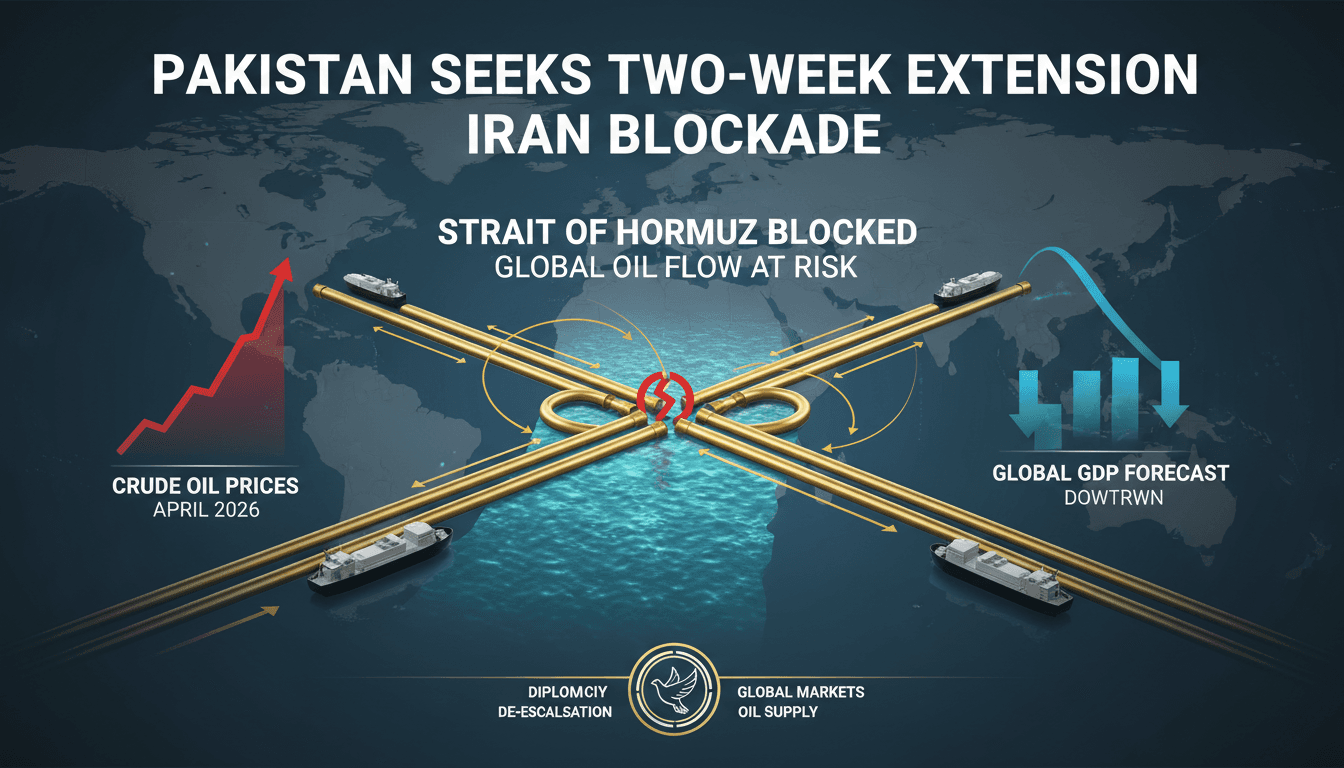
Here's what it means for you.
If the Strait of Hormuz reopens, you could see a decrease in fuel prices and a stabilization of global markets.
Why it matters
The Strait of Hormuz is a critical chokepoint for global oil, with 20% of the world's oil and liquefied natural gas transiting through it.
What happened (in 30 seconds)
- Pakistan's Prime Minister Shehbaz Sharif requested a two-week extension from U.S. President Donald Trump for Iran to end its blockade of the Strait of Hormuz.
- The White House acknowledged the request and reports indicate that Trump conditionally granted the extension, contingent on Iran reopening the strait and observing a ceasefire.
- Oil prices declined in after-hours trading, reflecting market relief amid hopes for de-escalation in the region.
The context you actually need
- The Iran war escalated after failed negotiations over Iran's nuclear program, leading to a blockade of the Strait of Hormuz by Iran in retaliation for U.S.-Israeli military actions.
- Pakistan emerged as a mediator in the conflict, facilitating communication between the U.S. and Iran to prevent further escalation and promote diplomatic solutions.
- Dubai residents are feeling the pinch of the blockade, with skyrocketing fuel costs and inflation affecting daily life and economic stability in the region.
What's really happening
The request for a two-week extension to the U.S. deadline for Iran to reopen the Strait of Hormuz is a pivotal moment in a complex geopolitical landscape. The Strait is not just a narrow waterway; it is a vital artery for global energy supplies, with approximately 20% of the world's oil and liquefied natural gas transiting through it. The blockade imposed by Iran in retaliation for U.S. and Israeli military actions has already led to significant disruptions in global oil markets, causing prices to spike and creating ripple effects across economies heavily reliant on stable energy supplies.
Pakistan's Prime Minister Shehbaz Sharif's appeal to President Trump reflects a broader strategy of diplomatic engagement aimed at de-escalation. By requesting a ceasefire and an extension of the deadline, Sharif is not only seeking to alleviate immediate tensions but also to position Pakistan as a key player in regional diplomacy. The acknowledgment of this request by the White House indicates a willingness to explore alternatives to military action, which could have catastrophic consequences for the region and beyond.
The conditional nature of Trump's extension—tied to Iran's goodwill in reopening the strait and observing a ceasefire—highlights the precarious balance of power and the incentives at play. If Iran complies, it could lead to a stabilization of oil prices and a reduction in inflationary pressures in markets like Dubai, which have been severely impacted by the blockade. However, failure to comply could escalate tensions further, leading to military strikes and even higher oil prices.
As the situation unfolds, the interconnectedness of global markets means that any significant changes in the Strait of Hormuz will have immediate implications for consumers and businesses worldwide. The potential for a diplomatic resolution, as indicated by the positive reception of Sharif's proposal by Iranian officials, could usher in a period of relative calm, allowing for a reassessment of energy strategies and economic policies.
Who feels it first (and how)
- Consumers in Dubai: Facing higher fuel prices and inflation due to the blockade.
- Oil and gas companies: Adjusting operations based on fluctuating prices and supply chain disruptions.
- Global markets: Investors reacting to changes in oil prices and geopolitical stability, affecting stock prices and economic forecasts.
What to watch next
- Iran's response: How Iran reacts to the conditional extension will be crucial in determining the next steps in the conflict and its impact on oil markets.
- U.S. military posture: Any shifts in U.S. military strategy in the region could signal escalating tensions or a move toward de-escalation.
- Market reactions: Watch for fluctuations in oil prices and stock markets as news develops, particularly in response to compliance or non-compliance with the ceasefire.
The Strait of Hormuz is critical for global oil transit, with 20% of the world's oil passing through it.
Oil prices will continue to fluctuate based on developments in the region, particularly regarding Iran's compliance with the ceasefire.
The long-term implications of Pakistan's mediation efforts on regional stability and U.S.-Iran relations remain uncertain.
Frequently Asked Questions
- Why it matters?
- The Strait of Hormuz is a critical chokepoint for global oil, with 20% of the world's oil and liquefied natural gas transiting through it.
- What happened (in 30 seconds)?
- Pakistan's Prime Minister Shehbaz Sharif requested a two-week extension from U.S. President Donald Trump for Iran to end its blockade of the Strait of Hormuz. The White House acknowledged the request and reports indicate that Trump conditionally granted the extension, contingent on Iran reopening the strait and observing a ceasefire. Oil prices declined in after-hours trading, reflecting market relief amid hopes for de-escalation in the region.
- What's really happening?
- The request for a two-week extension to the U.S. deadline for Iran to reopen the Strait of Hormuz is a pivotal moment in a complex geopolitical landscape. The Strait is not just a narrow waterway; it is a vital artery for global energy supplies, with approximately 20% of the world's oil and liquefied natural gas transiting through it. The blockade imposed by Iran in retaliation for U.S. and Israeli military actions has already led to significant disruptions in global oil markets, causing prices
- Who feels it first (and how)?
- Consumers in Dubai: Facing higher fuel prices and inflation due to the blockade. Oil and gas companies: Adjusting operations based on fluctuating prices and supply chain disruptions. Global markets: Investors reacting to changes in oil prices and geopolitical stability, affecting stock prices and economic forecasts.
- What to watch next?
- Iran's response: How Iran reacts to the conditional extension will be crucial in determining the next steps in the conflict and its impact on oil markets. U.S. military posture: Any shifts in U.S. military strategy in the region could signal escalating tensions or a move toward de-escalation. Market reactions: Watch for fluctuations in oil prices and stock markets as news develops, particularly in response to compliance or non-compliance with the ceasefire.
U.S. business news, corporate developments, and economy.
"The Wall Street Journal is respected for deep financial and economic reporting with a center-right editorial perspective."
— A47 Editor
Pakistan Seeks Two-Week Extension to Trump’s Iran Deadline
Pakistan has formally requested a two-week extension from President Trump regarding the deadline for Iran to reopen the Strait of Hormuz, which is currently set for 8 p.m. ET on Tuesday. This request arises amidst escalating tensions and military thr...
English-language reporting on Saudi politics, policy, and society.
"Saudi Gazette reflects mainstream Saudi institutional perspectives."
— A47 Editor
Pakistan urges Trump to extend deadline, Iran to open Hormuz for two weeks
Pakistan has called for a two-week ceasefire and the reopening of the Strait of Hormuz to facilitate diplomatic efforts aimed at resolving the escalating conflict in the Middle East. Prime Minister Shehbaz Sharif emphasized the need for time to allow...
European coverage of Middle East politics and security issues.
"France 24 offers international reporting with a European editorial perspective."
— A47 Editor
Iran positively reviewing Pakistan’s request for a two-week ceasefire, source says
Iran is currently reviewing Pakistan's request for a two-week ceasefire amid escalating tensions with the United States, particularly following President Donald Trump's ultimatum demanding the reopening of the strategic Strait of Hormuz. White House ...
24/7 international news from a French perspective in multiple languages.
"France 24 is viewed as a globally focused outlet with balanced coverage and a European perspective."
— A47 Editor
Iran positively reviewing Pakistan’s request for a two-week ceasefire, source says
Iran is currently reviewing Pakistan's request for a two-week ceasefire amid escalating tensions with the United States, particularly following President Donald Trump's ultimatum demanding the reopening of the strategic Strait of Hormuz. White House ...