
U.S.-Made Explosives Found Near Balkan Stream Pipeline in Serbia
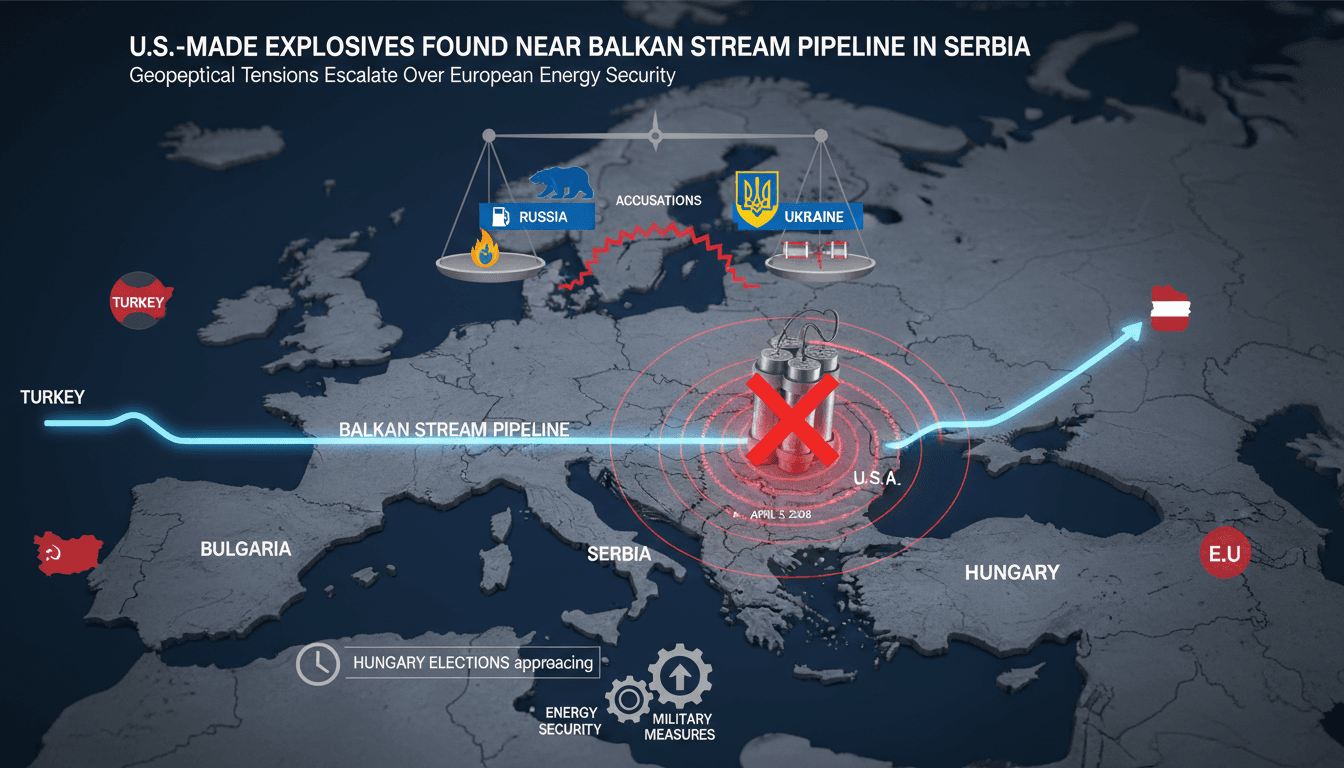
Here's what it means for you.
The discovery of explosives near a key gas pipeline could impact energy security and market stability across Europe, affecting global energy prices.
Why it matters
This incident highlights the fragility of energy infrastructure amid rising geopolitical tensions, which can ripple through global markets.
What happened (in 30 seconds)
- On April 5, 2026, Serbian authorities found U.S.-made explosives near the Balkan Stream pipeline, an extension of Russia's TurkStream.
- Hungarian Prime Minister Viktor Orbán labeled the incident as sabotage and convened an emergency defense meeting, emphasizing the pipeline's critical status.
- No suspects have been confirmed, with accusations flying between Ukraine, Russia, and claims of a false-flag operation ahead of Hungary's elections.
The context you actually need
- The Balkan Stream pipeline supplies 5-8 billion cubic meters of Russian natural gas annually to Hungary, crucial for energy security in the region.
- Tensions escalated following a dispute over Ukraine's Druzhba oil pipeline repairs, which halted Russian oil flows to Hungary and Slovakia since January 2026.
- Hungary's parliamentary elections on April 12, 2026, have made energy security a pivotal campaign issue, with Orbán's Fidesz party trailing in polls.
What's really happening
The discovery of explosives near the Balkan Stream pipeline is a significant event that underscores the ongoing geopolitical tensions in Eastern Europe, particularly between Russia, Ukraine, and their respective allies. The Balkan Stream, which is an extension of the TurkStream pipeline, plays a critical role in supplying natural gas from Russia to Hungary and Serbia, making it a vital piece of infrastructure amid Europe's efforts to reduce reliance on Russian energy sources following the 2022 invasion of Ukraine.
The explosives, identified as U.S.-manufactured, raise questions about the motivations behind their placement. Serbian President Aleksandar Vučić's announcement of the find, along with his briefing to Orbán, indicates a serious concern over national security. Orbán's immediate response—calling for military protection of the pipeline—reflects the urgency of the situation. The Hungarian Prime Minister's assertion that this could be linked to Ukrainian actions suggests a narrative that may be politically motivated, especially with elections approaching.
The backdrop of this incident includes a complex web of energy dependencies and political maneuvering. Hungary's recent blockade of a €90 billion EU loan to Ukraine and the halted oil flows from Russia have heightened tensions, making energy security a focal point in the region. Orbán's government is under pressure from opposition parties, which are leveraging these geopolitical events to challenge his leadership. The accusations of a false-flag operation further complicate the narrative, as both Ukraine and Hungary's opposition suggest that Russia may be attempting to manipulate the situation to sway public opinion ahead of the elections.
The implications of this incident extend beyond immediate security concerns. The stability of European gas markets has remained intact thus far, with no reported disruptions in gas flow or price surges. However, the ongoing investigation and the heightened military presence around the pipeline indicate that the situation is fluid. The involvement of U.S.-made explosives adds another layer of complexity, potentially influencing diplomatic relations and energy policies in the region.
As the investigation unfolds, the interplay between national security, energy dependence, and political strategy will be crucial in determining the future landscape of energy security in Europe.
Who feels it first (and how)
- Energy companies: Increased scrutiny on energy infrastructure may lead to heightened operational costs and security measures.
- Governments: National security agencies will likely ramp up monitoring and defense of critical infrastructure.
- Consumers: Potential fluctuations in energy prices could affect household budgets, particularly in energy-dependent regions.
What to watch next
- Investigative outcomes: The results of the ongoing investigation will clarify the responsible parties and could influence political narratives in Hungary and beyond.
- Market reactions: Watch for any shifts in European gas prices or supply chain disruptions that may arise from heightened security measures.
- Political developments: The upcoming Hungarian elections may shift the balance of power, impacting energy policy and regional alliances.
Explosives were found near the Balkan Stream pipeline, and military protection has been increased.
Political tensions will escalate as accusations and narratives develop around the incident.
The long-term impact on energy prices and market stability remains uncertain.
Frequently Asked Questions
- Why it matters?
- This incident highlights the fragility of energy infrastructure amid rising geopolitical tensions, which can ripple through global markets.
- What happened (in 30 seconds)?
- On April 5, 2026, Serbian authorities found U.S.-made explosives near the Balkan Stream pipeline, an extension of Russia's TurkStream. Hungarian Prime Minister Viktor Orbán labeled the incident as sabotage and convened an emergency defense meeting, emphasizing the pipeline's critical status. No suspects have been confirmed, with accusations flying between Ukraine, Russia, and claims of a false-flag operation ahead of Hungary's elections.
- What's really happening?
- The discovery of explosives near the Balkan Stream pipeline is a significant event that underscores the ongoing geopolitical tensions in Eastern Europe, particularly between Russia, Ukraine, and their respective allies. The Balkan Stream, which is an extension of the TurkStream pipeline, plays a critical role in supplying natural gas from Russia to Hungary and Serbia, making it a vital piece of infrastructure amid Europe's efforts to reduce reliance on Russian energy sources following the 2022 i
- Who feels it first (and how)?
- Energy companies: Increased scrutiny on energy infrastructure may lead to heightened operational costs and security measures. Governments: National security agencies will likely ramp up monitoring and defense of critical infrastructure. Consumers: Potential fluctuations in energy prices could affect household budgets, particularly in energy-dependent regions.
- What to watch next?
- Investigative outcomes: The results of the ongoing investigation will clarify the responsible parties and could influence political narratives in Hungary and beyond. Market reactions: Watch for any shifts in European gas prices or supply chain disruptions that may arise from heightened security measures. Political developments: The upcoming Hungarian elections may shift the balance of power, impacting energy policy and regional alliances.
24/7 international news from a French perspective in multiple languages.
"France 24 is viewed as a globally focused outlet with balanced coverage and a European perspective."
— A47 Editor
Explosives discovered near gas pipeline to Hungary, says Serbia's president
Powerful explosives were discovered near the Balkan Stream pipeline in Serbia, which transports Russian gas to Hungary, as reported by Serbian President Aleksandar Vučić. This alarming find has raised significant concerns just days before Hungary's n...
International coverage from The Guardian's global desks.
"The Guardian is known for its progressive editorial stance and in-depth analysis."
— A47 Editor
Hungarian PM faces ‘false flag’ claims after Serbia says explosives found near pipeline
Serbian authorities reported the discovery of powerful explosives near a gas pipeline that transports Russian natural gas to Hungary, raising concerns about potential sabotage just days before Hungary's parliamentary elections. Prime Minister Viktor ...
Arabic-language coverage of political affairs and current events.
"Okaz political coverage typically follows mainstream Saudi framing on national and regional affairs."
— A47 Editor
صربيا تُفشل تفجير أنابيب غاز يغذي المجر
Serbian authorities announced the discovery of explosives near a major gas pipeline supplying Serbia and Hungary, with President Aleksandar Vučić informing Hungarian Prime Minister Viktor Orbán about the threat to critical gas infrastructure. The exp...
RT is a Russian state-funded network covering global events from a Russian perspective.
"RT is widely criticized for promoting pro-Kremlin narratives and is considered by many to be a state propaganda outlet."
— A47 Editor
Serbia thwarts plot to bomb Russia-Hungary gas pipeline – Vucic
Serbian President Aleksandar Vucic announced that explosives were discovered near a gas pipeline connecting Serbia and Hungary, which transports Russian gas. This alarming find has raised concerns about potential sabotage, particularly as it coincide...