
Kuwaiti-American Journalist Detained for Sharing Iran War Footage
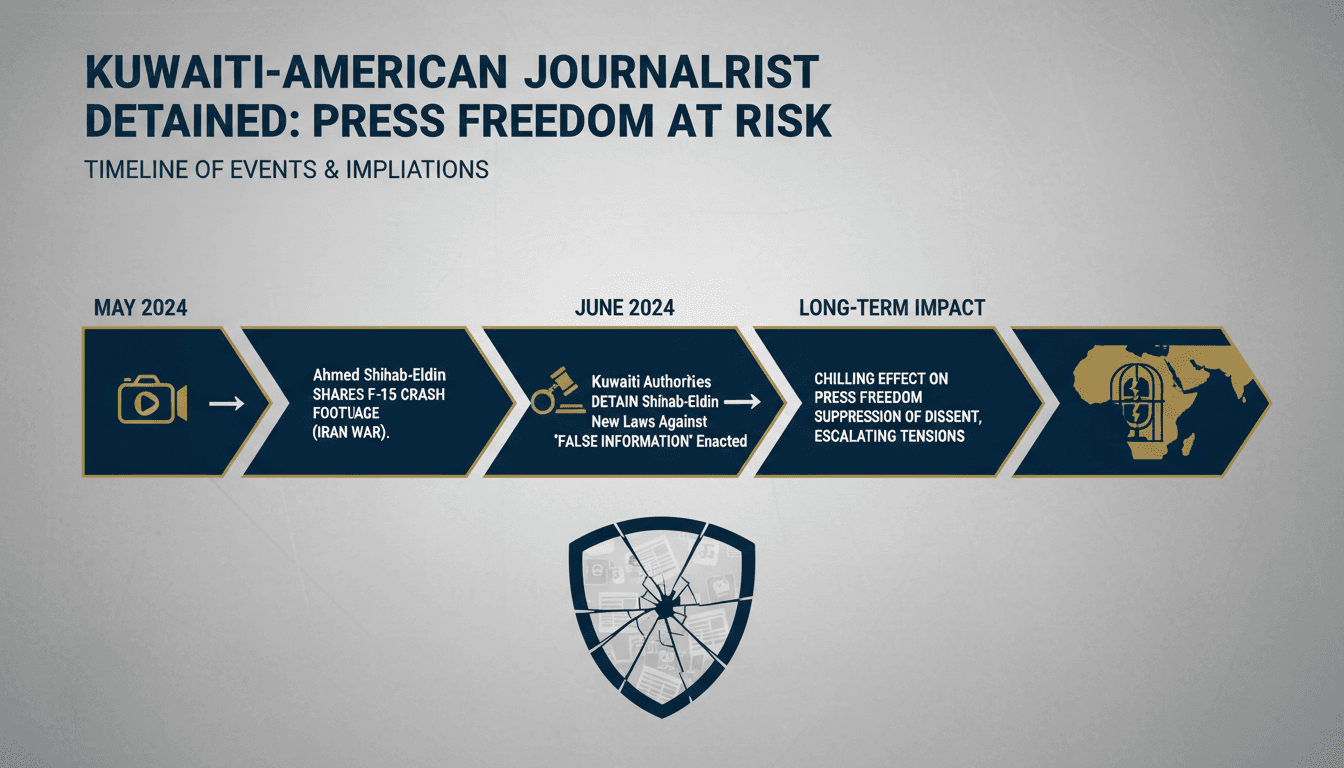
Here's what it means for you.
The detention of a prominent journalist in Kuwait signals a tightening grip on media freedom that could impact global reporting standards.
Why it matters
This incident reflects a broader regional trend of suppressing dissent and controlling narratives during conflicts, which can affect how news is reported worldwide.
What happened (in 30 seconds)
- Ahmed Shihab-Eldin, a Kuwaiti-American journalist, was detained on March 2, 2026, for sharing verified footage of a US F-15 fighter jet crash during the Iran war.
- Kuwaiti authorities charged him with spreading false information and harming national security, amid a crackdown on war-related reporting.
- Press freedom groups have called for his release, highlighting a growing pattern of detentions across the Gulf region.
The context you actually need
- The US-Israeli war with Iran began on February 28, 2026, leading to missile strikes on US bases in the Gulf, including Kuwait.
- Kuwait's Interior Ministry issued warnings against sharing footage related to military operations, resulting in arrests for public security violations.
- New laws enacted on March 15 impose severe penalties for disseminating information that undermines military confidence, reflecting a regional trend of restricting media freedom.
What's really happening
The detention of Ahmed Shihab-Eldin is not an isolated incident but part of a larger strategy by Kuwaiti authorities to control the narrative surrounding the ongoing conflict with Iran. Following the outbreak of hostilities, the government has taken a hardline stance against any form of dissent, particularly in the media. This crackdown is fueled by fears of public unrest and the potential for misinformation to exacerbate an already volatile situation.
The Kuwaiti government has historically maintained a delicate balance between allowing some degree of press freedom and suppressing dissent. However, the recent escalation of military conflict has shifted this balance significantly. The Interior Ministry's warnings against filming or sharing footage of military operations indicate a clear intent to stifle any reporting that could be perceived as undermining national security. This is further compounded by the introduction of new laws that impose harsh penalties for spreading what authorities deem false information.
The implications of Shihab-Eldin's detention extend beyond Kuwait. Press freedom organizations, including the Committee to Protect Journalists, have highlighted the chilling effect such actions can have on journalists across the region. The fear of arrest for simply reporting verified information can lead to self-censorship among journalists, ultimately resulting in a less informed public. This trend is particularly concerning in a time of conflict, where accurate reporting is crucial for understanding the complexities of the situation.
Moreover, the regional response to Shihab-Eldin's detention has been swift, with various human rights organizations calling for his immediate release. The lack of a clear response from Kuwaiti authorities suggests a continued commitment to suppress dissenting voices. This environment of fear and repression can lead to a significant decline in the quality of journalism, as reporters may avoid covering sensitive topics altogether.
As the situation unfolds, the potential for further crackdowns on media freedom in Kuwait and neighboring countries remains high. The interconnectedness of the Gulf states means that actions taken in one country can have ripple effects throughout the region. Journalists and media organizations must navigate an increasingly hostile environment, which could lead to a homogenization of news coverage that favors government narratives over independent reporting.
Who feels it first (and how)
- Journalists: Increased risk of detention and censorship, leading to self-censorship.
- Media organizations: Strained operations and potential loss of credibility due to restricted reporting.
- Civilians: Limited access to accurate information about the conflict, impacting public awareness and discourse.
- Investors: Heightened geopolitical risks may affect market stability and investment decisions in the region.
What to watch next
- International responses: Monitor how global organizations and foreign governments react to Shihab-Eldin's detention, as this could influence Kuwait's approach to press freedom.
- Regional media laws: Watch for any new legislation in Kuwait and neighboring countries that may further restrict media operations and reporting.
- Public sentiment: Keep an eye on social media and public reactions within Kuwait, as growing dissent could lead to protests or calls for reform.
Ahmed Shihab-Eldin is detained and charged with spreading false information.
Continued crackdowns on media freedom in Kuwait and potentially other Gulf states.
The long-term impact on press freedom and public discourse in the region.
Frequently Asked Questions
- Why it matters?
- This incident reflects a broader regional trend of suppressing dissent and controlling narratives during conflicts, which can affect how news is reported worldwide.
- What happened (in 30 seconds)?
- Ahmed Shihab-Eldin, a Kuwaiti-American journalist, was detained on March 2, 2026, for sharing verified footage of a US F-15 fighter jet crash during the Iran war. Kuwaiti authorities charged him with spreading false information and harming national security, amid a crackdown on war-related reporting. Press freedom groups have called for his release, highlighting a growing pattern of detentions across the Gulf region.
- What's really happening?
- The detention of Ahmed Shihab-Eldin is not an isolated incident but part of a larger strategy by Kuwaiti authorities to control the narrative surrounding the ongoing conflict with Iran. Following the outbreak of hostilities, the government has taken a hardline stance against any form of dissent, particularly in the media. This crackdown is fueled by fears of public unrest and the potential for misinformation to exacerbate an already volatile situation. The Kuwaiti government has historically ma
- Who feels it first (and how)?
- Journalists: Increased risk of detention and censorship, leading to self-censorship. Media organizations: Strained operations and potential loss of credibility due to restricted reporting. Civilians: Limited access to accurate information about the conflict, impacting public awareness and discourse. Investors: Heightened geopolitical risks may affect market stability and investment decisions in the region.
- What to watch next?
- International responses: Monitor how global organizations and foreign governments react to Shihab-Eldin's detention, as this could influence Kuwait's approach to press freedom. Regional media laws: Watch for any new legislation in Kuwait and neighboring countries that may further restrict media operations and reporting. Public sentiment: Keep an eye on social media and public reactions within Kuwait, as growing dissent could lead to protests or calls for reform.
News from the United States including domestic politics, society, and culture.
"Sky News is often seen as a center-right outlet in the UK, known for its rolling news coverage and emphasis on breaking stories and political affairs."
— A47 Editor
Journalist detained in Kuwait after posting Iran war video, activists say
A journalist has been detained in Kuwait after posting videos related to the ongoing war in Iran, as reported by a press freedom advocacy group. This incident highlights concerns regarding freedom of expression and the treatment of journalists in the...
International news, politics, and culture.
"Sky News is a UK-based 24-hour channel known for fast-breaking news and political coverage."
— A47 Editor
Journalist detained in Kuwait after posting Iran war video, activists say
A journalist has been detained in Kuwait after posting videos related to the ongoing war in Iran, according to reports from a press freedom advocacy group. The journalist, Ahmed Shihab-Eldin, an award-winning Kuwaiti American, faces prosecution in a ...
Global coverage of politics, crises, and international affairs.
"HuffPost provides progressive-oriented reporting on international developments, often focusing on humanitarian and social justice issues."
— A47 Editor
Journalist Ahmed Shihab-Eldin Jailed In Kuwait Over Social Media Posts On Iran War: Reports
Ahmed Shihab-Eldin, an award-winning Kuwaiti American journalist, was reportedly jailed in Kuwait last month for social media posts related to the Iran war, facing prosecution in a special tribunal. His arrest has drawn significant attention due to i...
International coverage from The Guardian's global desks.
"The Guardian is known for its progressive editorial stance and in-depth analysis."
— A47 Editor
Detention of journalist in Kuwait raises questions about crackdown on freedom of speech
Ahmed Shihab-Eldin, a prize-winning journalist, was arrested in Kuwait on March 3 after reporting on a friendly fire incident involving a US air force F-15 E Strike Eagle. His detention has raised concerns about the increasing crackdown on freedom of...