
Senator Thom Tillis Proposes Draft Compromise on Stablecoin Yields in Senate Bill
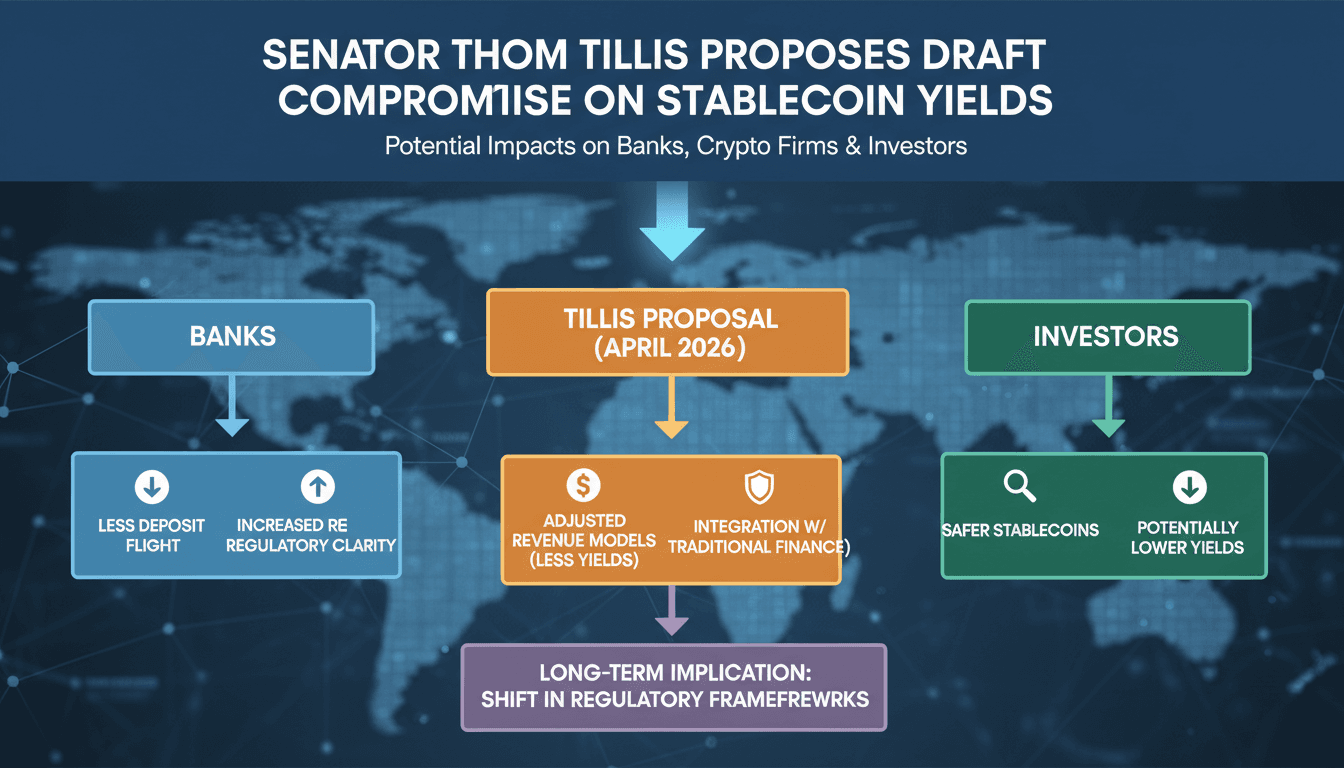
Here's what it means for you.
If you engage with stablecoins, this legislative proposal could reshape your access to yields and liquidity.
Why it matters
This proposal could redefine the relationship between banks and crypto platforms, impacting how stablecoins operate in the financial ecosystem.
What happened (in 30 seconds)
- Senator Thom Tillis announced a draft agreement aimed at resolving the ongoing dispute over stablecoin yields between banks and crypto firms.
- The proposal follows stalled negotiations and aims to address concerns about deposit flight and systemic risks associated with non-bank yields.
- The Senate Banking Committee is set to review the draft in late April 2026, with potential for further mediation if disagreements persist.
The context you actually need
- The CLARITY Act passed in July 2025, establishing regulatory roles for the SEC and CFTC in digital asset markets, including stablecoins.
- Banks argue that non-bank yields threaten deposits, while crypto firms view these yields as essential for their business models.
- Previous negotiations facilitated by the White House have failed to produce a consensus, prompting Senator Tillis's intervention.
What's really happening
The ongoing conflict between banks and cryptocurrency platforms over stablecoin yields has reached a critical juncture. Senator Thom Tillis's draft proposal aims to bridge the divide that has stalled legislative progress since the House passed the CLARITY Act in July 2025. This act delineated regulatory responsibilities for the SEC and CFTC, particularly concerning stablecoins, but the Senate's parallel efforts have been mired in contention over yield provisions.
Banks are concerned that allowing third-party yields on stablecoins could lead to deposit flight, where customers withdraw funds from traditional banks in favor of higher yields offered by crypto platforms. This scenario poses systemic risks to the banking sector, as it could destabilize the traditional deposit base that banks rely on for lending and liquidity. The Council of Economic Advisers estimates that if stablecoin yield bans are enacted, banks could see a projected increase of $2.1 billion in lending capacity, highlighting the financial stakes involved.
On the other hand, cryptocurrency firms argue that yields are a core component of their operations, essential for attracting users and maintaining competitiveness in a rapidly evolving market. The inability to offer competitive yields could stifle innovation and growth within the crypto sector, leading to a less dynamic financial landscape.
The draft agreement from Senator Tillis is expected to address these conflicting interests, but initial reactions from both banking and crypto groups indicate skepticism. While there is a recognition of the need for regulatory clarity, both sides have expressed concerns about the draft's provisions, particularly regarding enforcement and the potential for further negotiations.
As the Senate Banking Committee prepares for a markup of the proposal, the outcome remains uncertain. The potential for a fourth mediation suggests that the path to consensus is still fraught with challenges. The implications of this legislative effort extend beyond the immediate stakeholders, as the resolution of this dispute could set precedents for how digital assets are regulated in the future.
Who feels it first (and how)
- Banks: Concerned about deposit stability and systemic risks.
- Crypto firms: Focused on maintaining competitive yields to attract users.
- Investors: Potentially impacted by changes in yield availability and liquidity.
- Regulators: Tasked with enforcing new rules and ensuring market stability.
What to watch next
- Senate Banking Committee markup: The outcome will indicate the likelihood of the proposal advancing and its potential impact on the market.
- Industry reactions: Continued feedback from banks and crypto firms will reveal the level of acceptance or resistance to the proposed changes.
- Market volatility: Watch for shifts in crypto prices and trading volumes as the proposal progresses through legislative channels.
The draft proposal aims to resolve the yield dispute between banks and crypto firms.
Further negotiations may be necessary to reach a consensus that satisfies both parties.
The long-term effects on stablecoin yields and market dynamics remain uncertain.
Frequently Asked Questions
- Why it matters?
- This proposal could redefine the relationship between banks and crypto platforms, impacting how stablecoins operate in the financial ecosystem.
- What happened (in 30 seconds)?
- Senator Thom Tillis announced a draft agreement aimed at resolving the ongoing dispute over stablecoin yields between banks and crypto firms. The proposal follows stalled negotiations and aims to address concerns about deposit flight and systemic risks associated with non-bank yields. The Senate Banking Committee is set to review the draft in late April 2026, with potential for further mediation if disagreements persist.
- What's really happening?
- The ongoing conflict between banks and cryptocurrency platforms over stablecoin yields has reached a critical juncture. Senator Thom Tillis's draft proposal aims to bridge the divide that has stalled legislative progress since the House passed the CLARITY Act in July 2025. This act delineated regulatory responsibilities for the SEC and CFTC, particularly concerning stablecoins, but the Senate's parallel efforts have been mired in contention over yield provisions. Banks are concerned that allowi
- Who feels it first (and how)?
- Banks: Concerned about deposit stability and systemic risks. Crypto firms: Focused on maintaining competitive yields to attract users. Investors: Potentially impacted by changes in yield availability and liquidity. Regulators: Tasked with enforcing new rules and ensuring market stability.
- What to watch next?
- Senate Banking Committee markup: The outcome will indicate the likelihood of the proposal advancing and its potential impact on the market. Industry reactions: Continued feedback from banks and crypto firms will reveal the level of acceptance or resistance to the proposed changes. Market volatility: Watch for shifts in crypto prices and trading volumes as the proposal progresses through legislative channels.
Covers blockchain, cryptocurrency news, project analysis, and market insights.
"Cointelegraph is a leading crypto-focused media outlet known for timely news, analysis, and educational content related to blockchain and digital assets."
— A47 Editor
Crypto, banks continue Senate bill spat with new proposal concerns: Report
Senator Thom Tillis is set to publicly share an agreement aimed at resolving the ongoing clash between the crypto and banking sectors over stablecoin yields, although both sides are currently resisting the proposal, according to Politico.
Covers Bitcoin plus altcoin news, market updates, and educational resources.
"Bitcoin.com provides news, market data, and guides focused on Bitcoin and the wider crypto industry."
— A47 Editor
Report: Stablecoin Yield Fight Nears Resolution as Tillis, Alsobrooks Finalize Draft Language
Lawmakers, including Senators Thom Tillis and Angela Alsobrooks, are finalizing draft language for the CLARITY Act, which aims to clarify regulations surrounding stablecoin yields, indicating significant progress in negotiations.
Real-time updates, analysis, and reports on the blockchain and cryptocurrency sectors.
"Crypto News delivers real-time updates, analysis, and reports on the blockchain and cryptocurrency sectors."
— A47 Editor
Senator Tillis eyes “crypto-palooza” to break stalemate over stablecoin yield regulations
Senator Thom Tillis is set to introduce a draft agreement aimed at resolving the ongoing stalemate over stablecoin yield regulations, potentially leading to a significant bipartisan breakthrough in the cryptocurrency sector. This initiative comes as ...