
Pam Bondi Excluded from House Oversight Deposition on Epstein Files Following DOJ Ruling
Here's what it means for you.
The handling of high-profile investigations like Jeffrey Epstein's can impact public trust in governmental accountability.
Why it matters
The fallout from this situation could shape future oversight of sensitive investigations and influence public sentiment regarding justice and transparency.
What happened (in 30 seconds)
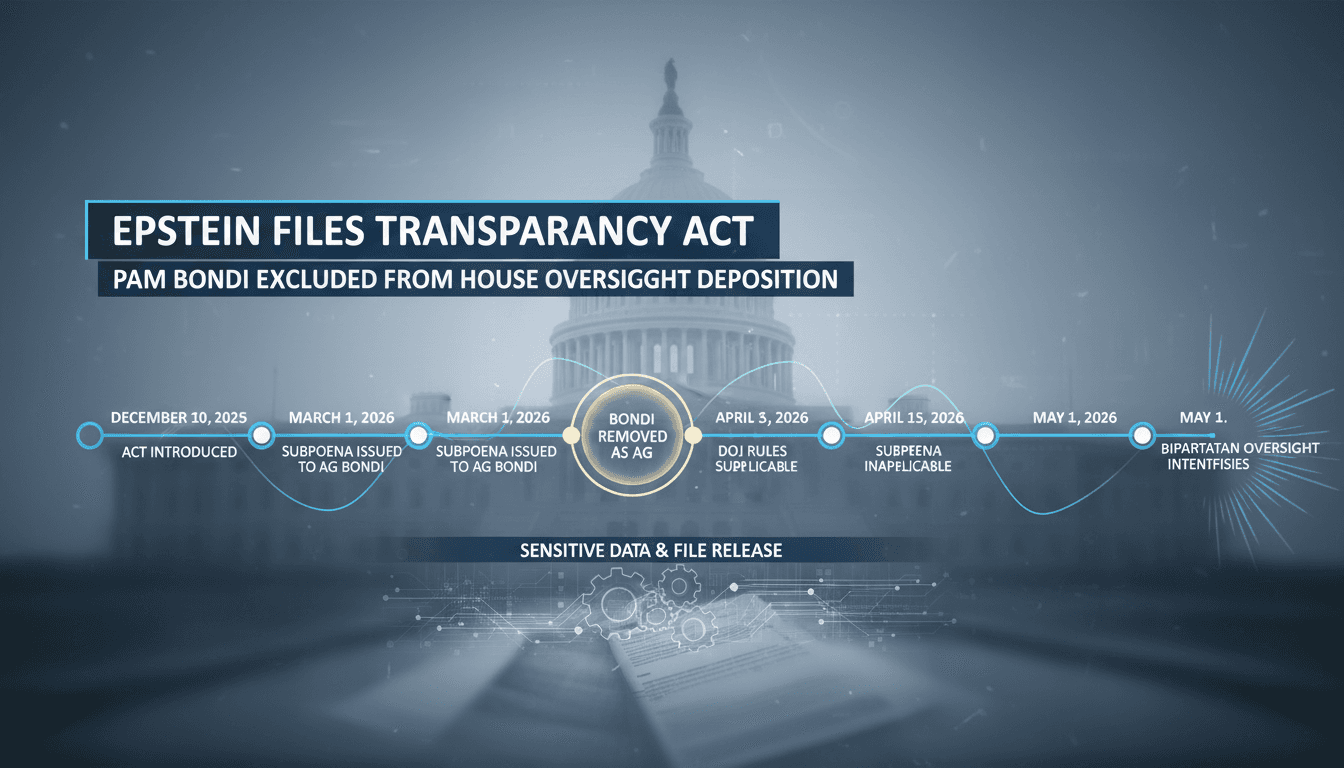
- Pam Bondi will not attend a scheduled House Oversight Committee deposition regarding the Epstein investigation files due to her recent removal as Attorney General.
- The Department of Justice declared the subpoena issued to Bondi inapplicable, prompting bipartisan demands for accountability over delayed file releases.
- House Oversight Committee plans to engage Bondi's personal counsel to reschedule the deposition amid threats of contempt proceedings.
The context you actually need
- The Epstein Files Transparency Act required the Department of Justice to release investigation files by December 19, 2025, but the deadline was missed, leading to public outcry.
- Bipartisan frustration over the handling of the Epstein files culminated in a March 4, 2026, vote to subpoena Bondi, reflecting a rare moment of cross-party collaboration.
- The situation escalated after Bondi's combative testimony in February 2026, where she faced accusations of obstructing access to crucial information.
What's really happening
The recent developments surrounding Pam Bondi's exclusion from the House Oversight Committee deposition on the Epstein files underscore a complex interplay of political maneuvering, accountability, and public trust. The Epstein Files Transparency Act was designed to ensure that the Department of Justice (DoJ) would release critical investigation files by a specific deadline. However, the DoJ, under Bondi's leadership, failed to meet this deadline, releasing only partial files on January 31, 2026. This delay not only frustrated lawmakers but also raised serious concerns among victims regarding the exposure of sensitive information.
The subsequent hearings revealed a contentious atmosphere, with Bondi's combative responses to questioning and allegations of DoJ surveillance on lawmakers who were reviewing the files. Such dynamics contributed to a growing bipartisan consensus that accountability was necessary. On March 4, 2026, the House Oversight Committee voted to subpoena Bondi, with five Republicans joining Democrats in this effort. This unusual collaboration highlighted the urgency felt across party lines to address the perceived mishandling of the Epstein investigation.
However, the political landscape shifted dramatically when President Donald Trump ousted Bondi as Attorney General on April 3, 2026. Just days later, the DoJ announced that Bondi would not appear at the scheduled deposition, citing her removal from office. This move has raised questions about the effectiveness of congressional oversight and the ability of lawmakers to hold former officials accountable. The committee's plans to engage Bondi's personal counsel indicate a continued effort to pursue accountability, but the situation remains fraught with tension.
The implications of this scenario extend beyond the immediate legal and political ramifications. The handling of high-profile investigations like Epstein's can significantly influence public trust in governmental institutions. As the committee navigates the complexities of rescheduling the deposition and potentially pursuing contempt proceedings, the broader narrative of transparency and accountability in the justice system is at stake. The public's perception of these proceedings will likely shape future legislative efforts aimed at ensuring that similar investigations are conducted with the utmost integrity and transparency.
Who feels it first (and how)
- Lawmakers: They face pressure to ensure accountability and transparency in high-profile investigations.
- Victims of Epstein: They are directly impacted by the handling of sensitive information and the release of investigation files.
- Legal professionals: They may experience shifts in the landscape of oversight and accountability in similar cases.
What to watch next
- Future depositions: The outcome of Bondi's personal counsel engagement could set a precedent for how similar cases are handled in the future.
- Bipartisan cooperation: Continued collaboration between parties on oversight issues may signal a shift in how Congress addresses accountability.
- Public sentiment: Monitoring how public opinion evolves in response to these developments will be crucial for understanding the long-term impact on trust in government.
The DoJ's position voids Bondi's subpoena in her official capacity.
The House Oversight Committee will pursue accountability through Bondi's personal counsel.
The long-term effects on public trust in governmental accountability remain uncertain.
Frequently Asked Questions
- Why it matters?
- The fallout from this situation could shape future oversight of sensitive investigations and influence public sentiment regarding justice and transparency.
- What happened (in 30 seconds)?
- Pam Bondi will not attend a scheduled House Oversight Committee deposition regarding the Epstein investigation files due to her recent removal as Attorney General. The Department of Justice declared the subpoena issued to Bondi inapplicable, prompting bipartisan demands for accountability over delayed file releases. House Oversight Committee plans to engage Bondi's personal counsel to reschedule the deposition amid threats of contempt proceedings.
- What's really happening?
- The recent developments surrounding Pam Bondi's exclusion from the House Oversight Committee deposition on the Epstein files underscore a complex interplay of political maneuvering, accountability, and public trust. The Epstein Files Transparency Act was designed to ensure that the Department of Justice (DoJ) would release critical investigation files by a specific deadline. However, the DoJ, under Bondi's leadership, failed to meet this deadline, releasing only partial files on January 31, 2026
- Who feels it first (and how)?
- Lawmakers: They face pressure to ensure accountability and transparency in high-profile investigations. Victims of Epstein: They are directly impacted by the handling of sensitive information and the release of investigation files. Legal professionals: They may experience shifts in the landscape of oversight and accountability in similar cases.
- What to watch next?
- Future depositions: The outcome of Bondi's personal counsel engagement could set a precedent for how similar cases are handled in the future. Bipartisan cooperation: Continued collaboration between parties on oversight issues may signal a shift in how Congress addresses accountability. Public sentiment: Monitoring how public opinion evolves in response to these developments will be crucial for understanding the long-term impact on trust in government.
Global business headlines with AI angles.
"General business outlet that frequently covers AI."
— A47 Editor
House Members Push to Force Pam Bondi Testimony on Epstein Files Despite Ouster As AG
Members of the House Oversight Committee are pressing for sworn testimony from former Attorney General Pam Bondi regarding the Justice Department's management of records related to Jeffrey Epstein, despite her recent ouster from the position. This de...
International coverage from The Guardian's global desks.
"The Guardian is known for its progressive editorial stance and in-depth analysis."
— A47 Editor
Pam Bondi will not appear at scheduled House hearing on Epstein files, DoJ says
Former U.S. Attorney General Pam Bondi will not attend a scheduled House deposition regarding the Justice Department's handling of the Jeffrey Epstein investigation, as confirmed by the Department of Justice. Bondi was subpoenaed in her capacity as a...
Business, investment, entrepreneurship, leadership, and innovation.
"Forbes is known for its coverage of business leaders, market trends, and entrepreneurial ventures with a pro-business editorial stance."
— A47 Editor
Democrats Threaten Pam Bondi With Contempt After She Backs Out Of Epstein Testimony
Pam Bondi, the former U.S. Attorney General, has backed out of her scheduled testimony regarding Jeffrey Epstein, prompting Democrats to threaten her with contempt. This decision follows her dismissal by President Trump amid scrutiny over her handlin...