
Lebanon and Israel to Begin Direct Negotiations Mediated by the US
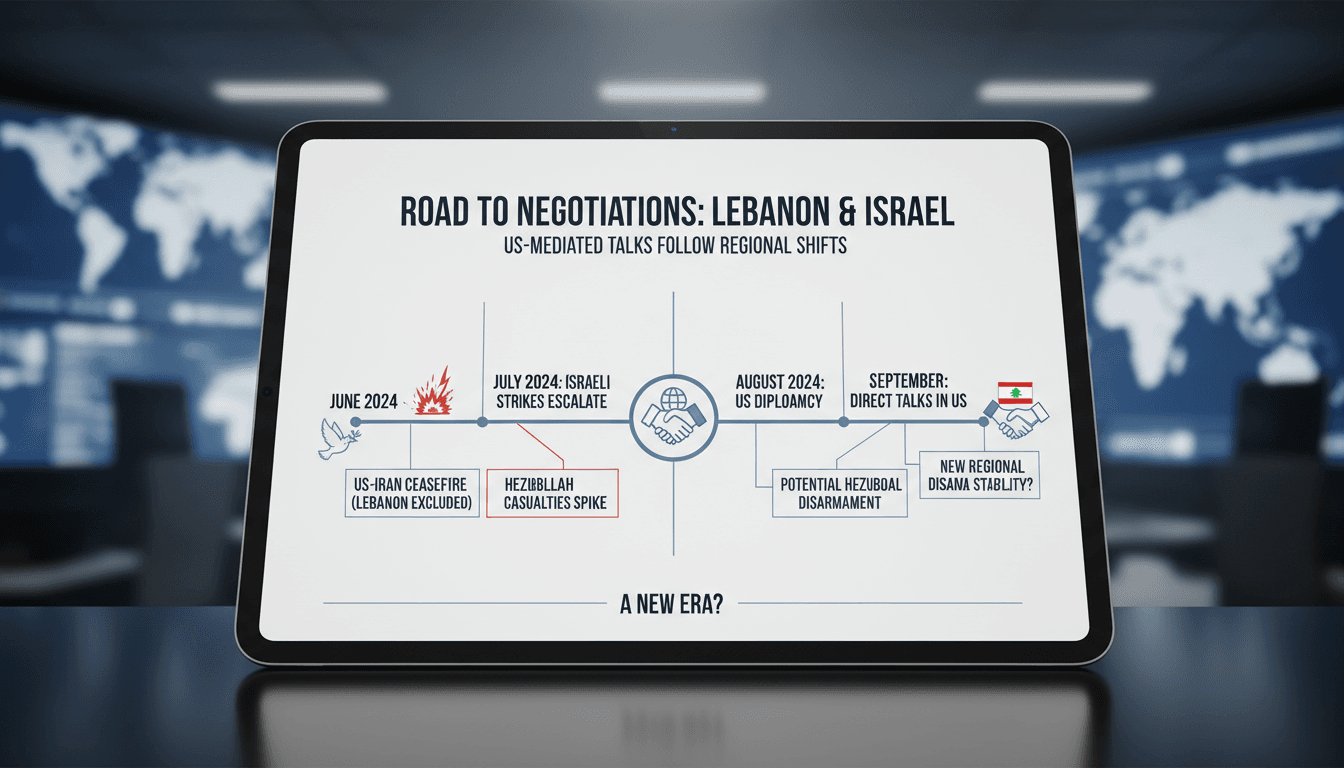
Here's what it means for you.
The outcome of these negotiations could influence oil prices and market stability, affecting your investments and cost of living.
Why it matters
These talks could reshape geopolitical dynamics in the Middle East, impacting global energy markets and regional security.
What happened (in 30 seconds)
- Direct negotiations between Lebanon and Israel are set to begin next week at the US State Department, marking the first such talks in decades.
- Lebanon's commitment to disarm Hezbollah by the end of the year is a key agenda item, following recent escalations in violence.
- US mediation aims to stabilize the region amid ongoing Israeli strikes against Hezbollah, with significant casualties reported.
The context you actually need
- Fragile ceasefire: The proposed talks follow a 2024 ceasefire agreement that has seen persistent violations and renewed military operations.
- Escalating violence: Recent Israeli strikes resulted in over 180 deaths in a single day, highlighting the urgent need for diplomatic intervention.
- US-Iran dynamics: The recent US-Iran ceasefire excludes Lebanon, complicating the regional security landscape and increasing pressure on Lebanon to negotiate.
What's really happening
The upcoming negotiations between Lebanon and Israel represent a critical juncture in Middle Eastern diplomacy, driven by a complex interplay of military, political, and economic factors. The backdrop of violence, particularly the Israeli strikes that killed between 182 and 254 individuals on April 8, 2026, underscores the urgency for both nations to engage in dialogue. These strikes not only escalated tensions but also prompted Lebanon to advocate for a temporary ceasefire to facilitate broader discussions.
Lebanon's President Joseph Aoun and Israeli Prime Minister Benjamin Netanyahu's endorsement of these talks signals a shift in strategy, as both leaders face internal and external pressures to stabilize their respective nations. The US, acting as a mediator, has a vested interest in curbing Hezbollah's influence, which is seen as a destabilizing force in the region. The proposed agenda includes disarming Hezbollah, a move that could significantly alter the power dynamics within Lebanon and its relationship with Israel.
The negotiations are also influenced by the broader geopolitical landscape, particularly the recent US-Iran ceasefire that explicitly excludes Lebanon. This exclusion has heightened fears of further Israeli military action, compelling Lebanon to seek a diplomatic resolution. The US's role as a mediator is crucial, as it attempts to balance its relationships with both Israel and Lebanon while addressing Iran's influence in the region.
The implications of these negotiations extend beyond the immediate parties involved. For Lebanon, disarming Hezbollah could lead to a more stable internal environment, potentially fostering economic recovery and attracting foreign investment. For Israel, achieving a peaceful resolution could enhance its security and reduce the military burden of ongoing operations against Hezbollah. However, the path to peace is fraught with challenges, including the need for both sides to make significant concessions and the potential backlash from hardline factions within their respective countries.
As the negotiations unfold, the outcomes will likely reverberate across the region, influencing oil prices and market stability. The heightened tensions and violence have already contributed to a surge in oil prices by 3-5%, affecting economies reliant on stable energy costs. The UAE, with its substantial Lebanese expatriate community, is particularly sensitive to these developments, as regional instability can impact investor confidence and economic growth.
Who feels it first (and how)
- Lebanese citizens: Families with ties to Hezbollah may face internal conflict and uncertainty about security.
- Israeli citizens: Those living near the border may experience heightened anxiety over potential escalations.
- Investors: Market participants in the UAE and global oil markets will react to shifts in stability and energy prices.
- Expatriates in Dubai: The Lebanese community in Dubai, numbering over 100,000, may feel increased anxiety regarding family safety and economic implications.
What to watch next
- Negotiation outcomes: The success or failure of the talks will set the tone for future regional diplomacy and security.
- Casualty reports: Continued violence could derail negotiations and escalate tensions, impacting market stability.
- Oil price fluctuations: Watch for changes in oil prices as the situation develops, which could affect global economic conditions.
The negotiations are scheduled to take place at the US State Department next week.
Both sides will face significant pressure to reach a compromise to avoid further violence.
The long-term effectiveness of any agreements made during these talks remains uncertain, particularly regarding Hezbollah's disarmament.
Frequently Asked Questions
- Why it matters?
- These talks could reshape geopolitical dynamics in the Middle East, impacting global energy markets and regional security.
- What happened (in 30 seconds)?
- Direct negotiations between Lebanon and Israel are set to begin next week at the US State Department, marking the first such talks in decades. Lebanon's commitment to disarm Hezbollah by the end of the year is a key agenda item, following recent escalations in violence. US mediation aims to stabilize the region amid ongoing Israeli strikes against Hezbollah, with significant casualties reported.
- What's really happening?
- The upcoming negotiations between Lebanon and Israel represent a critical juncture in Middle Eastern diplomacy, driven by a complex interplay of military, political, and economic factors. The backdrop of violence, particularly the Israeli strikes that killed between 182 and 254 individuals on April 8, 2026, underscores the urgency for both nations to engage in dialogue. These strikes not only escalated tensions but also prompted Lebanon to advocate for a temporary ceasefire to facilitate broader
- Who feels it first (and how)?
- Lebanese citizens: Families with ties to Hezbollah may face internal conflict and uncertainty about security. Israeli citizens: Those living near the border may experience heightened anxiety over potential escalations. Investors: Market participants in the UAE and global oil markets will react to shifts in stability and energy prices. Expatriates in Dubai: The Lebanese community in Dubai, numbering over 100,000, may feel increased anxiety regarding family safety and economic implications.
- What to watch next?
- Negotiation outcomes: The success or failure of the talks will set the tone for future regional diplomacy and security. Casualty reports: Continued violence could derail negotiations and escalate tensions, impacting market stability. Oil price fluctuations: Watch for changes in oil prices as the situation develops, which could affect global economic conditions.
Arabic-language digital news outlet covering UAE, regional, and international developments with broad general-news coverage.
"Al Ain News coverage typically blends UAE-focused reporting with wider Arab regional and international news."
— A47 Editor
الموعد والأجندة ومقر الانعقاد.. «العين الإخبارية» تكشف كواليس مفاوضات لبنان وإسرائيل
Direct negotiations between Lebanon and Israel are set to begin next week at the U.S. Department of State in Washington, marking the first discussions focused on the relationship between the two countries.
Regional coverage and analysis focused on politics, diplomacy, and business across the Middle East.
"Al-Monitor is known for analytical reporting on Middle East politics and policy developments."
— A47 Editor
US to host Lebanon-Israel talks next week, Israeli official says
The Trump administration has expressed support for Lebanon to independently negotiate with Israel, as confirmed by a senior Lebanese official. This development comes ahead of scheduled talks in the U.S. next week, separate from ongoing discussions in...