
Hezbollah Rejects Direct Negotiations with Israel Amid Border Tensions
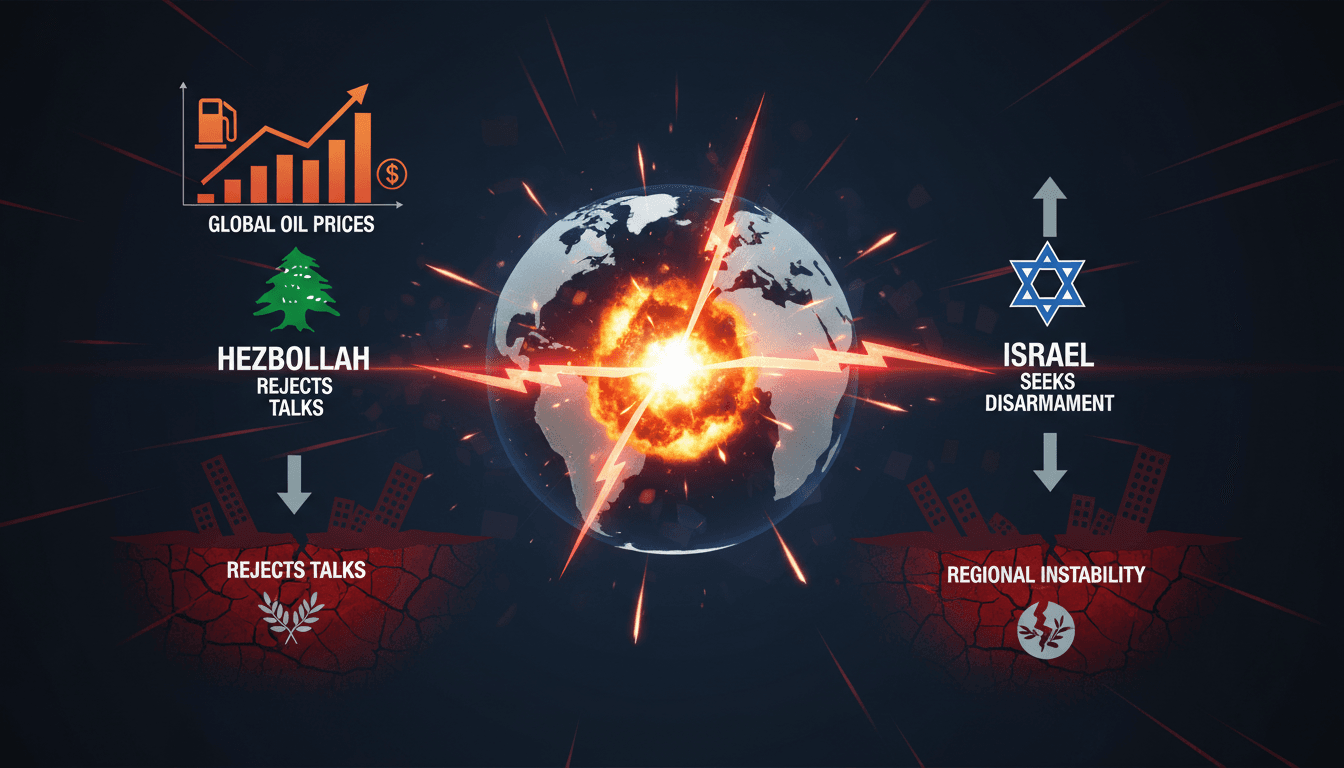
Here's what it means for you.
The ongoing tensions between Israel and Hezbollah could impact global oil prices and regional stability, affecting international markets.
Why it matters
The rejection of negotiations signals a potential escalation in conflict, which could disrupt supply chains and energy markets worldwide.
What happened (in 30 seconds)
- Hezbollah MP Ali Fayyad announced on April 9, 2026, that the group rejects direct negotiations with Israel.
- Israeli Prime Minister Benjamin Netanyahu instructed his cabinet to initiate talks in Washington, focusing on disarming Hezbollah.
- Ongoing Israeli strikes in Lebanon continue to target Hezbollah infrastructure, complicating the situation further.
The context you actually need
- Fragile ceasefire: The rejection follows a fragile ceasefire agreement from November 2024, which has been violated multiple times.
- Humanitarian crisis: Over 1.2 million Lebanese residents have been displaced due to Israel's military actions since early 2026.
- Regional dynamics: The situation is exacerbated by Israel's goal to disarm Hezbollah and establish long-term security, while Lebanon seeks a halt to hostilities before engaging in talks.
What's really happening
The recent announcement by Hezbollah's Ali Fayyad reflects a deep-seated resistance to direct negotiations with Israel, rooted in national principles that prioritize territorial integrity and the return of displaced residents. This rejection is not merely a political stance; it is a response to ongoing Israeli military actions that have resulted in significant casualties among Hezbollah ranks, including the deaths of key figures close to the group's leadership.
Israel's strategy aims to weaken Hezbollah's military capabilities, particularly south of the Litani River, where the group has maintained a stronghold. The Israeli government, under Netanyahu, views direct negotiations as a means to enforce disarmament and secure its borders against perceived threats. However, Hezbollah's refusal to engage in talks under current conditions indicates a commitment to its operational integrity and a rejection of what it perceives as coercive diplomacy.
The backdrop of this conflict is a humanitarian crisis in Lebanon, with over 1.2 million residents displaced due to the ongoing violence. This situation complicates the Lebanese government's position, as it seeks international support to halt Israeli attacks while navigating the internal pressures from Hezbollah and its own populace. The Lebanese government has not publicly rebuked Hezbollah's stance, indicating a complex interplay of power dynamics within the country.
As the situation unfolds, the potential for escalation remains high. Hezbollah has threatened to expand its military responses, which could lead to further Israeli strikes and a cycle of retaliation. The Israeli government has dismissed calls for a truce, insisting that negotiations will proceed regardless of the ongoing hostilities. This hardline approach may lead to increased violence, further complicating any future diplomatic efforts.
The implications of this standoff extend beyond the immediate region. As tensions rise, global oil prices have already begun to react, with prices surging toward $100 per barrel amid fears of instability in the Middle East. The UAE has experienced temporary airspace closures and flight cancellations, reflecting the broader economic impact of the conflict on international trade and travel.
Who feels it first (and how)
- Aviation sector: Airlines operating in and out of Dubai may face disruptions due to airspace closures.
- Energy markets: Investors and companies in the oil sector will feel the impact of rising prices and supply chain uncertainties.
- Lebanese civilians: The humanitarian crisis continues to affect displaced individuals and families in Lebanon, exacerbating social and economic challenges.
What to watch next
- Ceasefire negotiations: Monitor any shifts in the Lebanese government's stance on preconditions for talks, as this could indicate a willingness to engage diplomatically.
- Military escalations: Watch for any significant military actions from either side, particularly Hezbollah's response to Israeli strikes, which could escalate tensions further.
- Oil price fluctuations: Keep an eye on global oil prices, as continued instability in the region may lead to further increases, impacting economies worldwide.
Hezbollah's rejection of direct negotiations is a clear stance against Israeli military actions.
Escalation of military conflict between Israel and Hezbollah is probable, given the current rhetoric and actions.
The long-term impact on regional stability and international markets remains uncertain, depending on future developments.
Frequently Asked Questions
- Why it matters?
- The rejection of negotiations signals a potential escalation in conflict, which could disrupt supply chains and energy markets worldwide.
- What happened (in 30 seconds)?
- Hezbollah MP Ali Fayyad announced on April 9, 2026, that the group rejects direct negotiations with Israel. Israeli Prime Minister Benjamin Netanyahu instructed his cabinet to initiate talks in Washington, focusing on disarming Hezbollah. Ongoing Israeli strikes in Lebanon continue to target Hezbollah infrastructure, complicating the situation further.
- What's really happening?
- The recent announcement by Hezbollah's Ali Fayyad reflects a deep-seated resistance to direct negotiations with Israel, rooted in national principles that prioritize territorial integrity and the return of displaced residents. This rejection is not merely a political stance; it is a response to ongoing Israeli military actions that have resulted in significant casualties among Hezbollah ranks, including the deaths of key figures close to the group's leadership. Israel's strategy aims to weaken
- Who feels it first (and how)?
- Aviation sector: Airlines operating in and out of Dubai may face disruptions due to airspace closures. Energy markets: Investors and companies in the oil sector will feel the impact of rising prices and supply chain uncertainties. Lebanese civilians: The humanitarian crisis continues to affect displaced individuals and families in Lebanon, exacerbating social and economic challenges.
- What to watch next?
- Ceasefire negotiations: Monitor any shifts in the Lebanese government's stance on preconditions for talks, as this could indicate a willingness to engage diplomatically. Military escalations: Watch for any significant military actions from either side, particularly Hezbollah's response to Israeli strikes, which could escalate tensions further. Oil price fluctuations: Keep an eye on global oil prices, as continued instability in the region may lead to further increases, impacting economies wo
Global business headlines with AI angles.
"General business outlet that frequently covers AI."
— A47 Editor
Hezbollah MP Says Group Rejects Any Direct Talks Between Israel And Lebanon
A Hezbollah lawmaker has firmly stated that the group will not engage in any direct discussions with Israel, following Israel's announcement of upcoming negotiations with Lebanon. This rejection underscores Hezbollah's stance against any diplomatic o...
Regional coverage and analysis focused on politics, diplomacy, and business across the Middle East.
"Al-Monitor is known for analytical reporting on Middle East politics and policy developments."
— A47 Editor
Hezbollah lawmaker says group rejects direct negotiations with Israel
Hezbollah lawmaker Ali Fayyad announced that the group rejects any direct negotiations with Israel, asserting that the Lebanese government should prioritize a ceasefire and the withdrawal of Israeli troops from Lebanese territory before further discu...
Arabic-language UAE newspaper coverage focused on domestic affairs, public institutions, business, society, and regional developments.
"Al Khaleej coverage generally reflects a mainstream UAE editorial lens with strong attention to public affairs, institutions, and regional developments."
— A47 Editor
«حزب الله» يرفض المفاوضات المباشرة مع إسرائيل
Hezbollah's deputy, Ali Fayad, announced on Thursday that the party rejects direct negotiations with Israel, insisting that the Lebanese government should condition any further steps on a ceasefire. This statement followed Israeli Prime Minister Benj...