
US Extends Sanctions Waiver for Russian Oil Purchases Amid Rising Energy Prices
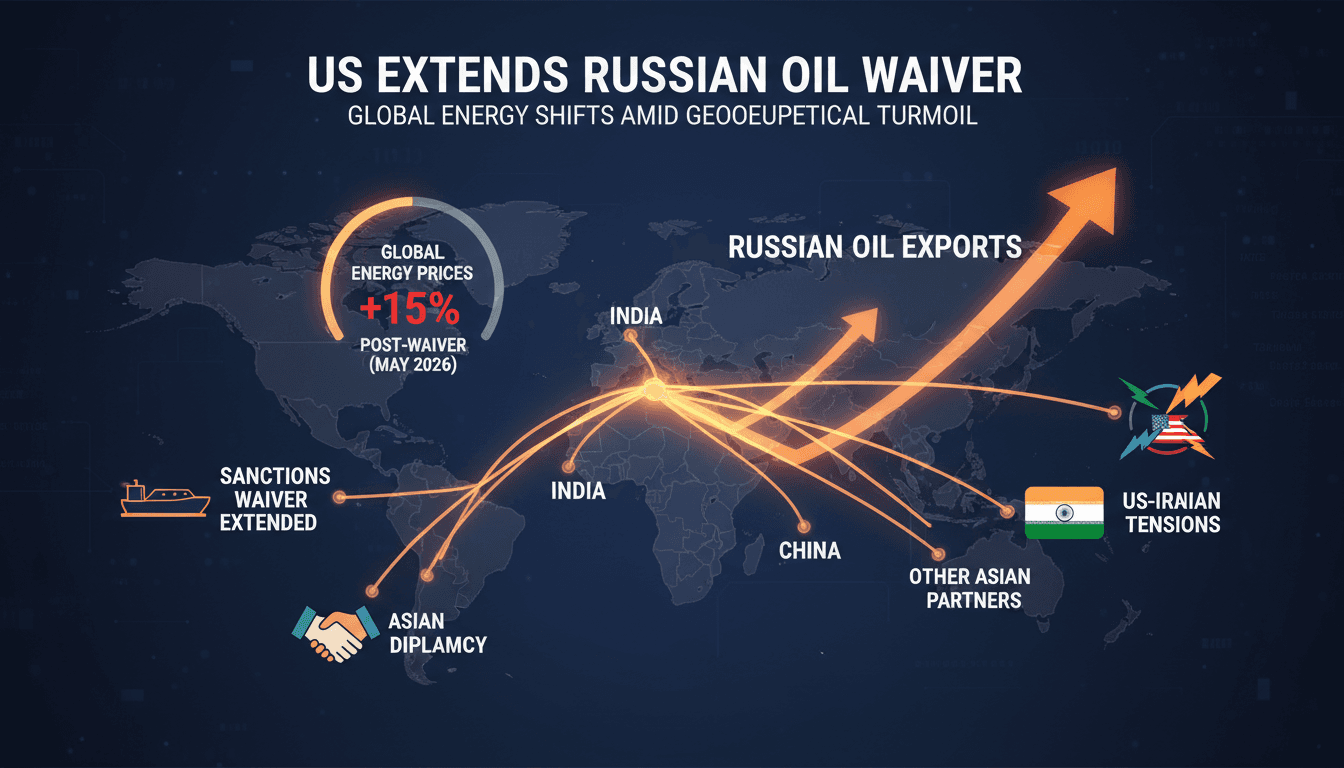
Here's what it means for you.
If you rely on global energy markets, this waiver could stabilize prices and impact your fuel costs.
Why it matters
The waiver reflects the U.S. balancing act between geopolitical pressures and energy market stability.
What happened (in 30 seconds)
- On April 17, 2026, the U.S. Treasury renewed a waiver allowing third countries to purchase Russian oil loaded at sea until May 16, 2026.
- This decision came amid rising global energy prices due to the ongoing U.S.-Israeli war with Iran and diplomatic pressure from countries like India.
- Oil prices dropped 9% to around $90 per barrel following the announcement, indicating immediate market reactions.
The context you actually need
- The waiver follows a previous 30-day waiver that expired on April 11, 2026, amid significant geopolitical tensions.
- Treasury Secretary Scott Bessent initially opposed the renewal but reversed his stance due to diplomatic pressures from G20 and IMF meetings.
- The International Energy Agency has labeled the current energy supply disruption as the worst in history, exacerbated by Russia's ongoing invasion of Ukraine.
What's really happening
The U.S. Treasury's decision to renew the sanctions waiver on Russian oil purchases is a complex interplay of geopolitical strategy and market dynamics. Initially, Secretary Scott Bessent announced that the waiver would not be extended, reflecting a hardline stance against Russia amid its ongoing invasion of Ukraine. However, as the U.S.-Israeli war with Iran escalated, damaging over 80 oil and gas facilities in the Middle East, the pressure to stabilize global energy prices intensified.
The renewed waiver allows third countries to purchase Russian crude oil and petroleum products loaded on tankers, effectively enabling an additional 100 million barrels of Russian oil to enter the market. This move is particularly significant as it comes at a time when global oil prices have surged due to supply disruptions and geopolitical tensions. The immediate effect was a 9% drop in oil prices to approximately $90 per barrel, which is crucial for economies heavily reliant on imported fuel, such as those in the UAE.
The waiver also highlights the U.S.'s strategic pivot towards maintaining energy stability in the face of rising prices, which could have broader implications for global energy markets. By allowing these transactions, the U.S. is attempting to balance its sanctions regime against Russia with the need to ensure that energy prices do not spiral out of control, which could lead to economic instability both domestically and internationally.
Moreover, the waiver's approval reflects the influence of key diplomatic relationships, particularly with Asian partners like India, who have been vocal about their energy needs. The U.S. is navigating a delicate path, balancing its foreign policy objectives with the realities of global energy supply and demand. This situation underscores the interconnectedness of geopolitical events and market dynamics, where decisions made in Washington can have immediate repercussions on energy prices and availability worldwide.
Who feels it first (and how)
- Energy consumers in the UAE and other import-dependent countries will see immediate impacts on fuel prices.
- Oil traders and companies involved in the purchase and sale of crude oil will adjust their strategies based on the renewed waiver.
- Geopolitical analysts and policymakers will monitor the implications of this waiver on U.S.-Russia relations and broader Middle Eastern stability.
What to watch next
- Global oil price trends: Continued fluctuations in oil prices will indicate how effectively the waiver stabilizes the market.
- Geopolitical developments: Watch for changes in the U.S.-Israeli-Iran dynamics, as these could influence future sanctions and waivers.
- Responses from European leaders: European Commission President Ursula von der Leyen's opposition to easing sanctions may lead to further political ramifications.
The waiver allows for the purchase of an additional 100 million barrels of Russian oil.
Oil prices will continue to fluctuate based on geopolitical developments and market responses to the waiver.
The long-term impact on U.S.-Russia relations and the effectiveness of sanctions in the context of ongoing global conflicts.
Frequently Asked Questions
- Why it matters?
- The waiver reflects the U.S. balancing act between geopolitical pressures and energy market stability.
- What happened (in 30 seconds)?
- On April 17, 2026, the U.S. Treasury renewed a waiver allowing third countries to purchase Russian oil loaded at sea until May 16, 2026. This decision came amid rising global energy prices due to the ongoing U.S.-Israeli war with Iran and diplomatic pressure from countries like India. Oil prices dropped 9% to around $90 per barrel following the announcement, indicating immediate market reactions.
- What's really happening?
- The U.S. Treasury's decision to renew the sanctions waiver on Russian oil purchases is a complex interplay of geopolitical strategy and market dynamics. Initially, Secretary Scott Bessent announced that the waiver would not be extended, reflecting a hardline stance against Russia amid its ongoing invasion of Ukraine. However, as the U.S.-Israeli war with Iran escalated, damaging over 80 oil and gas facilities in the Middle East, the pressure to stabilize global energy prices intensified. The re
- Who feels it first (and how)?
- Energy consumers in the UAE and other import-dependent countries will see immediate impacts on fuel prices. Oil traders and companies involved in the purchase and sale of crude oil will adjust their strategies based on the renewed waiver. Geopolitical analysts and policymakers will monitor the implications of this waiver on U.S.-Russia relations and broader Middle Eastern stability.
- What to watch next?
- Global oil price trends: Continued fluctuations in oil prices will indicate how effectively the waiver stabilizes the market. Geopolitical developments: Watch for changes in the U.S.-Israeli-Iran dynamics, as these could influence future sanctions and waivers. Responses from European leaders: European Commission President Ursula von der Leyen's opposition to easing sanctions may lead to further political ramifications.
Regional and international reporting focused on Middle Eastern politics, diplomacy, and economics.
"Asharq Al-Awsat is a Saudi-owned international newspaper reflecting mainstream Gulf political perspectives."
— A47 Editor
US Renews Russian Oil Waiver for a Month to Curb Global Energy Prices
The United States has renewed a waiver allowing Russian oil sales for an additional month, aiming to stabilize global energy prices amid ongoing geopolitical tensions. This extension permits purchases of Russian oil already at sea until May 16, refle...
English-language news from Qatar covering domestic and regional affairs.
"Gulf Times reflects Qatari perspectives on regional developments."
— A47 Editor
US renews Russian oil waiver after pressure from countries dealing with war price shocks
The Trump administration has renewed a waiver allowing countries to purchase sanctioned Russian oil at sea for an additional month, amidst ongoing pressures from nations grappling with the economic impacts of the war. This decision has drawn criticis...
Oil, metals, and agriculture: supply/demand headlines, OPEC chatter, inventories, and price action.
"Solid tape for energy and metals traders tracking macro and micro catalysts."
— A47 Editor
US renews Russian oil waiver after pressure from countries dealing with Iran war price shocks
The United States has renewed a waiver allowing for the import of Russian oil, a decision influenced by pressures from countries affected by rising energy prices due to the ongoing conflict in Iran. This extension comes amid a global supply squeeze a...