
Backdoor Compromise in Essential Plugin WordPress Portfolio Following Acquisition
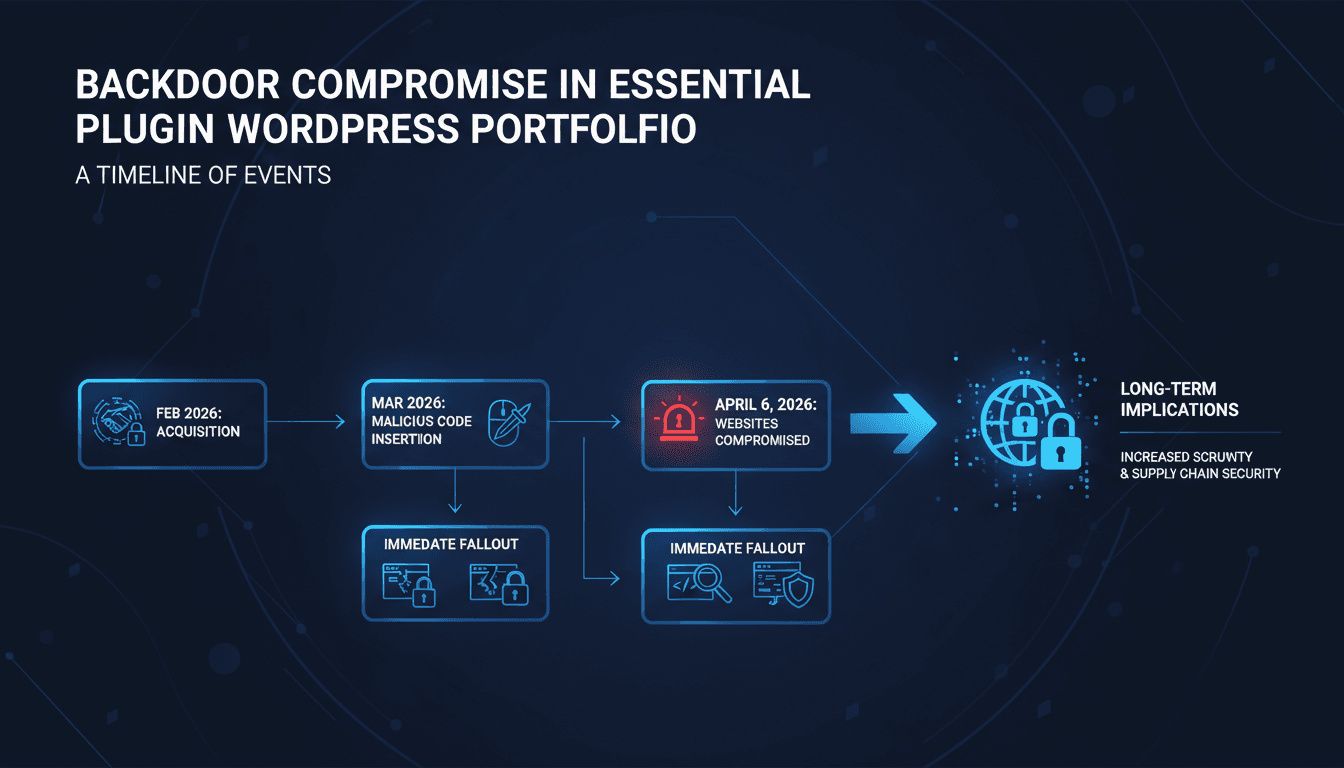
Here's what it means for you.
If you manage a website using WordPress, the recent backdoor compromise could expose your site to malware and SEO penalties.
Why it matters
This incident highlights vulnerabilities in the WordPress ecosystem, emphasizing the need for transparency in plugin ownership and supply chain security.
What happened (in 30 seconds)
- On April 6, 2026, dormant backdoors in 31 Essential Plugin WordPress plugins activated, compromising thousands of websites.
- The backdoors were inserted in August 2025 following an unverified acquisition by an entity linked to cryptocurrency and gambling.
- All affected plugins were permanently closed on April 7, 2026, after the issue was discovered, with remediation patches released shortly thereafter.
The context you actually need
- Essential Plugin, originally WP Online Support, faced a revenue decline of 35-45% by late 2024, prompting a sale of its portfolio.
- The new owner, known as 'Kris,' acquired the plugins without notifying users, allowing unrestricted access to inject malicious code.
- The backdoors were designed to serve cloaked spam content, impacting SEO and potentially leading to blacklisting by search engines.
What's really happening
The Essential Plugin incident is a stark reminder of the vulnerabilities inherent in the software supply chain, particularly in open-source ecosystems like WordPress. The acquisition of the Essential Plugin portfolio by Kris, an individual with ties to cryptocurrency and gambling, raised immediate red flags regarding the integrity of the plugins. The lack of notification to users about the ownership transfer allowed Kris to exploit the system without oversight, embedding PHP deserialization backdoors in the code.
These backdoors remained dormant for eight months, a strategic choice that allowed the new owner to avoid detection while preparing to exploit the compromised plugins. When the backdoors activated, they phoned home to a malicious server, downloading additional malicious code that injected spam content into the websites using the affected plugins. This not only jeopardized the security of those sites but also posed significant risks to their search engine rankings, as cloaked spam content can lead to penalties from search engines.
The incident underscores a broader issue within the WordPress ecosystem: the need for rigorous vetting of plugin ownership changes and a more transparent acquisition process. The WordPress.org plugin review team, which typically conducts automated reviews, was unable to catch the malicious code due to the lack of notification about the ownership transfer. This gap in oversight highlights the systemic vulnerabilities that can arise when ownership changes occur without proper checks and balances.
In the aftermath, the WordPress.org team acted swiftly to close all affected plugins and release remediation patches. However, the damage was already done, with over 400,000 installations of the compromised plugins potentially affected. Site operators are now left to deal with the fallout, including SEO penalties and the need for extensive security audits.
This incident serves as a wake-up call for website operators and developers alike. It emphasizes the importance of maintaining vigilance regarding the plugins you use and the need for ongoing scrutiny of their security practices. As the digital landscape continues to evolve, the risks associated with supply chain attacks will only grow, making it essential for all stakeholders to prioritize security and transparency.
Who feels it first (and how)
- Website owners using the affected plugins face immediate risks of malware and SEO penalties.
- Web developers must reassess their reliance on third-party plugins and implement stricter security measures.
- Hosting providers are tasked with conducting fleet-wide scans to identify and mitigate vulnerabilities across their client sites.
What to watch next
- Increased scrutiny on plugin acquisitions: Expect industry discussions around the need for transparency in plugin ownership changes to intensify.
- Emergence of stricter security protocols: Look for the development of new standards and practices aimed at securing the WordPress ecosystem against similar attacks.
- Potential legal ramifications: Monitor for any legal actions taken against the new owner or the original developers regarding the breach of trust and security.
The backdoors were activated on April 6, 2026, affecting over 400,000 installations.
Increased demand for security audits and plugin vetting processes in the WordPress community.
The long-term impact on the reputation of the Essential Plugin brand and its former owners.
Frequently Asked Questions
- Why it matters?
- This incident highlights vulnerabilities in the WordPress ecosystem, emphasizing the need for transparency in plugin ownership and supply chain security.
- What happened (in 30 seconds)?
- On April 6, 2026, dormant backdoors in 31 Essential Plugin WordPress plugins activated, compromising thousands of websites. The backdoors were inserted in August 2025 following an unverified acquisition by an entity linked to cryptocurrency and gambling. All affected plugins were permanently closed on April 7, 2026, after the issue was discovered, with remediation patches released shortly thereafter.
- What's really happening?
- The Essential Plugin incident is a stark reminder of the vulnerabilities inherent in the software supply chain, particularly in open-source ecosystems like WordPress. The acquisition of the Essential Plugin portfolio by Kris, an individual with ties to cryptocurrency and gambling, raised immediate red flags regarding the integrity of the plugins. The lack of notification to users about the ownership transfer allowed Kris to exploit the system without oversight, embedding PHP deserialization back
- Who feels it first (and how)?
- Website owners using the affected plugins face immediate risks of malware and SEO penalties. Web developers must reassess their reliance on third-party plugins and implement stricter security measures. Hosting providers are tasked with conducting fleet-wide scans to identify and mitigate vulnerabilities across their client sites.
- What to watch next?
- Increased scrutiny on plugin acquisitions: Expect industry discussions around the need for transparency in plugin ownership changes to intensify. Emergence of stricter security protocols: Look for the development of new standards and practices aimed at securing the WordPress ecosystem against similar attacks. Potential legal ramifications: Monitor for any legal actions taken against the new owner or the original developers regarding the breach of trust and security.
Tech news, hardware, and AI tools coverage.
"PC/tech site increasingly covering AI hardware and apps."
— A47 Editor
Popular WordPress plugins backdoored after ownership change, putting thousands of websites at risk
A significant security breach has been reported involving popular WordPress plugins that were compromised following a change in ownership. The new owner has allegedly weaponized these plugins to download and distribute malicious code, affecting numer...
Consumer tech news, reviews, and buying guides for gadgets and electronics.
"TechRadar is known for comprehensive buying advice, hardware reviews, and consumer tech news targeted at mainstream audiences."
— A47 Editor
WordPress websites under attack — expert report says dozens of plugins hijacked to target thousands of sites
A recent report reveals that a malicious actor acquired a struggling WordPress plugin company and introduced malware into its products, compromising numerous websites. This incident highlights a significant security breach affecting thousands of Word...
Startup news with frequent AI coverage.
"Covers launches, funding, and product updates in AI."
— A47 Editor
Someone planted backdoors in dozens of WordPress plug-ins used in thousands of websites
Dozens of WordPress plug-ins have reportedly been compromised to introduce malware after being acquired by a new corporate owner, raising significant security concerns for the thousands of websites that utilize these tools.