
Iran Threatens Ceasefire Termination Over Hezbollah Exclusion Amid Israeli Strikes
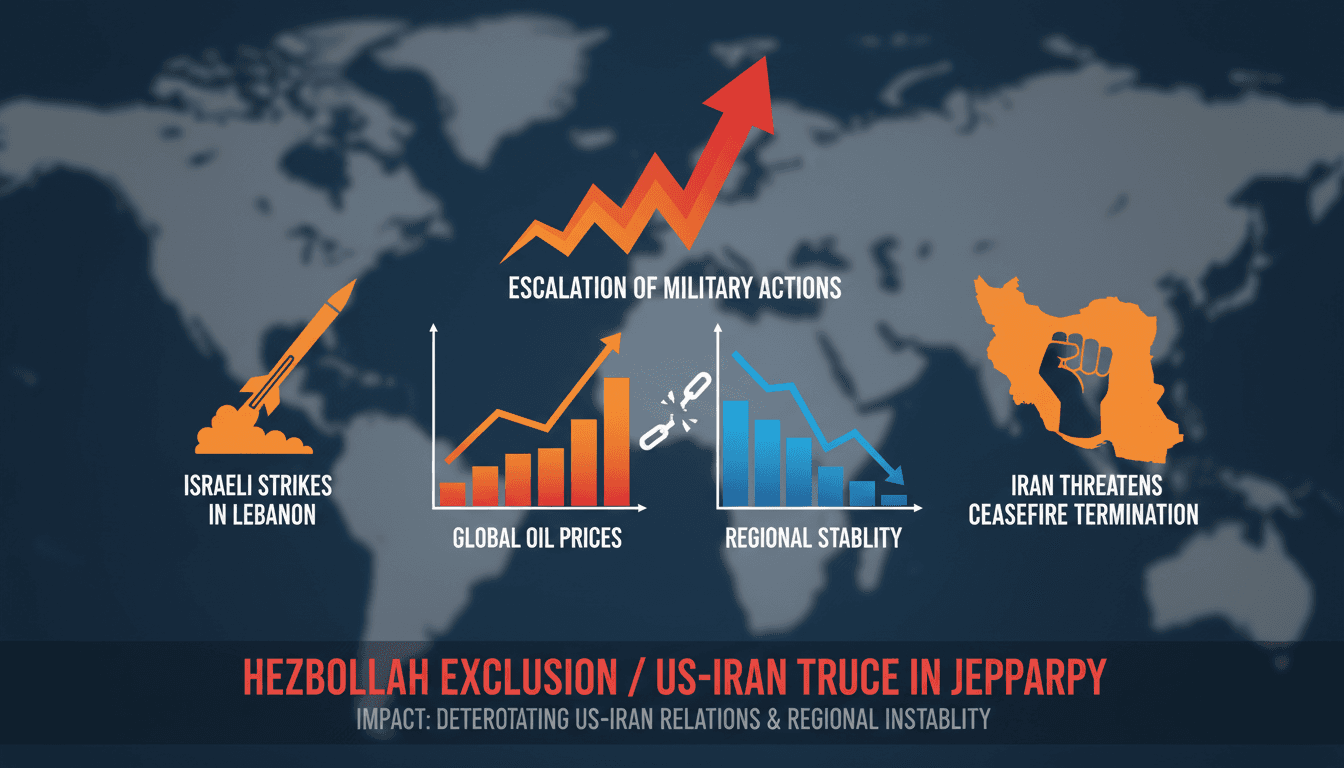
Here's what it means for you.
Global markets and energy prices are poised for volatility as geopolitical tensions escalate in the Middle East.
Why it matters
The ongoing conflict and ceasefire negotiations directly impact global oil prices and regional stability, affecting businesses and consumers worldwide.
What happened (in 30 seconds)
- Iran threatened to end a U.S.-Iran ceasefire due to the exclusion of Hezbollah from the agreement amid Israeli military operations in Lebanon.
- Israeli airstrikes targeted over 100 Hezbollah sites on April 8, 2026, resulting in 254 casualties, marking one of the deadliest days of the conflict.
- U.S. President Trump announced a conditional ceasefire on April 7, 2026, mediated by Pakistan, requiring Iran to reopen the Strait of Hormuz but excluding Israel's actions against Hezbollah.
The context you actually need
- The ceasefire follows a broader military campaign against Iranian targets, initiated after Hezbollah's actions in 2024 and 2025, which escalated tensions in the region.
- Iran's peace proposal was rejected by the U.S., highlighting the complexities of negotiating peace in a multi-faceted conflict involving multiple actors and interests.
- The situation in Lebanon is dire, with immediate casualties reported and a national day of mourning declared, reflecting the humanitarian impact of the ongoing conflict.
What's really happening
The current standoff between Iran and the U.S. over the ceasefire agreement underscores a complex web of geopolitical interests and military strategies. The U.S.-Iran ceasefire, announced on April 7, 2026, was intended to de-escalate tensions in the region, particularly concerning the vital Strait of Hormuz, through which a significant portion of the world's oil supply passes. However, the exclusion of Hezbollah from the ceasefire terms has created a critical fault line.
Iran perceives the ongoing Israeli airstrikes against Hezbollah as a direct violation of the truce, which they argue undermines the agreement's legitimacy. The Iranian leadership, including Foreign Minister Seyed Abbas Araghchi and parliamentary speaker Mohammad Bagher Ghalibaf, has made it clear that they view the U.S. as complicit in these violations, leading to threats of withdrawal from the ceasefire. This situation is exacerbated by the broader military campaign, dubbed Operation Epic Fury, which aims to dismantle Iranian influence in the region.
The stakes are high. The Iranian Revolutionary Guard Corps (IRGC) has indicated that continued Israeli strikes could lead to regional retaliation, heightening the risk of a broader conflict. The humanitarian toll is significant, with 254 individuals reported killed in the latest strikes, prompting international condemnation and calls for a more inclusive peace process that considers all parties involved, including Lebanon and Hezbollah.
Moreover, the economic implications are profound. Global markets reacted sharply to the ceasefire announcements, with Brent crude oil prices falling significantly. However, the volatility remains as the situation develops. Dubai, for instance, saw an 8.5% surge in its stock index following the ceasefire news, reflecting investor optimism. Yet, the UAE's defense systems have been activated to intercept Iranian missiles, indicating ongoing threats to regional stability and trade.
As the U.S. and its allies navigate this precarious situation, the potential for escalation remains high, with both military and economic repercussions that could ripple across global markets.
Who feels it first (and how)
- Energy sector professionals: Fluctuations in oil prices directly affect profitability and operational costs.
- Investors in global markets: Market volatility can impact investment strategies and portfolio performance.
- Residents of Lebanon: Immediate humanitarian crises and national mourning affect daily life and stability.
- U.S. military and diplomatic personnel: Increased tensions may lead to heightened operational risks and diplomatic challenges.
What to watch next
- Iran's military response: Any retaliatory actions by Iran could escalate tensions and disrupt oil supplies, impacting global markets.
- U.S. diplomatic efforts: Future negotiations or peace talks could either stabilize or further complicate the situation, influencing investor confidence.
- Casualty reports from Lebanon: Ongoing humanitarian crises may prompt international intervention or aid, affecting regional political dynamics.
The ceasefire is fragile, with ongoing Israeli strikes against Hezbollah.
Increased military tensions and potential retaliatory actions from Iran if strikes continue.
The long-term viability of the ceasefire and its impact on regional stability and oil prices.
Frequently Asked Questions
- Why it matters?
- The ongoing conflict and ceasefire negotiations directly impact global oil prices and regional stability, affecting businesses and consumers worldwide.
- What happened (in 30 seconds)?
- Iran threatened to end a U.S.-Iran ceasefire due to the exclusion of Hezbollah from the agreement amid Israeli military operations in Lebanon. Israeli airstrikes targeted over 100 Hezbollah sites on April 8, 2026, resulting in 254 casualties, marking one of the deadliest days of the conflict. U.S. President Trump announced a conditional ceasefire on April 7, 2026, mediated by Pakistan, requiring Iran to reopen the Strait of Hormuz but excluding Israel's actions against Hezbollah.
- What's really happening?
- The current standoff between Iran and the U.S. over the ceasefire agreement underscores a complex web of geopolitical interests and military strategies. The U.S.-Iran ceasefire, announced on April 7, 2026, was intended to de-escalate tensions in the region, particularly concerning the vital Strait of Hormuz, through which a significant portion of the world's oil supply passes. However, the exclusion of Hezbollah from the ceasefire terms has created a critical fault line. Iran perceives the ong
- Who feels it first (and how)?
- Energy sector professionals: Fluctuations in oil prices directly affect profitability and operational costs. Investors in global markets: Market volatility can impact investment strategies and portfolio performance. Residents of Lebanon: Immediate humanitarian crises and national mourning affect daily life and stability. U.S. military and diplomatic personnel: Increased tensions may lead to heightened operational risks and diplomatic challenges.
- What to watch next?
- Iran's military response: Any retaliatory actions by Iran could escalate tensions and disrupt oil supplies, impacting global markets. U.S. diplomatic efforts: Future negotiations or peace talks could either stabilize or further complicate the situation, influencing investor confidence. Casualty reports from Lebanon: Ongoing humanitarian crises may prompt international intervention or aid, affecting regional political dynamics.
Conservative-leaning coverage of current events.
"Fox News is a highly influential conservative news outlet known for right-leaning political commentary and coverage."
— A47 Editor
Iran threatens to end ceasefire over Hezbollah's exclusion from truce deal
Iran has threatened to terminate the recently agreed ceasefire due to the exclusion of Hezbollah from the truce deal, asserting that the U.S. must choose between continuing the ceasefire or escalating to war through Israel. This statement underscores...
Global news coverage with extensive reporting on Middle Eastern conflicts and geopolitics.
"Al Jazeera is a Qatar-based broadcaster known for wide regional coverage and alternative perspectives."
— A47 Editor
Netanyahu: A ‘ceasefire with Iran will not include Hezbollah’
Israeli Prime Minister Benjamin Netanyahu stated that the recent ceasefire agreement between the United States and Iran will not include Hezbollah, following the announcement of a two-week truce aimed at de-escalating military tensions in the region.
Comprehensive coverage of Middle Eastern and global issues.
"Al Jazeera is a prominent voice from the Global South, especially the Middle East, with an emphasis on underreported stories."
— A47 Editor
Netanyahu: A ‘ceasefire with Iran will not include Hezbollah’
Israeli Prime Minister Benjamin Netanyahu stated that the recent ceasefire agreement between the United States and Iran will not include Hezbollah, following the announcement of a two-week truce aimed at de-escalating military tensions in the region.