
Trump Confirms Intense U.S.-Iran Negotiations Amid Pakistani Initiative
Here's what it means for you.
If you rely on stable energy prices or are involved in international trade, the outcome of these negotiations could significantly impact your costs and operations.
Why it matters
The ongoing U.S.-Iran negotiations could stabilize oil prices and prevent further economic disruptions in global markets.
What happened (in 30 seconds)
- Trump confirmed that intense negotiations with Iran are underway, spurred by a Pakistani initiative for a two-week extension on a key deadline.
- Iran expressed readiness for both peace and potential conflict, highlighting the precarious balance in the region.
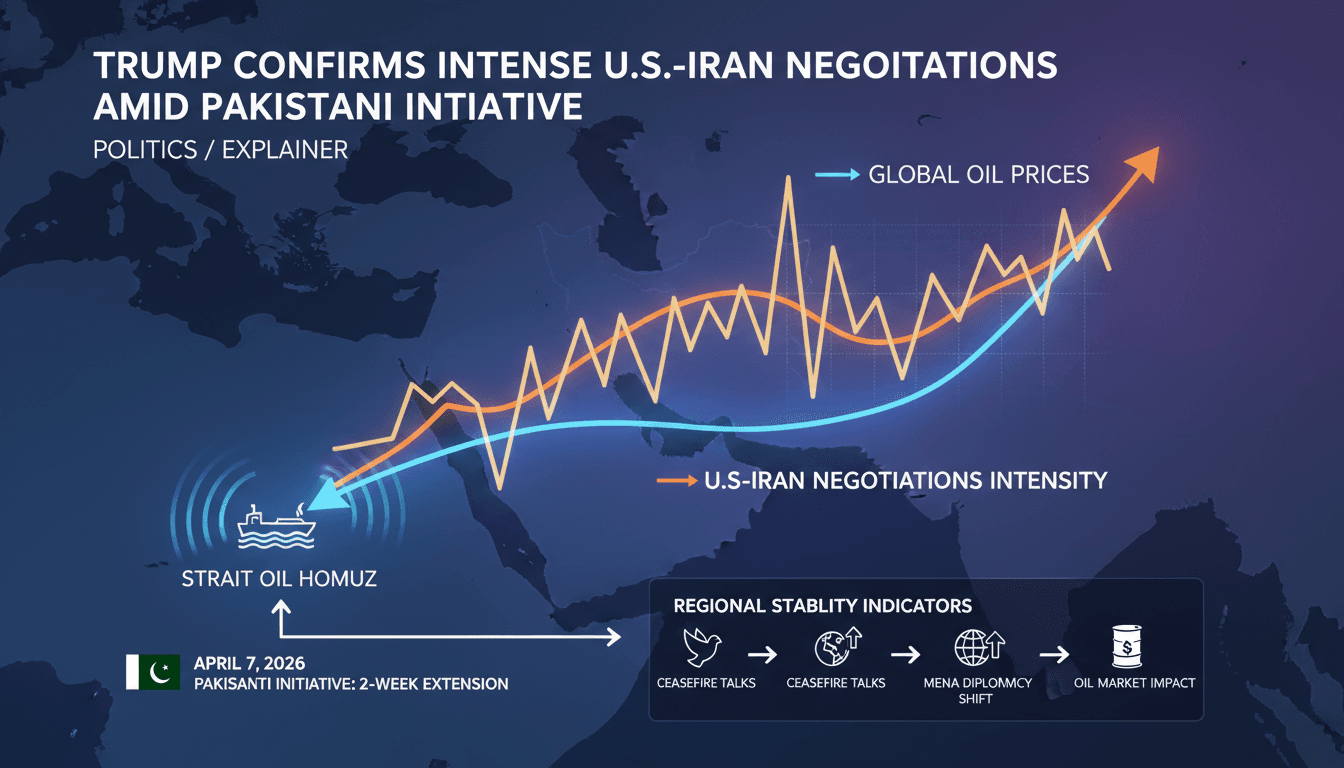
- Oil prices surged, with Brent crude surpassing $110 per barrel amid fears of escalating tensions and potential military action.
The context you actually need
- The U.S.-Iran conflict escalated following U.S. and Israeli strikes that killed Iranian leaders, leading to Iran closing the Strait of Hormuz.
- Pakistan emerged as a mediator, proposing a peace plan and facilitating discussions among regional powers to de-escalate tensions.
- Global oil markets are sensitive to developments in the Strait of Hormuz, a critical shipping route for energy supplies, making any disruptions impactful.
What's really happening
The current U.S.-Iran negotiations are a culmination of escalating tensions that began with the assassination of Iranian Supreme Leader Ayatollah Ali Khamenei in February 2026. This event triggered a series of retaliatory actions from Iran, including the closure of the Strait of Hormuz, a vital artery for global oil shipments. As a result, oil prices surged, reaching a peak of $117.63 per barrel, reflecting market anxiety over supply disruptions.
In response to the crisis, President Trump set a deadline for reopening the strait, which was initially targeted for April 6, 2026. However, as the deadline approached, the situation remained fraught with uncertainty. Pakistan's initiative to extend this deadline by two weeks represents a strategic diplomatic effort to stabilize the region and prevent military escalation. Trump's acknowledgment of "intense negotiations" signals a willingness to engage in dialogue, but the stakes remain high. A senior Iranian official's statement that Iran is "ready for peace as well as for war" underscores the duality of the situation—while there is a path toward de-escalation, the potential for conflict looms large.
The Pentagon's preparations for military action against Iranian energy and nuclear sites add another layer of complexity. These plans emphasize minimizing civilian impact, but any military engagement could further destabilize the region and disrupt oil supplies. The involvement of multiple stakeholders, including Pakistan, Saudi Arabia, and Turkey, highlights the geopolitical intricacies at play. As these countries coordinate their efforts, they aim to balance their interests while navigating the potential fallout from any military actions.
The broader implications of these negotiations extend beyond immediate diplomatic outcomes. If successful, they could lead to a stabilization of oil prices, which would benefit economies heavily reliant on energy imports. Conversely, failure to reach an agreement could exacerbate tensions, leading to further military conflict and economic repercussions, particularly for nations dependent on the Strait of Hormuz for energy supplies.
Who feels it first (and how)
- Energy consumers: Increased fuel prices directly affect household budgets and business operating costs.
- International traders: Disruptions in shipping routes impact logistics and supply chain costs.
- Investors in oil markets: Volatility in oil prices can lead to significant financial gains or losses.
What to watch next
- Negotiation outcomes: The success or failure of the U.S.-Iran talks will directly influence oil prices and market stability.
- Military actions: Any escalation in military engagement could lead to immediate disruptions in oil supply and further price increases.
- Regional alliances: The response from other countries involved in the negotiations, particularly Pakistan and Saudi Arabia, will shape the geopolitical landscape.
Oil prices are currently elevated due to geopolitical tensions.
Continued negotiations will influence market perceptions and potentially stabilize prices.
The long-term impact of these negotiations on U.S.-Iran relations and regional stability remains uncertain.
Frequently Asked Questions
- Why it matters?
- The ongoing U.S.-Iran negotiations could stabilize oil prices and prevent further economic disruptions in global markets.
- What happened (in 30 seconds)?
- Trump confirmed that intense negotiations with Iran are underway, spurred by a Pakistani initiative for a two-week extension on a key deadline. Iran expressed readiness for both peace and potential conflict, highlighting the precarious balance in the region. Oil prices surged, with Brent crude surpassing $110 per barrel amid fears of escalating tensions and potential military action.
- What's really happening?
- The current U.S.-Iran negotiations are a culmination of escalating tensions that began with the assassination of Iranian Supreme Leader Ayatollah Ali Khamenei in February 2026. This event triggered a series of retaliatory actions from Iran, including the closure of the Strait of Hormuz, a vital artery for global oil shipments. As a result, oil prices surged, reaching a peak of $117.63 per barrel, reflecting market anxiety over supply disruptions. In response to the crisis, President Trump set a
- Who feels it first (and how)?
- Energy consumers: Increased fuel prices directly affect household budgets and business operating costs. International traders: Disruptions in shipping routes impact logistics and supply chain costs. Investors in oil markets: Volatility in oil prices can lead to significant financial gains or losses.
- What to watch next?
- Negotiation outcomes: The success or failure of the U.S.-Iran talks will directly influence oil prices and market stability. Military actions: Any escalation in military engagement could lead to immediate disruptions in oil supply and further price increases. Regional alliances: The response from other countries involved in the negotiations, particularly Pakistan and Saudi Arabia, will shape the geopolitical landscape.
Arabic-language coverage of political affairs and current events.
"Okaz political coverage typically follows mainstream Saudi framing on national and regional affairs."
— A47 Editor
وسط تفاؤل بشأن المبادرة الباكستانية.. ترمب: المفاوضات محتدمة
In a significant political development, U.S. President Donald Trump confirmed that intense negotiations are ongoing with Iran, coinciding with Pakistan's request for a two-week extension of a deadline and the opening of the Strait of Hormuz as a good...
Regional coverage and analysis focused on politics, diplomacy, and business across the Middle East.
"Al-Monitor is known for analytical reporting on Middle East politics and policy developments."
— A47 Editor
Trump aware of Pakistani proposal and will respond, White House says
U.S. President Donald Trump has acknowledged a proposal from Pakistan for a two-week extension on a deadline he set for Iran, with the White House confirming that a response will be forthcoming. This development comes amid ongoing tensions regarding ...
Focused political reporting and governmental affairs.
"NBC News is a mainstream media outlet known for comprehensive national and international news coverage with a centrist to slightly left-leaning editorial tone."
— A47 Editor
Trump ‘aware’ of Pakistan proposal to extend deadline for Iran by two weeks
President Trump is aware of a proposal from Pakistan to extend the deadline for Iran to negotiate a deal regarding the reopening of the Strait of Hormuz by two weeks. This comes as tensions escalate, with Trump warning that failure to reach an agreem...
European coverage of Middle East politics and security issues.
"France 24 offers international reporting with a European editorial perspective."
— A47 Editor
Iran positively reviewing Pakistan’s request for a two-week ceasefire, source says
Iran is currently reviewing Pakistan's request for a two-week ceasefire amid escalating tensions with the United States, particularly following President Donald Trump's ultimatum demanding the reopening of the strategic Strait of Hormuz. White House ...
24/7 international news from a French perspective in multiple languages.
"France 24 is viewed as a globally focused outlet with balanced coverage and a European perspective."
— A47 Editor
Iran positively reviewing Pakistan’s request for a two-week ceasefire, source says
Iran is currently reviewing Pakistan's request for a two-week ceasefire amid escalating tensions with the United States, particularly following President Donald Trump's ultimatum demanding the reopening of the strategic Strait of Hormuz. White House ...
Oil, metals, and agriculture: supply/demand headlines, OPEC chatter, inventories, and price action.
"Solid tape for energy and metals traders tracking macro and micro catalysts."
— A47 Editor
Trump aware of Pakistani proposal and will respond, White House says
The White House confirmed that President Trump is aware of a ceasefire proposal from Pakistan and intends to respond. This announcement comes amid ongoing tensions in the region, particularly concerning Iran and the Strait of Hormuz.