
Indonesia's central bank maintains interest rates amid Middle East tensions
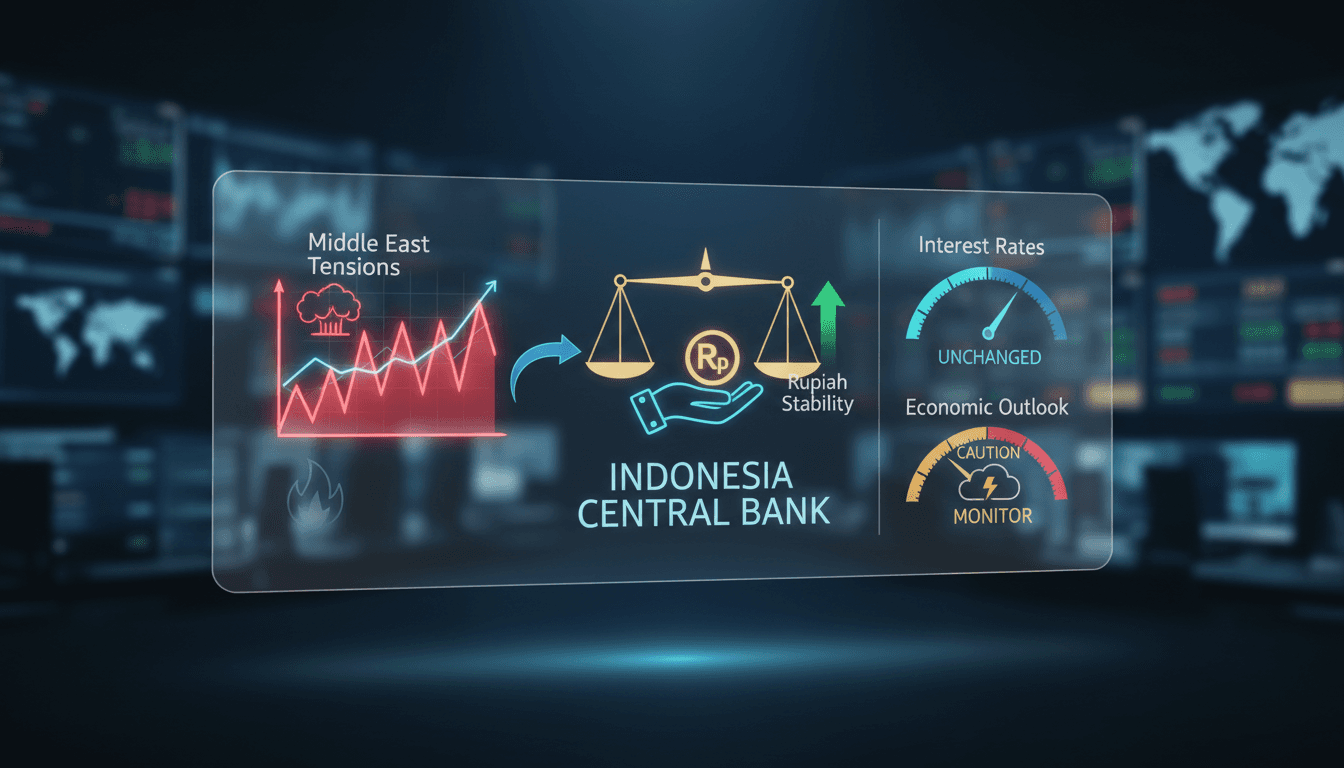
Here's what it means for you.
The stability of Indonesia's economy is closely tied to geopolitical developments in the Middle East.
What happened
Indonesia's central bank held interest rates steady to support the rupiah amidst Middle East war fallout.
The Context
- The ongoing conflict in the Middle East is impacting global economic stability.
- Maintaining interest rates is a strategy to bolster the national currency.
- The decision reflects cautious economic sentiment in Indonesia.
Takeaway
The central bank's decision highlights the importance of geopolitical stability for economic policy.
Pan-Arab news coverage spanning politics, business, sports, and regional affairs.
"Asharq Al-Awsat reflects a broad Arab editorial perspective with strong attention to regional geopolitics."
— A47 Editor
«المركزي الإندونيسي» يثبت الفائدة لدعم الروبية وسط تداعيات الحرب
The Indonesian central bank has decided to keep interest rates unchanged in a move aimed at supporting the stability of the rupiah amid the repercussions of the war in Iran. This decision reflects the bank's commitment to maintaining economic stabili...
Key macro releases (CPI, jobs, PMIs), surprise indexes, and market implications.
"Great for data-print awareness and instant read-through to rates and risk assets."
— A47 Editor
Indonesia’s central bank holds rates steady amid Middle East war fallout
Indonesia's central bank has decided to maintain its interest rates amid ongoing geopolitical tensions resulting from the conflict in the Middle East. This decision reflects a cautious approach to economic stability as the region's instability contin...
Social/economic commentary and analysis relevant to business and markets.
"WSJ blends data-driven economic insight with commentary on policy and society."
— A47 Editor
Indonesia’s Central Bank Holds as Middle East Risks Dim Outlook
Indonesia's central bank has opted to maintain its interest rates amid ongoing geopolitical tensions stemming from the conflict in the Middle East, reflecting a cautious approach to economic stability.