
Algeria Launches National Committee for Healthcare Quality Improvement
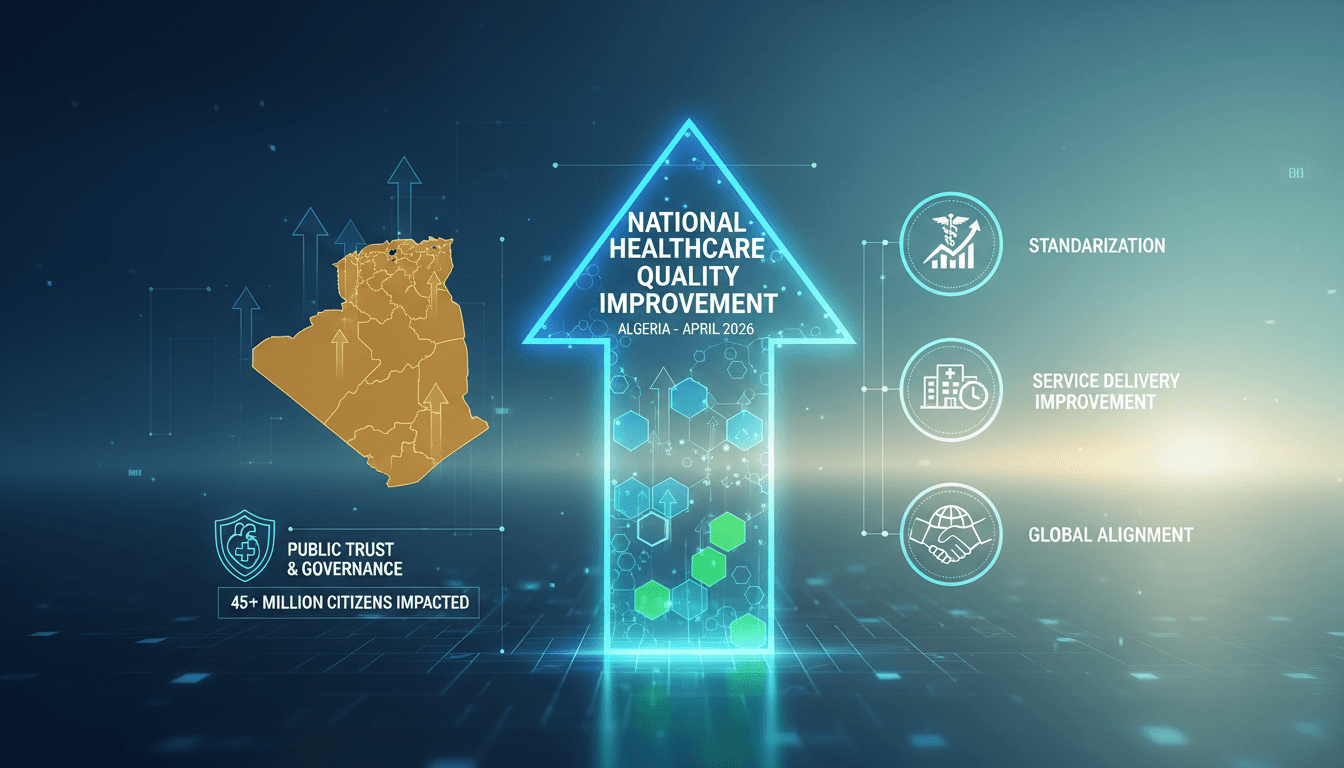
Here's what it means for you.
If you operate in the healthcare sector, understanding Algeria's new standards could influence regional practices and expectations.
Why it matters
This initiative aims to unify healthcare quality across Algeria, impacting over 45 million citizens and potentially influencing regional health standards.
What happened (in 30 seconds)
- On April 19, 2026, Algeria's Health Minister inaugurated the National Evaluation Committee in Algiers.
- The committee's goal is to standardize healthcare quality, evaluate performance, and enhance governance across public and private institutions.
- This initiative aligns with international benchmarks and aims to foster transparency and public trust in the healthcare system.
The context you actually need
- Algeria's healthcare sector has been undergoing reforms to address disparities and improve infrastructure amid economic diversification efforts.
- The new committee implements provisions from the national health law, responding to the need for unified standards and performance evaluation.
- This shift emphasizes a results-oriented management approach, aiming to create a quality culture in a system serving a large population.
What's really happening
On April 19, 2026, Health Minister Professor Mohamed Siddiq Ait Messaoudan officially launched the National Evaluation Committee, a multidisciplinary body designed to tackle the pressing need for standardized healthcare quality in Algeria. This initiative is not merely a bureaucratic exercise; it represents a strategic pivot in how healthcare is managed and delivered across the nation.
The committee comprises a diverse group of stakeholders, including representatives from central administration, healthcare staff, experts, and professors. Their collective expertise is crucial for establishing a framework that will unify quality standards and ensure that both public and private healthcare institutions are held to the same high benchmarks. This is particularly important in a country where healthcare disparities have been a longstanding issue, exacerbated by economic challenges and rising public expectations.
The committee's responsibilities are extensive. They will analyze national performance indicators, produce policy reports, and organize accreditation systems. Training evaluators and disseminating best practices are also key components of their mandate. By focusing on these areas, the committee aims to foster a culture of continuous improvement and transparency, which is essential for rebuilding public trust in the healthcare system.
This initiative aligns with international healthcare standards, which is vital for Algeria as it seeks to integrate more fully into the global health landscape. The current health expenditure in Algeria stands at 6.2% of GDP, according to the latest World Bank data. This figure indicates a commitment to investing in healthcare, but it also highlights the need for effective management of these resources to ensure that they translate into improved health outcomes for citizens.
The establishment of the National Evaluation Committee is a response to the urgent need for a cohesive strategy in healthcare governance. By implementing standardized quality metrics, Algeria is taking a significant step toward enhancing service efficacy and ensuring that healthcare institutions are accountable for their performance. This shift is expected to have far-reaching implications, not just for healthcare providers but also for the millions of citizens who rely on these services.
Who feels it first (and how)
- Healthcare providers: Hospitals and clinics will need to adapt to new standards and accreditation processes.
- Patients: Citizens will experience changes in service quality and transparency in healthcare delivery.
- Healthcare professionals: Staff will undergo training and may face new performance evaluations.
- Investors: Stakeholders in the healthcare sector may see shifts in investment opportunities based on the new standards.
What to watch next
- Implementation of standards: Monitor how quickly and effectively the new standards are adopted across healthcare institutions. This will indicate the initiative's success.
- Public feedback: Watch for citizen responses to changes in service quality, which will reflect the initiative's impact on public trust.
- International collaboration: Look for partnerships with international health organizations that may arise as Algeria aligns with global benchmarks.
The National Evaluation Committee has been established and is actively working on standardizing healthcare quality.
There will be a gradual improvement in healthcare service quality as institutions adapt to new standards.
The long-term impact on public trust and health outcomes remains to be seen as the initiative unfolds.
Frequently Asked Questions
- Why it matters?
- This initiative aims to unify healthcare quality across Algeria, impacting over 45 million citizens and potentially influencing regional health standards.
- What happened (in 30 seconds)?
- On April 19, 2026, Algeria's Health Minister inaugurated the National Evaluation Committee in Algiers. The committee's goal is to standardize healthcare quality, evaluate performance, and enhance governance across public and private institutions. This initiative aligns with international benchmarks and aims to foster transparency and public trust in the healthcare system.
- What's really happening?
- On April 19, 2026, Health Minister Professor Mohamed Siddiq Ait Messaoudan officially launched the National Evaluation Committee, a multidisciplinary body designed to tackle the pressing need for standardized healthcare quality in Algeria. This initiative is not merely a bureaucratic exercise; it represents a strategic pivot in how healthcare is managed and delivered across the nation. The committee comprises a diverse group of stakeholders, including representatives from central administratio
- Who feels it first (and how)?
- Healthcare providers: Hospitals and clinics will need to adapt to new standards and accreditation processes. Patients: Citizens will experience changes in service quality and transparency in healthcare delivery. Healthcare professionals: Staff will undergo training and may face new performance evaluations. Investors: Stakeholders in the healthcare sector may see shifts in investment opportunities based on the new standards.
- What to watch next?
- Implementation of standards: Monitor how quickly and effectively the new standards are adopted across healthcare institutions. This will indicate the initiative's success. Public feedback: Watch for citizen responses to changes in service quality, which will reflect the initiative's impact on public trust. International collaboration: Look for partnerships with international health organizations that may arise as Algeria aligns with global benchmarks.
Algerian and regional news coverage.
"Echorouk is a major Algerian outlet with broad national reporting."
— A47 Editor
الصحة: لجنة جديدة لضبط المعايير وتحسين الخدمات
On Sunday, Minister of Health Professor Mohamed Sidik Ait Massoudan inaugurated the National Evaluation Committee aimed at standardizing and accrediting health institutions. This initiative is seen as a pivotal step towards establishing a unified nat...
Algerian news with politics, society, and sports coverage.
"Ennahar Online is a high-volume Algerian outlet."
— A47 Editor
تنصيب اللجنة الوطنية للتقييم بهدف تقييس واعتماد مؤسسات الصّحة
On Sunday, Professor Mohamed Sidik Ait Massoudan, the Minister of Health, presided over the inauguration of the National Evaluation Committee at the Ministry of Health. This committee aims to standardize and accredit health institutions, with the att...