
RMT Union Initiates Strikes on London Underground Over Workweek Dispute
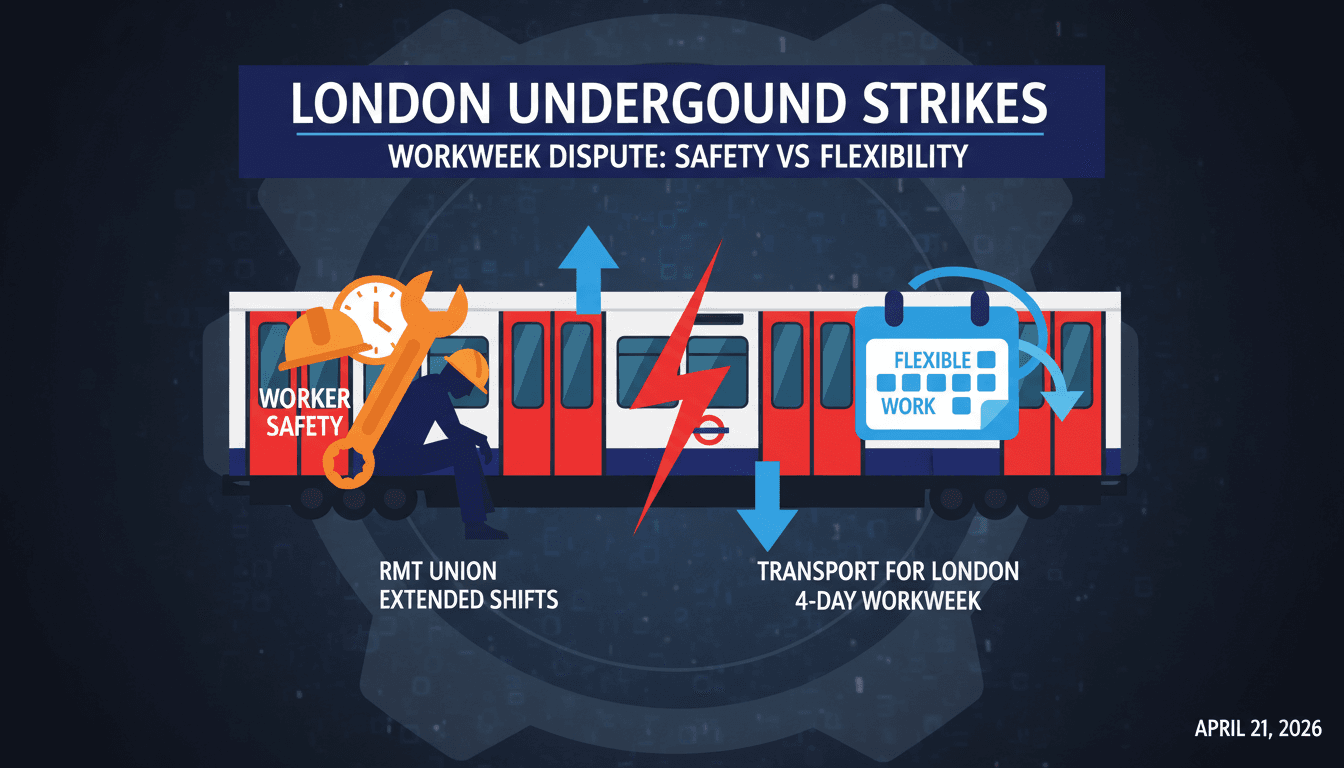
Here's what it means for you.
The ongoing strikes signal a critical moment for work culture, emphasizing the need for balance between flexibility and safety in the workplace.
The Vibe
A wave of industrial action is sweeping through London, as RMT drivers reject a proposed four-day workweek, citing safety concerns over fatigue.
What it signals
This situation highlights a growing tension between worker rights and organizational flexibility. As companies experiment with condensed work schedules, the pushback from labor unions reveals a deeper anxiety about employee well-being and job security. The outcome of these strikes could redefine work culture across sectors, influencing how businesses approach employee hours and safety.
Why it's happening now
1. The rise of flexible work arrangements has led to increased scrutiny over employee health and safety, particularly in high-stakes environments like public transport. 2. Previous industrial actions have set a precedent, emboldening unions to take a stand against perceived threats to worker welfare. 3. Ongoing negotiations between unions and employers are increasingly contentious, reflecting broader economic pressures and the need for sustainable work practices.
Who it's for (and who it leaves out)
The core beneficiaries of this strike are the RMT union members advocating for safer working conditions. However, the strikes may leave out commuters and businesses reliant on the Tube, who face disruptions without a voice in the negotiations.
What to watch next
1. Monitor the response from Transport for London (TfL) and any potential concessions made to the RMT, which could influence future negotiations across industries. 2. Keep an eye on public sentiment regarding work-life balance, as this could shape policy changes in labor laws and corporate practices.
Visual Directive: A striking infographic illustrating the tension between worker safety and flexible work arrangements in the context of the London Underground strikes.
The strikes are confirmed and scheduled to commence on 21 April 2026.
Disruptions to Tube services will lead to increased demand for alternative transport options.
The long-term impact on labor relations and work culture in the UK remains to be seen.
United Kingdom-focused news including local politics, business, and social issues.
"BBC News is widely regarded as a reputable international news organization, known for its impartial tone and public service mandate."
— A47 Editor
London Tube strikes: What you need to know
London Underground drivers who are members of the RMT union are scheduled to strike in April, May, and June due to disputes over working hours. This action is expected to disrupt services across the London Tube network during the strike periods.
UK and global business, economy, and markets coverage.
"Sky News is often seen as a center-right outlet in the UK, known for rolling news and breaking business stories."
— A47 Editor
Tube strikes: Full list of dates and lines affected in walkout
Heavy disruption is affecting the Tube in London this week as train drivers initiate a strike in response to changes in their working conditions. The strike has led to significant delays and cancellations across various lines, impacting commuters and...
UK politics, business, and social stories.
"Sky News is a UK-based 24-hour channel known for fast-breaking news and political coverage."
— A47 Editor
Tube strikes: Full list of dates and lines affected in walkout
Heavy disruption is anticipated on the Tube this week as train drivers initiate a strike in response to changes in their working conditions. The strike is expected to affect multiple lines, leading to significant delays and inconvenience for commuter...