
Trump issues ultimatum to Iran over Strait of Hormuz with threat of military strikes
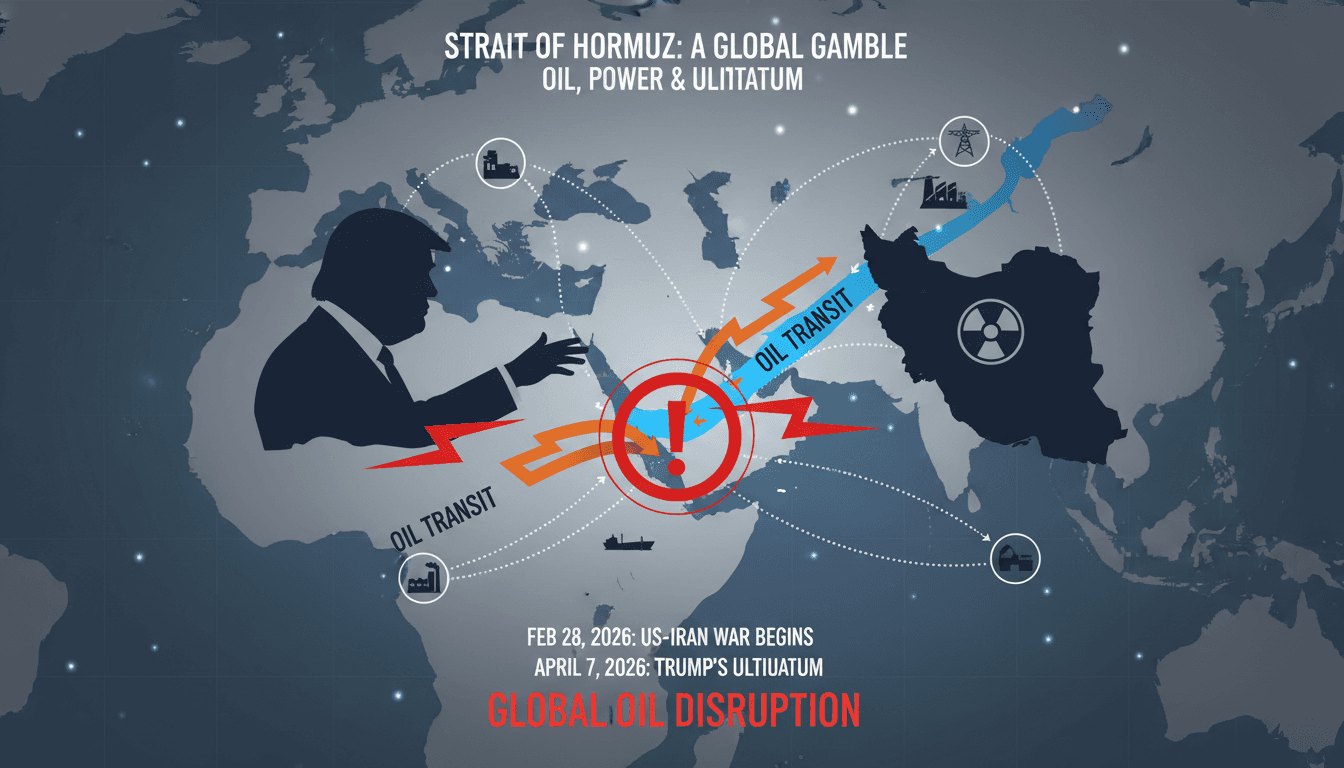
Here's what it means for you.
If you rely on global oil markets or energy imports, escalating tensions in the Persian Gulf could affect prices and availability.
Why it matters
The Strait of Hormuz is a critical chokepoint for global oil transit, with 25% of seaborne oil trade passing through it annually.
What happened (in 30 seconds)
- On April 5, 2026, U.S. President Donald Trump issued a military ultimatum to Iran, threatening strikes on its power plants and bridges unless the Strait of Hormuz is reopened.
- The U.S.-Iran war, which began on February 28, escalated with airstrikes and retaliatory missile attacks, disrupting oil shipments and raising global prices.
- As the deadline approaches, Iranian civilians are forming human chains around power plants, while the Pentagon prepares for potential strikes.
The context you actually need
- The U.S.-Iran war began with U.S.-Israeli airstrikes targeting Iranian military sites amid stalled nuclear negotiations, leading to Iranian missile strikes on Israel and U.S. bases.
- Iran's closure of the Strait of Hormuz has already disrupted global oil shipments, raising prices and causing economic concerns in oil-dependent regions like the UAE.
- Trump's threats are part of a broader strategy to weaken Iran’s military capabilities and economic resources, particularly its oil revenue from the South Pars gas field.
What's really happening
The current escalation between the U.S. and Iran is rooted in a complex web of geopolitical tensions, economic interests, and military strategies. The U.S.-Iran war, which ignited on February 28, 2026, has seen a series of aggressive actions from both sides, including U.S.-Israeli airstrikes that targeted Iranian nuclear and military sites. These strikes were a response to Iran's missile attacks on Israel and U.S. bases in the Gulf, which were perceived as direct threats to U.S. interests and allies in the region.
The Strait of Hormuz, a vital maritime corridor, plays a crucial role in global oil trade, with 25% of seaborne oil passing through it annually. Iran's decision to close the strait has significant implications for global energy markets, as it disrupts oil shipments and raises prices. Trump's ultimatum to Iran, which includes threats to strike critical infrastructure like power plants and bridges, aims to dismantle Iran's control over this strategic chokepoint and pressure its economy by targeting revenue sources.
The stakes are high, as the U.S. seeks to neutralize Iran's missile capabilities and compel the regime to make concessions. Previous threats in March targeted energy infrastructure, with deadlines extended amid ongoing rescue operations and stalled ceasefire talks mediated by various countries. The looming deadline of April 7, 2026, has heightened tensions, leading to Iranian civilians forming human chains around power plants in a show of defiance.
The potential for military strikes raises concerns about regional stability and the risk of further escalation. If the U.S. follows through on its threats, it could lead to retaliatory actions from Iran, impacting not only the Gulf states but also global oil prices and supply chains. The situation is fluid, with ceasefire talks stalled and Iran's demands remaining unmet, indicating that the conflict could escalate further if diplomatic solutions are not found.
Who feels it first (and how)
- Energy sector professionals: Increased volatility in oil prices could affect jobs and investments.
- Consumers in oil-dependent regions: Rising fuel prices may impact transportation and living costs.
- Investors in global markets: Market instability could lead to losses in energy stocks and related sectors.
- Civilians in Iran and Gulf states: Potential military strikes could lead to humanitarian crises and economic hardships.
What to watch next
- Iran's response to the ultimatum: How Iran reacts to Trump's threats will shape the immediate geopolitical landscape and impact oil prices.
- Global oil prices: Fluctuations in oil prices will signal market reactions to the ongoing conflict and may affect consumer costs.
- Ceasefire negotiations: Progress or failure in diplomatic talks could either de-escalate tensions or lead to further military actions.
The U.S. has issued an ultimatum to Iran, threatening military action.
Global oil prices will fluctuate in response to the escalating conflict.
The outcome of ceasefire negotiations and potential retaliatory actions from Iran remain uncertain.
Frequently Asked Questions
- Why it matters?
- The Strait of Hormuz is a critical chokepoint for global oil transit, with 25% of seaborne oil trade passing through it annually.
- What happened (in 30 seconds)?
- On April 5, 2026, U.S. President Donald Trump issued a military ultimatum to Iran, threatening strikes on its power plants and bridges unless the Strait of Hormuz is reopened. The U.S.-Iran war, which began on February 28, escalated with airstrikes and retaliatory missile attacks, disrupting oil shipments and raising global prices. As the deadline approaches, Iranian civilians are forming human chains around power plants, while the Pentagon prepares for potential strikes.
- What's really happening?
- The current escalation between the U.S. and Iran is rooted in a complex web of geopolitical tensions, economic interests, and military strategies. The U.S.-Iran war, which ignited on February 28, 2026, has seen a series of aggressive actions from both sides, including U.S.-Israeli airstrikes that targeted Iranian nuclear and military sites. These strikes were a response to Iran's missile attacks on Israel and U.S. bases in the Gulf, which were perceived as direct threats to U.S. interests and al
- Who feels it first (and how)?
- Energy sector professionals: Increased volatility in oil prices could affect jobs and investments. Consumers in oil-dependent regions: Rising fuel prices may impact transportation and living costs. Investors in global markets: Market instability could lead to losses in energy stocks and related sectors. Civilians in Iran and Gulf states: Potential military strikes could lead to humanitarian crises and economic hardships.
- What to watch next?
- Iran's response to the ultimatum: How Iran reacts to Trump's threats will shape the immediate geopolitical landscape and impact oil prices. Global oil prices: Fluctuations in oil prices will signal market reactions to the ongoing conflict and may affect consumer costs. Ceasefire negotiations: Progress or failure in diplomatic talks could either de-escalate tensions or lead to further military actions.
Macro commentary, policy analysis, growth/inflation themes, and global outlooks.
"Contextual macro coverage that complements day-to-day market headlines."
— A47 Editor
Iran latest: Pakistan asks Trump for extension as key deadline approaches
As the deadline for a potential deal with Iran approaches, Pakistan has requested an extension from former President Donald Trump regarding the reopening of the Strait of Hormuz, a critical maritime route for global oil shipments. This request comes ...
Global news coverage with extensive reporting on Middle Eastern conflicts and geopolitics.
"Al Jazeera is a Qatar-based broadcaster known for wide regional coverage and alternative perspectives."
— A47 Editor
Trump’s threat to strike Iran’s power plants looms
U.S. President Donald Trump has issued a stark ultimatum to Iran, declaring that if a deal is not reached by Tuesday, he will take military action against critical infrastructure, including power plants. This announcement follows a series of escalati...
Comprehensive coverage of Middle Eastern and global issues.
"Al Jazeera is a prominent voice from the Global South, especially the Middle East, with an emphasis on underreported stories."
— A47 Editor
Trump’s threat to strike Iran’s power plants looms
U.S. President Donald Trump has issued a stark ultimatum to Iran, declaring that if a deal is not reached by Tuesday, he will take military action against critical infrastructure, including power plants. This announcement follows a series of escalati...