
U.S. Secretary of State Directs Global Lobbying for 'Trade over Aid' UN Declaration
Here's what it means for you.
If you’re in international business or development, this shift could redefine how you engage with U.S. foreign policy and global markets.
Why it matters
This initiative signals a significant pivot in U.S. foreign policy, prioritizing economic partnerships over traditional aid, which could reshape global trade dynamics.
What happened (in 30 seconds)
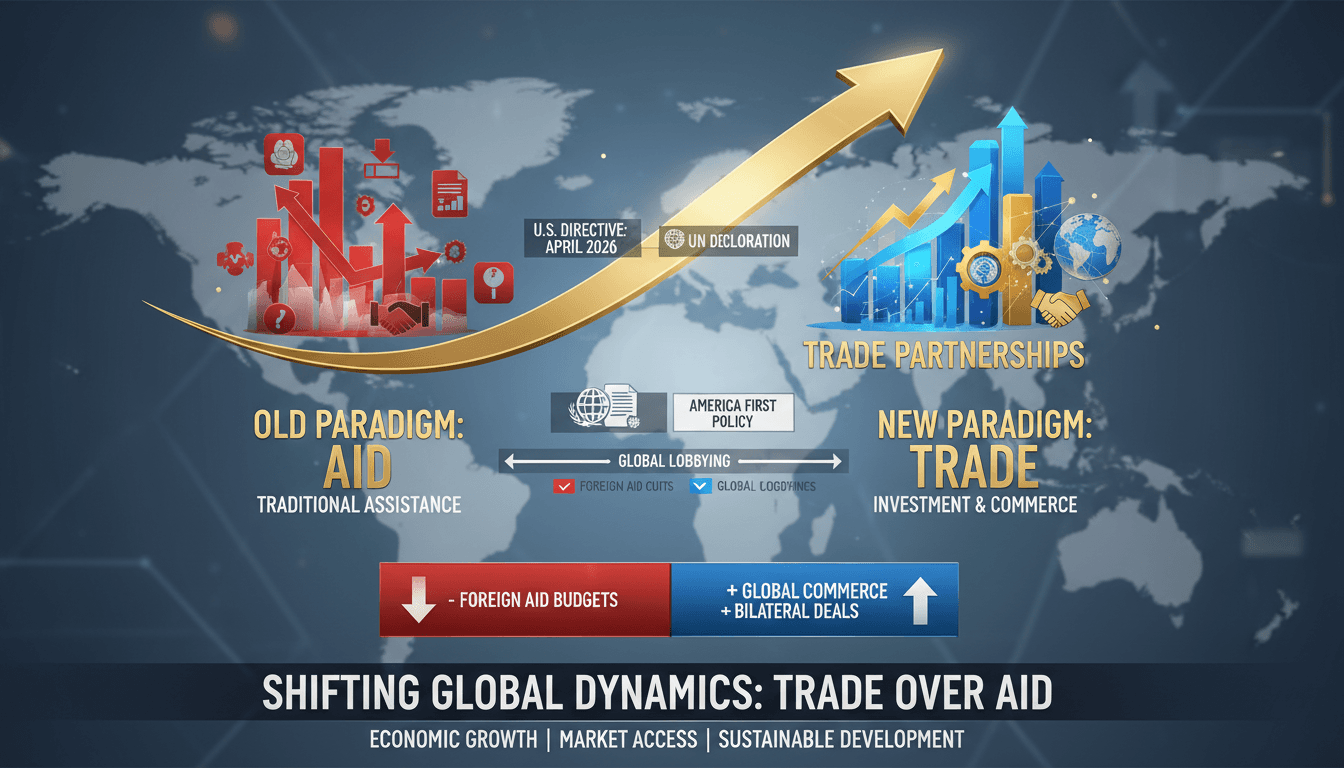
- On April 15, 2026, U.S. Secretary of State Marco Rubio sent a cable directing diplomats to secure signatures for a UN declaration endorsing 'trade over aid.'
- The policy shift emphasizes commercial partnerships and private investment, aligning with the Trump administration's 'America First' framework.
- Humanitarian organizations have criticized the move, arguing it prioritizes profits over essential aid, while the administration defends it as a means to reduce dependency.
The context you actually need
- Foreign aid cuts: The Trump administration has already reduced foreign aid by 23% in 2025, citing waste and dependency issues.
- Geopolitical strategy: This initiative is part of a broader strategy to counter China's influence through investment-led growth rather than traditional aid.
- U.S.-Africa business summits: Recent summits have resulted in $2.5 billion in deals, showcasing a shift towards economic engagement over humanitarian assistance.
What's really happening
The 'trade over aid' directive represents a fundamental shift in how the U.S. engages with the world, particularly in developing nations. By prioritizing trade and investment, the Trump administration aims to foster economic independence among nations, reducing their reliance on U.S. aid. This approach is rooted in the belief that free-market principles can drive prosperity more effectively than traditional foreign assistance programs, which the administration has labeled as inefficient and prone to corruption.
The cable sent by Secretary Rubio outlines a clear strategy for U.S. diplomats: to lobby allied nations for support of the UN declaration by April 20, 2026. This effort is not merely about securing signatures; it’s about embedding a new economic philosophy into international relations. The administration is leveraging the UN platform to promote American values and business opportunities, framing the initiative as a way to enhance global prosperity through capitalism.
Critics, including humanitarian organizations like the Rockefeller Foundation and Oxfam, argue that this shift endangers global relief efforts and undermines U.S. traditions of providing aid in times of need. They contend that prioritizing trade over aid could lead to increased suffering in vulnerable populations who rely on humanitarian assistance. However, administration officials counter that this approach will ultimately lead to more sustainable economic growth and less dependency on foreign aid.
The implications of this policy are far-reaching. Countries that have historically relied on U.S. aid may need to adapt quickly to a new economic landscape where trade agreements and private investments take precedence. This could lead to a re-evaluation of how these nations engage with the U.S. and other global powers, particularly China, which has been expanding its influence through investment in developing regions.
As the U.S. moves forward with this initiative, the focus will likely shift to how effectively it can negotiate trade deals that benefit both American businesses and the economies of partner nations. The upcoming UN launch event in late April will be a critical moment for gauging international support and the potential for this new paradigm to take root.
Who feels it first (and how)
- International businesses: Companies looking to expand into new markets may find new opportunities for partnerships and investments.
- Developing nations: Countries that previously relied on U.S. aid will need to pivot towards trade agreements and private investments.
- Humanitarian organizations: NGOs may face funding challenges and increased scrutiny as the focus shifts away from aid.
What to watch next
- Signature collection: Monitor the number of countries that sign the UN declaration by the April 20 deadline, as this will indicate international support for the initiative.
- Market reactions: Watch for shifts in investment patterns, particularly in regions that have historically received U.S. aid, to see how businesses adapt to the new focus on trade.
- Humanitarian response: Keep an eye on how humanitarian organizations respond to this policy shift and whether they can adapt their strategies to continue supporting vulnerable populations.
The U.S. has cut foreign aid significantly, and the 'trade over aid' initiative is officially underway.
Countries will need to adjust their economic strategies to align with U.S. trade priorities, potentially leading to new partnerships.
The long-term impact on humanitarian efforts and global relief operations remains uncertain as the focus shifts away from aid.
Frequently Asked Questions
- Why it matters?
- This initiative signals a significant pivot in U.S. foreign policy, prioritizing economic partnerships over traditional aid, which could reshape global trade dynamics.
- What happened (in 30 seconds)?
- On April 15, 2026, U.S. Secretary of State Marco Rubio sent a cable directing diplomats to secure signatures for a UN declaration endorsing 'trade over aid.' The policy shift emphasizes commercial partnerships and private investment, aligning with the Trump administration's 'America First' framework. Humanitarian organizations have criticized the move, arguing it prioritizes profits over essential aid, while the administration defends it as a means to reduce dependency.
- What's really happening?
- The 'trade over aid' directive represents a fundamental shift in how the U.S. engages with the world, particularly in developing nations. By prioritizing trade and investment, the Trump administration aims to foster economic independence among nations, reducing their reliance on U.S. aid. This approach is rooted in the belief that free-market principles can drive prosperity more effectively than traditional foreign assistance programs, which the administration has labeled as inefficient and pron
- Who feels it first (and how)?
- International businesses: Companies looking to expand into new markets may find new opportunities for partnerships and investments. Developing nations: Countries that previously relied on U.S. aid will need to pivot towards trade agreements and private investments. Humanitarian organizations: NGOs may face funding challenges and increased scrutiny as the focus shifts away from aid.
- What to watch next?
- Signature collection: Monitor the number of countries that sign the UN declaration by the April 20 deadline, as this will indicate international support for the initiative. Market reactions: Watch for shifts in investment patterns, particularly in regions that have historically received U.S. aid, to see how businesses adapt to the new focus on trade. Humanitarian response: Keep an eye on how humanitarian organizations respond to this policy shift and whether they can adapt their strategies t
News across North, Central, and South America including politics and economics.
"France 24 is viewed as a globally focused outlet with balanced coverage and a European perspective."
— A47 Editor
Trump administration to lobby allies to support 'trade over aid' push
The Trump administration is advocating for a global endorsement of a 'trade over aid' initiative at the United Nations, aiming to shift the focus from direct foreign assistance to promoting trade opportunities led by private enterprises. This policy ...
Editor-curated FT homepage stories spanning markets, business, world, and opinion.
"The Financial Times is a globally respected business publication with a centrist/center-left tone and strong markets focus."
— A47 Editor
Trump administration urges business partnerships instead of foreign aid
The Trump administration has launched a 'trade over aid' initiative, urging businesses to form partnerships rather than relying on traditional foreign aid, a move that has drawn criticism from the non-profit sector.
News from the United States including domestic politics, society, and culture.
"The Guardian is known for its progressive editorial stance and in-depth analysis, often advocating for social justice, environmental issues, and liberal values."
— A47 Editor
Trump officials urge other countries to join new ‘trade over aid’ push
The Trump administration is actively seeking international support for a new development policy initiative termed 'trade over aid,' which aims to shift focus from direct aid to developing nations towards enhancing trade opportunities led by private c...
Top international stories selected by The Guardian editors.
"The Guardian is known for its progressive editorial stance and in-depth analysis."
— A47 Editor
Trump officials urge other countries to join ‘trade over aid’ push
The Trump administration is actively seeking international support for a 'trade over aid' initiative, aiming to shift global development policy away from direct aid to developing countries and towards increased trade opportunities led by private comp...
Key macro releases (CPI, jobs, PMIs), surprise indexes, and market implications.
"Great for data-print awareness and instant read-through to rates and risk assets."
— A47 Editor
Trump administration to lobby allies to support ’trade over aid’ push, cable shows
The Trump administration is actively lobbying allies to support its 'trade over aid' initiative, which encourages businesses to establish partnerships instead of relying on traditional foreign aid, as revealed in a recent cable. This strategy aims to...
Breaking news, politics, business, and entertainment from the U.S. and around the world.
"The New York Post is a tabloid-format newspaper known for its sensationalist headlines and conservative-leaning editorial tone."
— A47 Editor
Trump administration calls on other nations to sign ‘trade over aid’ declaration to ‘promote America First values’: report
The Trump administration is reportedly urging other nations to endorse a new initiative called 'trade over aid,' which encourages investment in U.S. companies rather than funding overseas development projects. Secretary of State Marco Rubio has direc...