
U.S. Initiates Naval Blockade of Strait of Hormuz Against Iranian Oil Exports
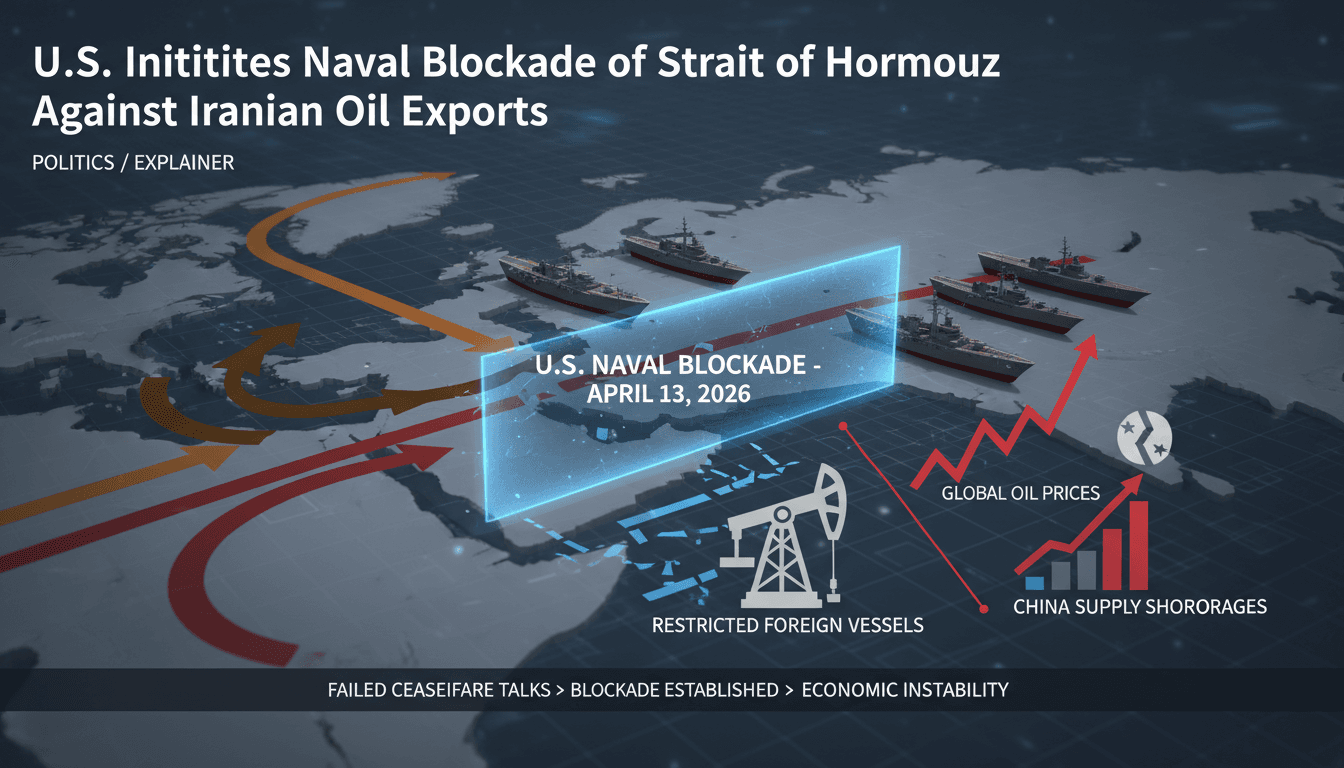
Here's what it means for you.
If you rely on global oil markets, prepare for potential price spikes and supply chain disruptions.
Why it matters
The U.S. blockade aims to economically isolate Iran, impacting global oil supply and prices.
What happened (in 30 seconds)
- On April 13, 2026, the U.S. initiated a naval blockade of the Strait of Hormuz in response to Iranian restrictions on foreign vessels.
- Iran's oil exports, primarily to China, totaling 1.5 million barrels per day, are now under threat, potentially leading to significant economic repercussions for Tehran.
- Iran has vowed to enforce its control over the strait, labeling the U.S. actions as illegal and promising countermeasures.
The context you actually need
- The U.S.-Iran conflict escalated in February 2026, with Iran imposing selective restrictions on maritime traffic, allowing its own tankers to operate while limiting others.
- Oil prices surged from $75-80 to $120-126 per barrel due to these tensions, benefiting Iran despite discounted sales to China.
- Failed ceasefire negotiations in Islamabad led to the U.S. blockade, which aims to disrupt Iran's oil revenue and assert control over the strategic waterway.
What's really happening
The "Besieging the Besiegers" operation marks a significant escalation in the ongoing U.S.-Iran conflict, which has roots in geopolitical tensions surrounding Iran's nuclear program and its regional influence. Since February 2026, Iran has strategically restricted access to the Strait of Hormuz, a vital maritime corridor for global oil shipments. By enforcing a permit and fee system for vessels, Iran effectively blockaded its adversaries while maintaining its oil exports. This selective blockade reduced daily ship traffic from approximately 130-150 vessels to fewer than five, forcing many to reroute around Africa's Cape of Good Hope, significantly increasing shipping times and costs.
In response to these provocations, U.S. President Donald Trump announced the naval blockade on April 13, 2026, aiming to halt Iran's oil shipments and economically isolate the country. The blockade is not merely a military maneuver; it is a calculated economic strategy designed to pressure Iran into compliance following failed diplomatic negotiations. The U.S. Navy's enforcement of this blockade involves positioning forces outside the strait to monitor and target Iranian exports, which could lead to heightened military confrontations in the region.
The implications of this blockade extend beyond immediate military concerns. With Iran exporting 1.5 million barrels of oil per day, primarily to China, the blockade threatens to disrupt global oil supply chains. As oil prices have already surged due to previous tensions, further increases are likely, which could exacerbate inflation and economic instability in oil-dependent regions, including the UAE and other Gulf states. The blockade also places significant pressure on China, which imports 90% of Iran's oil, potentially forcing Beijing to mediate between Washington and Tehran to secure its energy needs.
As the situation unfolds, the U.S. blockade could lead to a broader economic isolation of Iran, impacting its ability to fund military operations and regional influence. However, Iran's military has vowed to enforce its control over the Strait of Hormuz, indicating that the potential for conflict remains high. The U.S. and its allies must navigate this complex landscape carefully, balancing military readiness with diplomatic efforts to avoid further escalation.
Who feels it first (and how)
- Oil traders: Expect volatility in oil prices, impacting profit margins and trading strategies.
- Shipping companies: Face increased costs and longer transit times due to rerouted vessels.
- Consumers: May experience higher fuel prices and inflation as oil prices rise.
- Gulf states: Particularly the UAE, could see paralyzed exports and economic strain.
- China: Faces potential supply shortages, impacting its energy security and economic stability.
What to watch next
- Oil price fluctuations: Monitor how prices respond to the blockade and any Iranian countermeasures, as this will affect global markets.
- Military engagements: Watch for any escalations in military confrontations in the Strait of Hormuz, which could further destabilize the region.
- Diplomatic negotiations: Observe any renewed efforts by China or other nations to mediate between the U.S. and Iran, as this could influence the blockade's duration and effectiveness.
The U.S. has initiated a blockade of the Strait of Hormuz.
Oil prices will continue to rise, impacting global markets and economies.
The long-term effectiveness of the blockade in achieving U.S. objectives regarding Iran's nuclear program and regional influence.
Frequently Asked Questions
- Why it matters?
- The U.S. blockade aims to economically isolate Iran, impacting global oil supply and prices.
- What happened (in 30 seconds)?
- On April 13, 2026, the U.S. initiated a naval blockade of the Strait of Hormuz in response to Iranian restrictions on foreign vessels. Iran's oil exports, primarily to China, totaling 1.5 million barrels per day, are now under threat, potentially leading to significant economic repercussions for Tehran. Iran has vowed to enforce its control over the strait, labeling the U.S. actions as illegal and promising countermeasures.
- What's really happening?
- The "Besieging the Besiegers" operation marks a significant escalation in the ongoing U.S.-Iran conflict, which has roots in geopolitical tensions surrounding Iran's nuclear program and its regional influence. Since February 2026, Iran has strategically restricted access to the Strait of Hormuz, a vital maritime corridor for global oil shipments. By enforcing a permit and fee system for vessels, Iran effectively blockaded its adversaries while maintaining its oil exports. This selective blockade
- Who feels it first (and how)?
- Oil traders: Expect volatility in oil prices, impacting profit margins and trading strategies. Shipping companies: Face increased costs and longer transit times due to rerouted vessels. Consumers: May experience higher fuel prices and inflation as oil prices rise. Gulf states: Particularly the UAE, could see paralyzed exports and economic strain. China: Faces potential supply shortages, impacting its energy security and economic stability.
- What to watch next?
- Oil price fluctuations: Monitor how prices respond to the blockade and any Iranian countermeasures, as this will affect global markets. Military engagements: Watch for any escalations in military confrontations in the Strait of Hormuz, which could further destabilize the region. Diplomatic negotiations: Observe any renewed efforts by China or other nations to mediate between the U.S. and Iran, as this could influence the blockade's duration and effectiveness.
Pan-Arab news coverage spanning politics, business, sports, and regional affairs.
"Asharq Al-Awsat reflects a broad Arab editorial perspective with strong attention to regional geopolitics."
— A47 Editor
ماذا يعني «حصار الحصار» في «هرمز»؟
Iran has imposed a blockade on the Strait of Hormuz, effectively restricting access for the global community while keeping the strait open for its own exports and imports. This action raises concerns about international shipping routes and regional s...
Sports reporting with a focus on Saudi and regional competitions.
"Okaz sports coverage is broad and audience-friendly, with strong attention to Saudi teams and leagues."
— A47 Editor
حصار «هرمز».. خسائر تهز الاقتصاد الإيراني
The British newspaper The Times reported devastating losses to the Iranian economy due to the U.S. maritime blockade of the Strait of Hormuz, estimating direct economic costs to Iran at approximately $435 million daily. The Iranian economy faces a cr...
Sports reporting with a focus on Saudi and regional competitions.
"Okaz sports coverage is broad and audience-friendly, with strong attention to Saudi teams and leagues."
— A47 Editor
بسبب حصار «هرمز».. 13 مليار دولار خسائر شهرية لاقتصاد إيران
A potential U.S. naval blockade of the Strait of Hormuz could result in significant economic losses for Iran, estimated at $435 million daily, translating to approximately $13 billion monthly. This is primarily due to a loss of $276 million in export...
Arabic-language reporting on global and regional news.
"BBC Arabic is part of the BBC, generally regarded for editorial standards and broad international coverage."
— A47 Editor
ترامب يفرض حصاراً على موانئ إيران، وطهران تؤكد أنها "لن تذعن" للتهديدات
Washington has imposed a comprehensive blockade on Iran's ports following stalled negotiations in Vienna due to extreme demands, with Iranian officials warning of a 'deadly spiral' in the Strait of Hormuz and asserting their refusal to yield to threa...
Arabic-language coverage of political affairs and current events.
"Okaz political coverage typically follows mainstream Saudi framing on national and regional affairs."
— A47 Editor
الألغام «التائهة» تعيق ملاحة «هرمز»!
Despite the ceasefire announcement, Iran remains unable to fully open the Strait of Hormuz to maritime traffic due to concerns over drifting naval mines. U.S. officials attribute this inability to Tehran's lack of capability in locating and swiftly r...