
Saudi Arabia Intercepts Five Ballistic Missiles Targeting Eastern Province
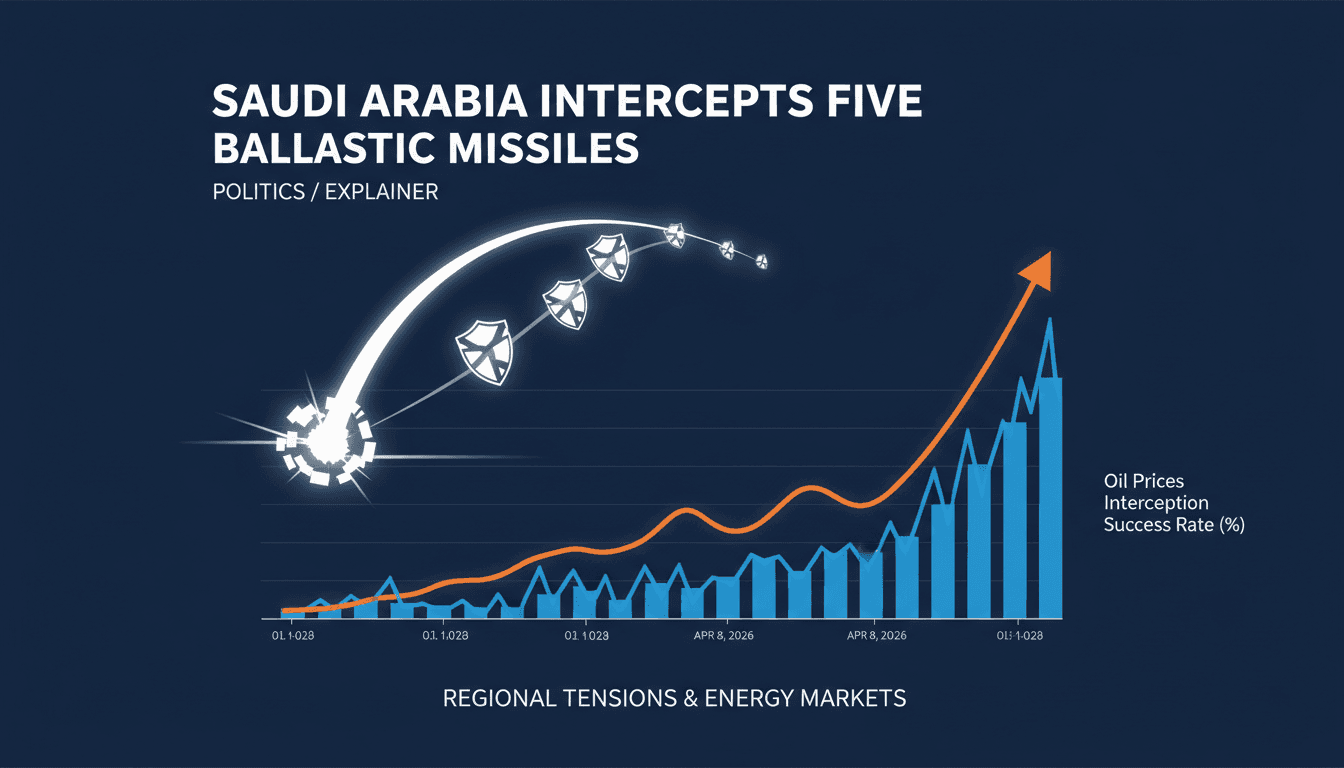
Here's what it means for you.
Increased geopolitical instability in the Gulf could lead to rising energy prices and potential disruptions in air travel.
Why it matters
The ongoing conflict and missile threats in the region directly impact global oil markets and security protocols.
What happened (in 30 seconds)
- Saudi air defenses intercepted and destroyed five ballistic missiles targeting the Eastern Province on April 8, 2026.
- This follows a series of similar interceptions, including 11 missiles and multiple drones on April 7, attributed to Iranian aggression.
- No casualties or significant damage were reported, but debris fell near critical energy facilities.
The context you actually need
- The interceptions are part of a broader conflict involving Iran and its proxies, escalating since late March 2026.
- Saudi Arabia's Eastern Province is crucial for oil production, making it a prime target for attacks.
- Regional tensions have risen sharply due to retaliatory strikes linked to U.S.-Israeli actions against Iranian interests.
What's really happening
The recent missile interceptions by Saudi Arabia are symptomatic of a larger, escalating conflict in the Gulf region, primarily driven by Iranian aggression. The backdrop is the ongoing 2026 Iran war, which has seen a marked increase in missile and drone attacks against Gulf states, particularly Saudi Arabia. These attacks are perceived as retaliatory measures against perceived threats from U.S.-Israeli operations targeting Iranian assets.
The successful interception of five ballistic missiles on April 8, 2026, is a significant achievement for the Royal Saudi Air Defense Forces, showcasing their capabilities in countering aerial threats. Major General Turki Al-Maliki's confirmation of the interceptions underscores the urgency and importance of maintaining robust defense systems in the face of escalating hostilities. The debris from these missiles fell near energy facilities, highlighting the potential risks to critical infrastructure, although no direct hits or casualties were reported.
The pattern of missile attacks has created a climate of fear and uncertainty, particularly in the Eastern Province, which is home to major Aramco oil and petrochemical facilities. The region has faced repeated assaults since late March, with prior incidents involving Houthi proxies and direct Iranian launches. This ongoing threat not only endangers lives and infrastructure but also has broader implications for global energy markets.
As the situation unfolds, the Saudi government has engaged in diplomatic discussions with regional allies, seeking solidarity and support against Iranian aggression. The aftermath of these interceptions has seen a spike in oil prices, with Brent crude nearing $120 per barrel, driven by fears of energy disruptions. This reflects the interconnectedness of regional security and global economic stability, where conflicts in the Gulf can lead to immediate repercussions in energy markets worldwide.
The lack of responsibility claims from the attackers further complicates the situation, leaving Saudi Arabia and its allies on high alert as they assess ongoing threats. The regional dynamics are shifting, and the potential for further escalations remains high, necessitating vigilance from all stakeholders involved.
Who feels it first (and how)
- Energy sector professionals: Increased oil prices and potential supply disruptions affect operations and profitability.
- Airline industry: Heightened security alerts may lead to flight delays and increased operational costs.
- Local residents in the Gulf: Increased military activity and potential for conflict create a climate of uncertainty and fear.
What to watch next
- Oil price fluctuations: Monitor Brent crude prices as they may indicate market reactions to ongoing conflicts.
- Military engagements: Watch for any escalation in military actions from Iran or its proxies, which could lead to further interceptions.
- Diplomatic developments: Pay attention to regional discussions among Gulf states and their allies, as these could shape future responses to threats.
Saudi Arabia successfully intercepted five ballistic missiles on April 8, 2026.
Continued military threats from Iran and its proxies, leading to further interceptions.
The long-term impact on global oil markets and regional stability as tensions evolve.
Frequently Asked Questions
- Why it matters?
- The ongoing conflict and missile threats in the region directly impact global oil markets and security protocols.
- What happened (in 30 seconds)?
- Saudi air defenses intercepted and destroyed five ballistic missiles targeting the Eastern Province on April 8, 2026. This follows a series of similar interceptions, including 11 missiles and multiple drones on April 7, attributed to Iranian aggression. No casualties or significant damage were reported, but debris fell near critical energy facilities.
- What's really happening?
- The recent missile interceptions by Saudi Arabia are symptomatic of a larger, escalating conflict in the Gulf region, primarily driven by Iranian aggression. The backdrop is the ongoing 2026 Iran war, which has seen a marked increase in missile and drone attacks against Gulf states, particularly Saudi Arabia. These attacks are perceived as retaliatory measures against perceived threats from U.S.-Israeli operations targeting Iranian assets. The successful interception of five ballistic missiles
- Who feels it first (and how)?
- Energy sector professionals: Increased oil prices and potential supply disruptions affect operations and profitability. Airline industry: Heightened security alerts may lead to flight delays and increased operational costs. Local residents in the Gulf: Increased military activity and potential for conflict create a climate of uncertainty and fear.
- What to watch next?
- Oil price fluctuations: Monitor Brent crude prices as they may indicate market reactions to ongoing conflicts. Military engagements: Watch for any escalation in military actions from Iran or its proxies, which could lead to further interceptions. Diplomatic developments: Pay attention to regional discussions among Gulf states and their allies, as these could shape future responses to threats.
Pan-Arab news coverage spanning politics, business, sports, and regional affairs.
"Asharq Al-Awsat reflects a broad Arab editorial perspective with strong attention to regional geopolitics."
— A47 Editor
السعودية تتصدى لـ5 صواريخ باليستية باتجاه الشرقية
Saudi air defenses successfully intercepted and destroyed five ballistic missiles launched towards the Eastern Province early Wednesday, as confirmed by the spokesperson for the Ministry of Defense, Major General Turki Al-Maliki.
Arabic-language coverage of Saudi, regional, and international affairs.
"Al Bilad offers mainstream Saudi newspaper coverage across domestic and broader Arab topics."
— A47 Editor
وزارة الدفاع: اعتراض وتدمير 5 صواريخ باليستية أُطلقت باتجاه المنطقة الشرقية
The Ministry of Defense announced that five ballistic missiles launched towards the Eastern region were intercepted and destroyed, as stated by the official spokesperson, Major General Turki Al-Maliki. This action reflects ongoing efforts to ensure t...