
Iran's Historical Naval Blockade Attempts in the Strait of Hormuz Fail to Achieve Closure
Here's what it means for you.
If you rely on global oil markets, understanding the dynamics of the Strait of Hormuz is crucial for anticipating price fluctuations.
Why it matters
The Strait of Hormuz is a critical chokepoint for approximately 20% of the world's oil supply, making its stability essential for global energy security.
What happened (in 30 seconds)
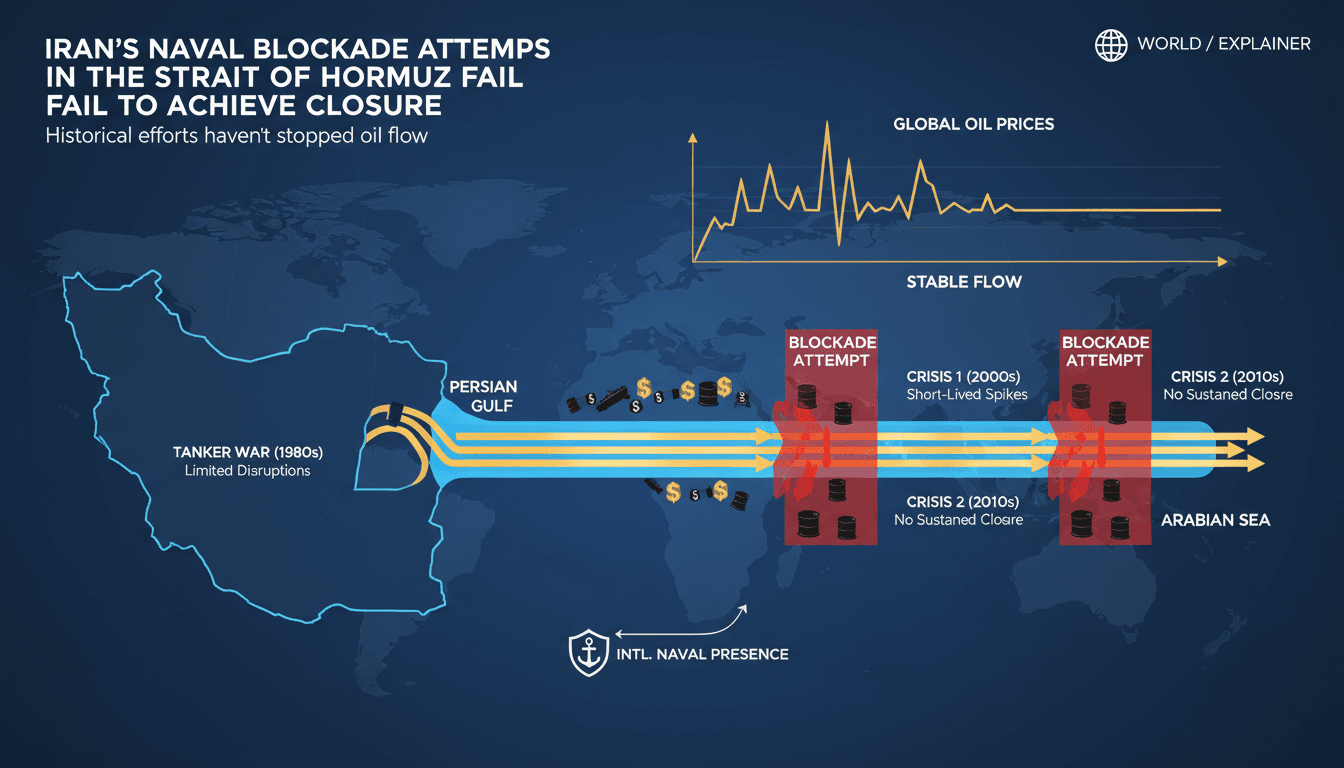
- Iran has repeatedly attempted to blockade the Strait of Hormuz during various conflicts, notably the Tanker War from 1984 to 1988, but has never achieved sustained closure.
- U.S. naval operations have consistently countered these blockade efforts, allowing oil shipments to continue despite temporary disruptions and price spikes.
- Recent threats in 2011–2012 and 2019 mirrored past attempts, resulting in brief market volatility but ultimately failing to halt oil flows.
The context you actually need
- The Strait of Hormuz became strategically significant for Iran after the 1979 Islamic Revolution and during the Iran-Iraq War, as it allowed Iran to exert leverage over global oil supplies.
- Iran's blockade strategies have included mining, tanker attacks, and warship deployments, which have led to temporary price surges but have been met with international naval responses.
- The resilience of oil transit through the Strait has been demonstrated despite over 400 attacks during the Tanker War and ongoing threats, highlighting the effectiveness of U.S. and allied naval operations.
What's really happening
The Strait of Hormuz serves as a vital artery for global oil trade, with around 20 million barrels per day transiting through it, according to the International Energy Agency. Iran's attempts to disrupt this flow have historically been framed as asymmetric responses to economic sanctions and geopolitical isolation. The Tanker War, which began in 1984, marked a significant escalation in Iran's strategy to retaliate against Iraq's attacks on its oil infrastructure. In response to Iraq targeting Iranian oil facilities, Iran initiated a campaign against neutral shipping, leading to a series of attacks on over 200 tankers, primarily those flagged by Kuwait and Saudi Arabia.
The U.S. intervened with Operation Earnest Will in 1987, which involved reflagging Kuwaiti tankers and providing naval escorts. This intervention culminated in Operation Praying Mantis in April 1988, where the U.S. destroyed significant Iranian naval assets. Despite these conflicts, oil transit through the Strait continued, demonstrating the limitations of Iran's blockade efforts.
In subsequent years, particularly during the sanctions imposed over Iran's nuclear program, threats to close the Strait resurfaced. In 2011, amid an EU oil embargo, Iran's threats led to temporary spikes in oil prices, reaching $110 per barrel, but these were short-lived as international naval presence maintained shipping routes. Similarly, in 2019, tensions escalated with attacks attributed to Iran on tankers and limpet mines, yet oil flows persisted due to robust naval patrols.
The ongoing threats from Iran, particularly in the context of the 2026 crisis, highlight a pattern of limited success in achieving sustained blockades. The U.S. and its allies have consistently countered these threats, reinforcing the Strait's resilience. This dynamic underscores the strategic importance of international naval operations in maintaining global oil supply stability, even amid geopolitical tensions.
Who feels it first (and how)
- Oil traders and investors: They experience immediate impacts on market volatility and pricing.
- Consumers in oil-dependent regions: Increased fuel prices can lead to higher costs for goods and services.
- Shipping companies: They face operational disruptions and increased insurance costs due to heightened risks in the region.
What to watch next
- U.S. naval deployments: Increased military presence in the region could signal heightened tensions or potential conflict, impacting oil prices.
- Iran's economic conditions: Economic pressures may influence Iran's willingness to escalate threats, affecting global oil supply stability.
- Global oil demand trends: Changes in demand due to economic shifts or alternative energy developments could alter the significance of the Strait.
Iran has a history of unsuccessful blockade attempts in the Strait of Hormuz.
Future threats from Iran will continue to provoke international naval responses, maintaining oil flow.
The long-term impact of geopolitical tensions on global oil prices remains uncertain.
Frequently Asked Questions
- Why it matters?
- The Strait of Hormuz is a critical chokepoint for approximately 20% of the world's oil supply, making its stability essential for global energy security.
- What happened (in 30 seconds)?
- Iran has repeatedly attempted to blockade the Strait of Hormuz during various conflicts, notably the Tanker War from 1984 to 1988, but has never achieved sustained closure. U.S. naval operations have consistently countered these blockade efforts, allowing oil shipments to continue despite temporary disruptions and price spikes. Recent threats in 2011–2012 and 2019 mirrored past attempts, resulting in brief market volatility but ultimately failing to halt oil flows.
- What's really happening?
- The Strait of Hormuz serves as a vital artery for global oil trade, with around 20 million barrels per day transiting through it, according to the International Energy Agency. Iran's attempts to disrupt this flow have historically been framed as asymmetric responses to economic sanctions and geopolitical isolation. The Tanker War, which began in 1984, marked a significant escalation in Iran's strategy to retaliate against Iraq's attacks on its oil infrastructure. In response to Iraq targeting Ir
- Who feels it first (and how)?
- Oil traders and investors: They experience immediate impacts on market volatility and pricing. Consumers in oil-dependent regions: Increased fuel prices can lead to higher costs for goods and services. Shipping companies: They face operational disruptions and increased insurance costs due to heightened risks in the region.
- What to watch next?
- U.S. naval deployments: Increased military presence in the region could signal heightened tensions or potential conflict, impacting oil prices. Iran's economic conditions: Economic pressures may influence Iran's willingness to escalate threats, affecting global oil supply stability. Global oil demand trends: Changes in demand due to economic shifts or alternative energy developments could alter the significance of the Strait.
Arabic-language reporting on global and regional news.
"BBC Arabic is part of the BBC, generally regarded for editorial standards and broad international coverage."
— A47 Editor
إيران ومضيق هرمز: ماذا تقول التجارب السابقة عن فاعلية الحصار البحري؟
The article discusses the use of maritime blockade by both the United States and Iran, examining historical precedents to assess the effectiveness of such strategies in conflict situations. It highlights the strategic significance of the Strait of Ho...
Regional and international reporting focused on Middle Eastern politics, diplomacy, and economics.
"Asharq Al-Awsat is a Saudi-owned international newspaper reflecting mainstream Gulf political perspectives."
— A47 Editor
For Iran, Flexing Control Over Hormuz Is a New Deterrent
Iran has recently intensified its control over the Strait of Hormuz, a strategic maritime route, by seizing two ships and imposing tolls, actions that follow a U.S. decision to halt military attacks in the region. This escalation underscores Iran's a...