
Saudi Railways Company Expands Logistics Network with Five New Routes
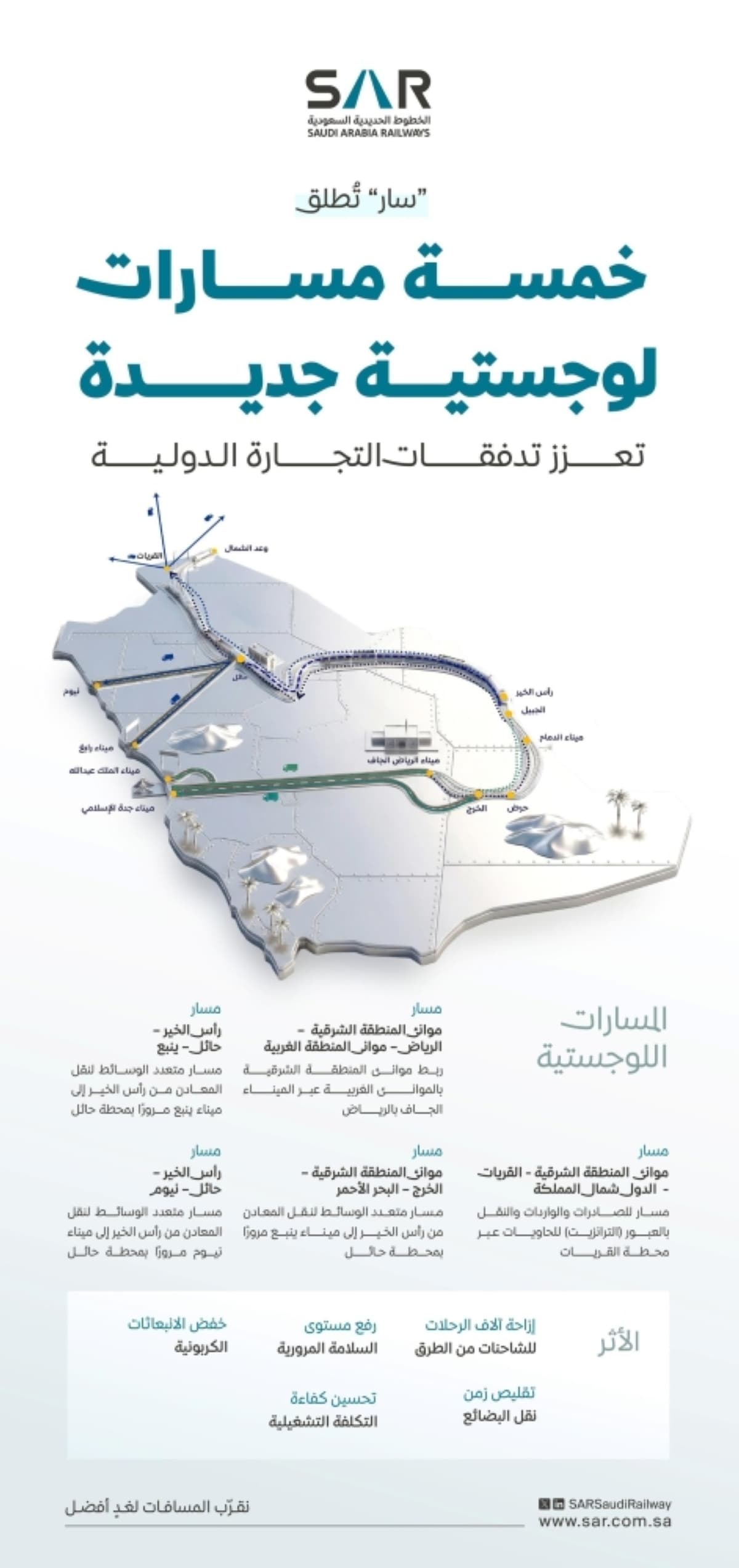
Here's what it means for you.
If you're involved in international trade or logistics, expect improved efficiency and potentially lower costs due to enhanced connectivity in the region.
Why it matters
This expansion positions Saudi Arabia as a pivotal logistics hub, impacting supply chains across the Gulf and beyond.
What happened (in 30 seconds)
- On April 10, 2026, the Saudi Railways Company (SAR) launched five new multi-modal logistics routes.
- These routes connect Arabian Gulf ports to key Saudi regions and neighboring countries, integrating rail and road transport.
- The initiative supports Saudi Vision 2030 by enhancing supply chain efficiency and reducing transit times.
The context you actually need
- Saudi Arabia is diversifying its economy away from oil dependency through infrastructure development, as outlined in Vision 2030.
- Global supply chain disruptions have prompted SAR to enhance rail freight capabilities, aiming to lower emissions and road dependency.
- The new routes will facilitate trade between Asia, Europe, and Africa, establishing Saudi Arabia as a key logistics corridor.
What's really happening
The launch of five new logistics routes by the Saudi Railways Company (SAR) on April 10, 2026, marks a significant step in Saudi Arabia's efforts to enhance its logistics capabilities and position itself as a global trade hub. This initiative is part of the broader National Transport and Logistics Strategy, which aligns with the ambitious goals of Saudi Vision 2030. The routes integrate rail and road transport, connecting major Arabian Gulf ports—such as Dammam, Jubail, and Ras Al-Khair—with central and northern regions of Saudi Arabia, including Riyadh, Hail, and Al-Qurayyat. They also extend to Red Sea ports like Yanbu and NEOM, as well as neighboring countries.
The strategic significance of these routes cannot be overstated. By improving internal connectivity within Saudi Arabia, the new logistics network is expected to streamline supply chains, reduce transit times, and enhance the overall efficiency of trade operations. The SAR has emphasized that thousands of truck trips are anticipated to be replaced annually, which not only enhances safety but also contributes to lower carbon emissions. This shift is particularly crucial in the context of global supply chain disruptions, as it allows for a more resilient logistics framework.
The operational framework of these routes utilizes key freight yards and dry ports, including the Riyadh Dry Port, which serves as a central hub for logistics operations. This infrastructure is designed to cater to various sectors, including industrial firms, mining companies, and shipping lines, thereby supporting economic diversification efforts. The routes are expected to bolster the petrochemical and mining sectors, which are vital to the Saudi economy.
Moreover, the expansion of these logistics routes aligns with the Kingdom's vision of becoming an East-West logistics corridor that links Asia, Europe, and Africa. This positioning not only enhances Saudi Arabia's trade capabilities but also strengthens its role within the Gulf Cooperation Council (GCC) logistics network. As a result, businesses and consumers in the region can anticipate improved trade efficiency and potentially lower costs for goods transiting through Saudi Arabia.
Who feels it first (and how)
- Logistics companies: Benefit from increased efficiency and reduced operational costs.
- Manufacturers: Experience improved supply chain reliability and faster access to markets.
- Consumers: May see lower prices and better availability of goods due to enhanced trade flows.
- Regional businesses: Gain from improved connectivity to Gulf and Red Sea ports.
What to watch next
- Volume of goods transported: Monitor the increase in freight volumes on the new routes, as it will indicate the effectiveness of the logistics network.
- Impact on transit times: Track changes in delivery times for goods moving through Saudi Arabia to gauge improvements in supply chain efficiency.
- Market responses: Watch for shifts in pricing and availability of goods in the region as logistics costs potentially decrease.
The routes have been launched and are operational.
Increased efficiency in trade flows and reduced transit times will occur.
The long-term impact on regional logistics dynamics and market pricing remains to be seen.
Frequently Asked Questions
- Why it matters?
- This expansion positions Saudi Arabia as a pivotal logistics hub, impacting supply chains across the Gulf and beyond.
- What happened (in 30 seconds)?
- On April 10, 2026, the Saudi Railways Company (SAR) launched five new multi-modal logistics routes. These routes connect Arabian Gulf ports to key Saudi regions and neighboring countries, integrating rail and road transport. The initiative supports Saudi Vision 2030 by enhancing supply chain efficiency and reducing transit times.
- What's really happening?
- The launch of five new logistics routes by the Saudi Railways Company (SAR) on April 10, 2026, marks a significant step in Saudi Arabia's efforts to enhance its logistics capabilities and position itself as a global trade hub. This initiative is part of the broader National Transport and Logistics Strategy, which aligns with the ambitious goals of Saudi Vision 2030. The routes integrate rail and road transport, connecting major Arabian Gulf ports—such as Dammam, Jubail, and Ras Al-Khair—with cen
- Who feels it first (and how)?
- Logistics companies: Benefit from increased efficiency and reduced operational costs. Manufacturers: Experience improved supply chain reliability and faster access to markets. Consumers: May see lower prices and better availability of goods due to enhanced trade flows. Regional businesses: Gain from improved connectivity to Gulf and Red Sea ports.
- What to watch next?
- Volume of goods transported: Monitor the increase in freight volumes on the new routes, as it will indicate the effectiveness of the logistics network. Impact on transit times: Track changes in delivery times for goods moving through Saudi Arabia to gauge improvements in supply chain efficiency. Market responses: Watch for shifts in pricing and availability of goods in the region as logistics costs potentially decrease.
Arabic-language coverage of Saudi, regional, and international affairs.
"Al Bilad offers mainstream Saudi newspaper coverage across domestic and broader Arab topics."
— A47 Editor
5 مسارات جديدة للشحن السككي.. منظومة سعودية متكاملة لدعم سلاسل الإمداد
Saudi Railways (SAR) has launched five new freight routes as part of its ongoing efforts to enhance supply chain efficiency and integrate various transportation modes. These routes are part of a comprehensive logistics system that connects the ports ...
Saudi newspaper coverage spanning local, national, and public-interest stories.
"Makkah Newspaper generally reflects mainstream Saudi editorial priorities with an emphasis on domestic issues."
— A47 Editor
«سار» تطلق 5 مسارات لوجستية جديدة تعزز تدفقات التجارة الدولية
Saudi Railways (SAR) has announced the launch of five new logistics routes in the freight sector, aimed at enhancing supply chain efficiency and improving integration with various transport modes. This initiative reflects SAR's ongoing commitment to ...
English-language reporting on Saudi politics, policy, and society.
"Saudi Gazette reflects mainstream Saudi institutional perspectives."
— A47 Editor
Saudi Railways launches 5 logistics routes to connect Gulf ports to Saudi Arabia
Saudi Railways (SAR) has launched five new logistics routes aimed at enhancing the freight sector by connecting ports along the Arabian Gulf with central and northern regions of Saudi Arabia, extending to the Red Sea ports and neighboring countries. ...
English-language reporting focused on Saudi Arabia and regional affairs.
"Saudi Gazette provides English-language coverage that often aligns with mainstream Saudi news priorities."
— A47 Editor
Saudi Railways launches 5 logistics routes to connect Gulf ports to Saudi Arabia
Saudi Railways (SAR) has launched five new logistics routes aimed at enhancing the freight sector by connecting ports along the Arabian Gulf with central and northern regions of Saudi Arabia, extending to the Red Sea ports and neighboring countries. ...