
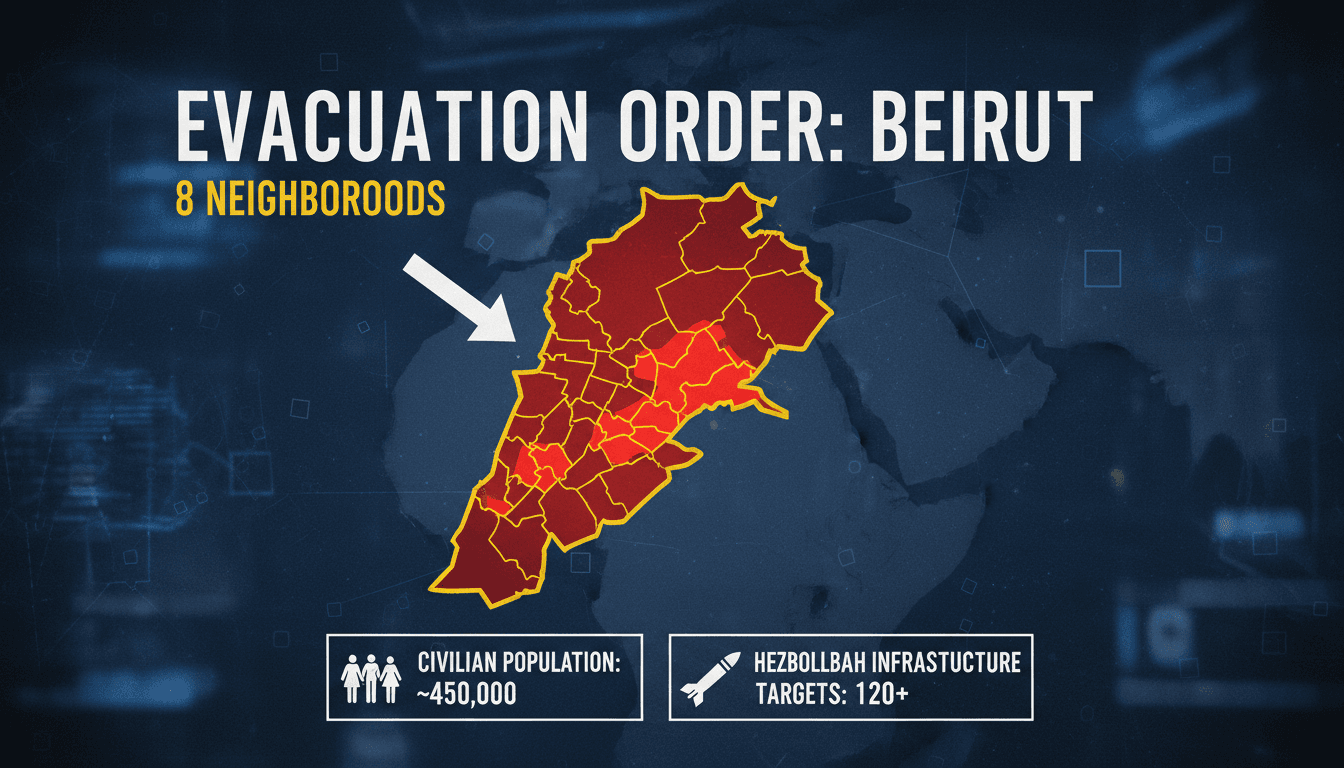
Israeli Defense Forces Issue Evacuation Order for Eight Neighborhoods in Beirut Amid Ongoing Conflict
Here's what it means for you.
If you have business interests in the Middle East, the escalation of conflict in Lebanon could disrupt supply chains and market stability.
Why it matters
The evacuation order signals a significant escalation in the ongoing Israel-Hezbollah conflict, which could have broader implications for regional security and economic conditions.
What happened (in 30 seconds)
- On April 9, 2026, the Israeli Defense Forces (IDF) issued an urgent evacuation warning to residents of eight neighborhoods in Beirut's southern suburbs.
- The order targets areas known to contain Hezbollah military infrastructure, prompting immediate civilian evacuations amid fears of impending strikes.
- This warning is part of the ongoing 2026 Israel-Hezbollah war, which has already resulted in over 1,500 Lebanese fatalities and the displacement of nearly 1 million people.
The context you actually need
- Dahiyeh, the targeted area, is a Hezbollah stronghold with a population between 300,000 and 800,000, making the evacuation particularly complex and urgent.
- The conflict has escalated significantly since early 2026, with intensified airstrikes and ground operations by Israel, leading to a humanitarian crisis.
- Regional reactions include condemnation from the UAE, highlighting concerns over civilian safety and the potential for wider regional instability affecting Gulf security and economic ties.
What's really happening
The IDF's evacuation order is a direct response to the ongoing military conflict with Hezbollah, which has intensified since early 2026. This escalation is characterized by a series of Israeli airstrikes targeting Hezbollah positions across southern Lebanon, particularly in Dahiyeh, a Shia-majority area known for its dense population and military infrastructure. The IDF's spokesperson, Avichai Adraee, emphasized the need for civilian safety, urging immediate evacuation from specified neighborhoods that are likely to be targeted in forthcoming strikes.
The broader context of this conflict is rooted in longstanding tensions between Israel and Hezbollah, exacerbated by regional dynamics and geopolitical interests. The current war has already claimed over 1,500 lives, according to the Lebanese Health Ministry, and displaced nearly 1 million people, creating a significant humanitarian crisis. The evacuation order reflects not only military strategy but also the urgent need to mitigate civilian casualties as hostilities escalate.
The situation is further complicated by international reactions, particularly from neighboring countries like the UAE, which condemned the strikes and called for international intervention. This response underscores the potential for the conflict to destabilize the region, affecting not only Lebanon but also Gulf states that have economic ties and security interests in the area.
As the IDF prepares for further operations, the humanitarian implications are severe. Civilians in Dahiyeh face immediate threats to their safety, and the evacuation process is fraught with challenges, including panic and logistical difficulties. The ongoing exchanges between Hezbollah and Israeli forces indicate that military actions will likely continue, further complicating the situation for residents and regional stakeholders.
Who feels it first (and how)
- Lebanese civilians: Immediate threat to safety and displacement due to evacuation orders.
- Hezbollah fighters: Potential loss of military infrastructure and increased pressure from Israeli operations.
- Regional businesses: Companies with interests in Lebanon or the Gulf may face disruptions in supply chains and market stability.
- International humanitarian organizations: Increased demand for aid and support for displaced populations.
What to watch next
- Civilian response: Monitor how quickly and effectively residents evacuate and the humanitarian response that follows.
- Military developments: Keep an eye on IDF operations in the region and any retaliatory actions from Hezbollah.
- International diplomatic efforts: Watch for any initiatives from global powers to mediate the conflict and address humanitarian concerns.
The IDF has issued an evacuation order for specific neighborhoods in Beirut.
Continued military operations and potential civilian casualties as the conflict escalates.
The long-term impact on regional stability and economic conditions in the Gulf.
Frequently Asked Questions
- Why it matters?
- The evacuation order signals a significant escalation in the ongoing Israel-Hezbollah conflict, which could have broader implications for regional security and economic conditions.
- What happened (in 30 seconds)?
- On April 9, 2026, the Israeli Defense Forces (IDF) issued an urgent evacuation warning to residents of eight neighborhoods in Beirut's southern suburbs. The order targets areas known to contain Hezbollah military infrastructure, prompting immediate civilian evacuations amid fears of impending strikes. This warning is part of the ongoing 2026 Israel-Hezbollah war, which has already resulted in over 1,500 Lebanese fatalities and the displacement of nearly 1 million people.
- What's really happening?
- The IDF's evacuation order is a direct response to the ongoing military conflict with Hezbollah, which has intensified since early 2026. This escalation is characterized by a series of Israeli airstrikes targeting Hezbollah positions across southern Lebanon, particularly in Dahiyeh, a Shia-majority area known for its dense population and military infrastructure. The IDF's spokesperson, Avichai Adraee, emphasized the need for civilian safety, urging immediate evacuation from specified neighborhoo
- Who feels it first (and how)?
- Lebanese civilians: Immediate threat to safety and displacement due to evacuation orders. Hezbollah fighters: Potential loss of military infrastructure and increased pressure from Israeli operations. Regional businesses: Companies with interests in Lebanon or the Gulf may face disruptions in supply chains and market stability. International humanitarian organizations: Increased demand for aid and support for displaced populations.
- What to watch next?
- Civilian response: Monitor how quickly and effectively residents evacuate and the humanitarian response that follows. Military developments: Keep an eye on IDF operations in the region and any retaliatory actions from Hezbollah. International diplomatic efforts: Watch for any initiatives from global powers to mediate the conflict and address humanitarian concerns.
Arabic-language coverage of political affairs and current events.
"Okaz political coverage typically follows mainstream Saudi framing on national and regional affairs."
— A47 Editor
إسرائيل تحذر 8 أحياء في جنوب لبنان
The Israeli army has issued an urgent warning to residents of eight neighborhoods in southern Beirut, urging them to evacuate immediately due to the threat of additional strikes. The spokesperson for the Israeli army, Avichai Adraee, shared a map on ...
Pan-Arab news coverage spanning politics, business, sports, and regional affairs.
"Asharq Al-Awsat reflects a broad Arab editorial perspective with strong attention to regional geopolitics."
— A47 Editor
الجيش الإسرائيلي يصدر إنذاراً بإخلاء الضاحية الجنوبية لبيروت
The Israeli army issued an urgent evacuation order to residents of the southern suburbs of Beirut on Thursday afternoon. This warning indicates a significant escalation in tensions in the region, raising concerns among the local population about thei...
Arabic-language UAE newspaper coverage focused on domestic affairs, public institutions, business, society, and regional developments.
"Al Khaleej coverage generally reflects a mainstream UAE editorial lens with strong attention to public affairs, institutions, and regional developments."
— A47 Editor
الجيش الإسرائيلي ينذر 8 أحياء في ضاحية بيروت بالإخلاء
The Israeli army issued a new evacuation warning to residents of eight neighborhoods in the southern suburbs of Beirut on Thursday. This action indicates heightened tensions in the region, reflecting ongoing security concerns.