
Elon Musk Accelerates Semiconductor Supply Chain for Terafab Project
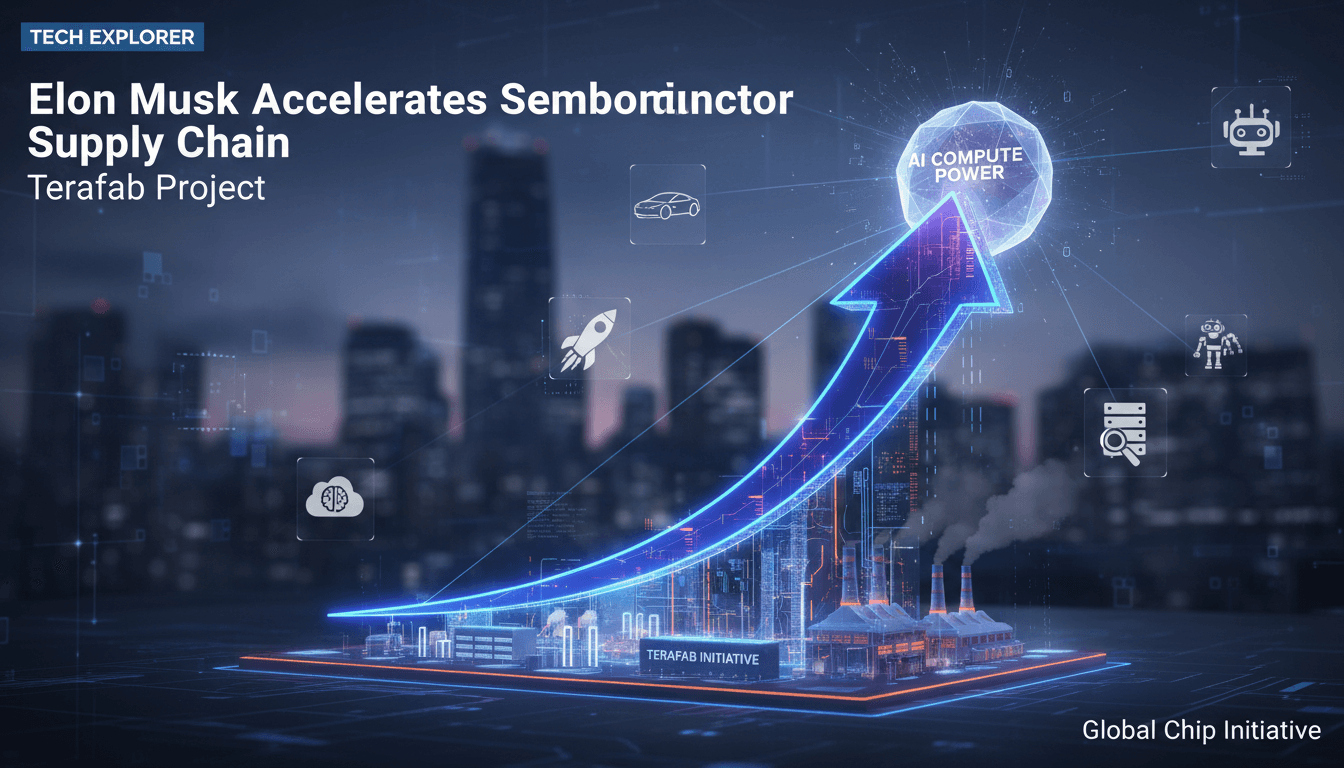
Here's what it means for you.
If you're in tech or automotive, the Terafab initiative could reshape supply chains and production timelines for AI and autonomous technologies.
Why it matters
The Terafab project aims to alleviate global semiconductor shortages, impacting industries reliant on advanced computing.
What happened (in 30 seconds)
- On April 16, 2026, Elon Musk's team reached out to major chip suppliers for accelerated timelines on the Terafab initiative.
- The goal is to construct the world's largest semiconductor facility, targeting 1 terawatt of annual AI compute production.
- Tesla shares rose approximately 11% following supplier engagement reports, indicating market optimism.
The context you actually need
- Terafab was announced on March 21, 2026, as a response to a global semiconductor capacity crisis, with current output at only 2% of required levels for Tesla's Full Self-Driving and other projects.
- Intel joined the initiative on April 7, 2026, bringing expertise in sub-5nm fabrication, crucial for the project's ambitious goals.
- The facility will integrate chip design, fabrication, and testing under one roof, with a prototype expected at Tesla's Giga Texas facility.
What's really happening
Elon Musk's Terafab initiative represents a strategic response to a critical shortage in semiconductor production capacity, which has been exacerbated by the rapid growth of AI technologies and autonomous vehicles. The semiconductor industry has struggled to keep pace with demand, leading to significant delays and increased costs across various sectors, particularly in automotive and tech. Musk's call for suppliers to proceed at "light speed" underscores the urgency of this initiative, as the projected output of 1 terawatt annually is designed to meet the escalating needs of Tesla's Full Self-Driving capabilities, the deployment of billions of Optimus robots, and SpaceX's orbital AI infrastructure.
The collaboration with Intel is particularly noteworthy, as it brings advanced fabrication capabilities to the table, enabling the production of chips at a 2nm process. This level of integration—combining design, fabrication, and testing—aims to streamline operations and reduce time-to-market for new technologies. The projected costs for the prototype are estimated between $20 billion and $25 billion, with full-scale operations potentially reaching $5 trillion. This financial commitment reflects the high stakes involved in securing a competitive edge in the semiconductor market.
The implications of Terafab extend beyond just Tesla and SpaceX; they signal a broader shift in how companies approach semiconductor production. By establishing a facility that can produce chips at unprecedented scales, Musk is positioning his companies to not only meet their own needs but also potentially supply other industries facing similar shortages. This could lead to a reconfiguration of supply chains, with a focus on localized production capabilities that reduce reliance on overseas manufacturing.
As the project progresses, it will be essential to monitor how quickly suppliers can ramp up production and whether the ambitious timelines set by Musk can be met. The success of Terafab could set a new standard for semiconductor production, influencing how other companies strategize their own supply chains in the face of ongoing global shortages.
Who feels it first (and how)
- Tech companies: Increased access to advanced chips could accelerate product development cycles.
- Automotive manufacturers: Enhanced semiconductor supply may alleviate production bottlenecks for electric and autonomous vehicles.
- Investors: Stock prices of companies involved in the semiconductor supply chain may experience volatility based on project developments.
What to watch next
- Supplier engagement timelines: Monitoring how quickly suppliers can meet Musk's demands will indicate the project's feasibility.
- Market reactions: Watch for fluctuations in stock prices of Tesla and its suppliers as news emerges about Terafab's progress.
- Global semiconductor trends: Keep an eye on broader industry shifts that may arise from Terafab's success or challenges, potentially influencing global supply chains.
The Terafab project aims for 1 terawatt of annual AI compute production.
Increased collaboration between tech companies and semiconductor suppliers as demand rises.
Whether the ambitious timelines set by Musk can be realistically achieved.
Frequently Asked Questions
- Why it matters?
- The Terafab project aims to alleviate global semiconductor shortages, impacting industries reliant on advanced computing.
- What happened (in 30 seconds)?
- On April 16, 2026, Elon Musk's team reached out to major chip suppliers for accelerated timelines on the Terafab initiative. The goal is to construct the world's largest semiconductor facility, targeting 1 terawatt of annual AI compute production. Tesla shares rose approximately 11% following supplier engagement reports, indicating market optimism.
- What's really happening?
- Elon Musk's Terafab initiative represents a strategic response to a critical shortage in semiconductor production capacity, which has been exacerbated by the rapid growth of AI technologies and autonomous vehicles. The semiconductor industry has struggled to keep pace with demand, leading to significant delays and increased costs across various sectors, particularly in automotive and tech. Musk's call for suppliers to proceed at "light speed" underscores the urgency of this initiative, as the pr
- Who feels it first (and how)?
- Tech companies: Increased access to advanced chips could accelerate product development cycles. Automotive manufacturers: Enhanced semiconductor supply may alleviate production bottlenecks for electric and autonomous vehicles. Investors: Stock prices of companies involved in the semiconductor supply chain may experience volatility based on project developments.
- What to watch next?
- Supplier engagement timelines: Monitoring how quickly suppliers can meet Musk's demands will indicate the project's feasibility. Market reactions: Watch for fluctuations in stock prices of Tesla and its suppliers as news emerges about Terafab's progress. Global semiconductor trends: Keep an eye on broader industry shifts that may arise from Terafab's success or challenges, potentially influencing global supply chains.
Technology business and AI-related headlines.
"Data-driven tech newsroom with global scope."
— A47 Editor
Musk Asks Suppliers to Move at ‘Light Speed’ on Terafab Plan
Elon Musk's team has initiated contact with chip industry suppliers, including Applied Materials Inc., Tokyo Electron Ltd., and Lam Research Corp., to expedite the Terafab project, which aims to establish a large-scale chip manufacturing facility in ...
Technology business news, market impacts, and innovation trends.
"Bloomberg is a premier financial and tech news provider, respected for its in-depth reporting and analytical rigor."
— A47 Editor
Musk Asks Suppliers to Move at ‘Light Speed’ on Terafab Plan
Elon Musk's team has initiated contact with chip industry suppliers, including Applied Materials Inc., Tokyo Electron Ltd., and Lam Research Corp., to expedite the Terafab project, which aims to establish a large-scale chip manufacturing facility in ...
Real-time updates, analysis, and reports on the blockchain and cryptocurrency sectors.
"Crypto News delivers real-time updates, analysis, and reports on the blockchain and cryptocurrency sectors."
— A47 Editor
xAI Terafab Reaches Out to Chip Suppliers at “Light Speed”
xAI Terafab has initiated contact with major chip suppliers, including Applied Materials, Tokyo Electron, and Lam Research, to obtain price quotes and delivery timelines for chipmaking equipment, emphasizing the urgency of the project by requesting a...