
Cocaine Pollution Alters Salmon Behavior in Aquatic Ecosystems
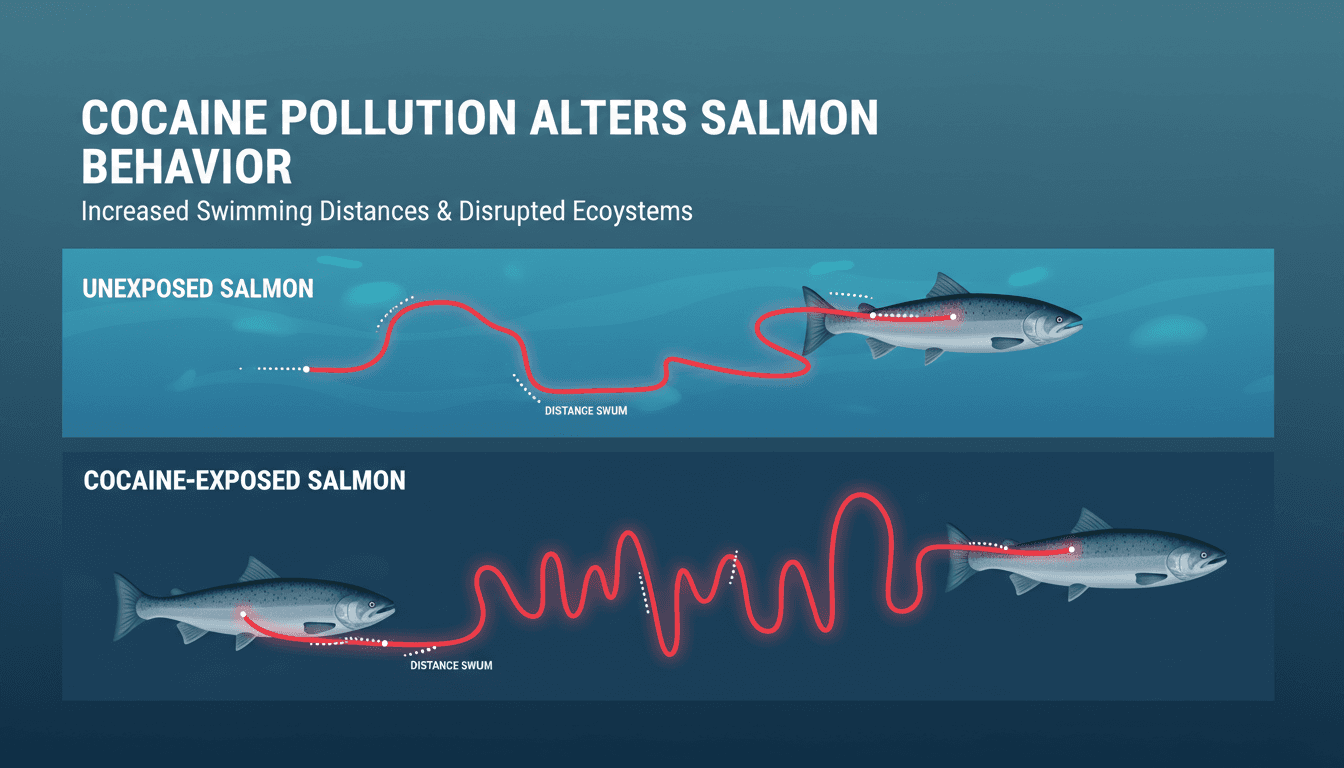
Here's what it means for you.
The ecological impact of drug contamination in waterways is becoming a pressing concern for environmental management.
What happened
Salmon exposed to cocaine in polluted waters exhibited increased swimming distances and altered behaviors.
The Context
- Cocaine and its metabolites can accumulate in the brains of fish.
- Altered behavior may affect feeding patterns and predator vulnerability.
- The study highlights the broader implications of drug pollution on aquatic ecosystems.
Takeaway
Understanding the effects of drug pollution on fish behavior is crucial for ecosystem management and conservation efforts.
Independent journalism covering technology, AI, and digital culture.
"An independent newsroom by veteran tech reporters known for critical, investigative coverage of AI and tech power."
— A47 Editor
Scientists Gave a Bunch of Salmon Cocaine. This Is What Happened Next
Scientists conducted an experiment exposing salmon to cocaine, discovering that the fish swam farther than their unexposed counterparts. This finding raises significant concerns about the impact of drug pollution on aquatic ecosystems and the behavio...
Reports on science policy, discoveries, and public debate in the scientific realm.
"The Guardian’s science section is known for thoughtful and critical reporting on global research, ethics, and public understanding of science."
— A47 Editor
Cocaine pollution in rivers and lakes may disrupt behaviour of salmon, study finds
A recent study has revealed that traces of cocaine in rivers and lakes can accumulate in the brains of juvenile Atlantic salmon, leading to altered swimming behavior and increased dispersal across their habitats. This exposure raises concerns about t...
Top international stories selected by The Guardian editors.
"The Guardian is known for its progressive editorial stance and in-depth analysis."
— A47 Editor
Cocaine pollution in rivers and lakes may disrupt behaviour of salmon, study finds
A recent study has found that traces of cocaine in rivers and lakes may accumulate in the brains of juvenile Atlantic salmon, leading to altered swimming behavior and increased dispersal across their habitat. This exposure to environmental levels of ...
Science and technology stories including AI.
"Longstanding science magazine with thoughtful AI coverage."
— A47 Editor
The strange way cocaine water pollution is changing salmon
Recent studies indicate that salmon exposed to cocaine through water pollution exhibit increased swimming behavior, which may have detrimental effects on their health and survival. This phenomenon raises concerns about the impact of illicit drug cont...
Scientific research, technology, environment, and society.
"Scientific American is one of the oldest and most authoritative science magazines, known for deep dives into science, technology, and society."
— A47 Editor
The strange way cocaine water pollution is changing salmon
Recent studies indicate that salmon exposed to cocaine through water pollution exhibit increased swimming behavior, which may have detrimental effects on their health and survival. This phenomenon raises concerns about the impact of illicit drug cont...