
Iran's Naval Mines Disrupt Shipping in Strait of Hormuz Post-Ceasefire
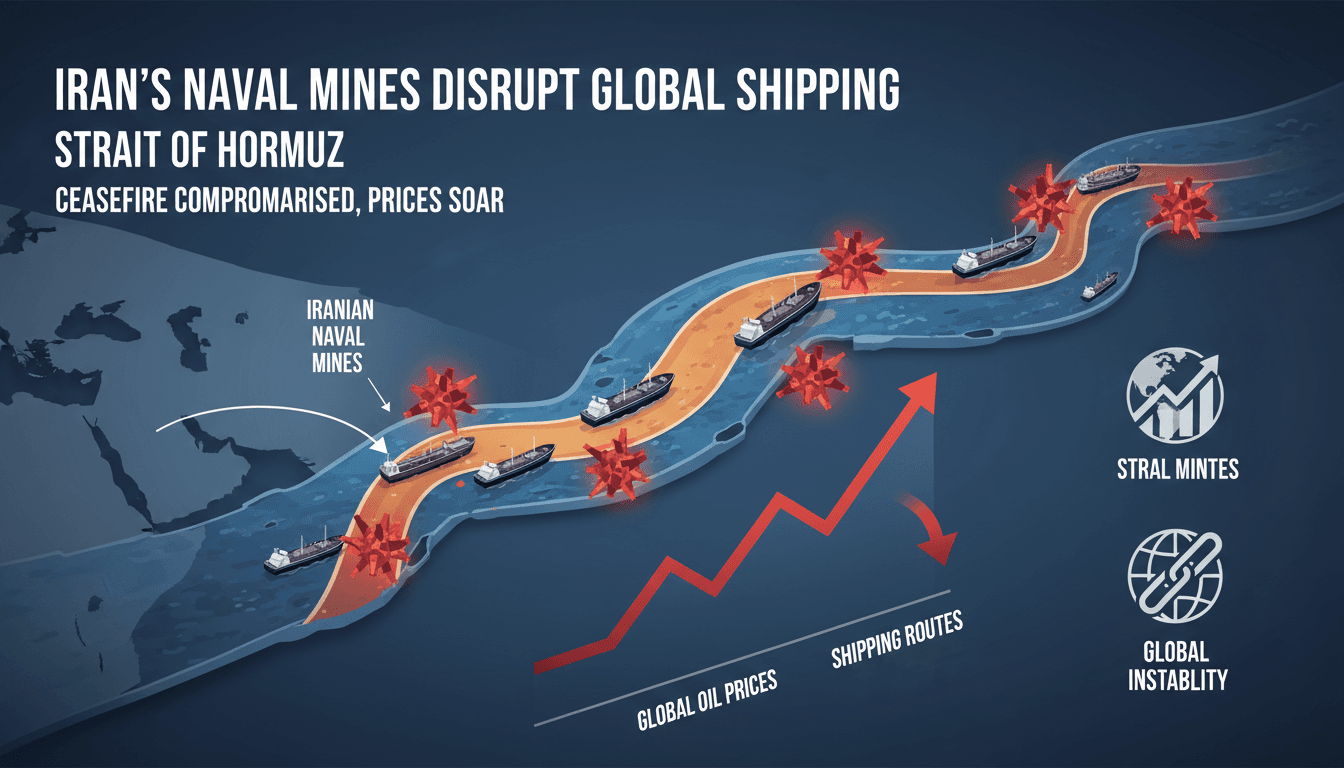
Here's what it means for you.
If you rely on global shipping or energy markets, the ongoing disruptions in the Strait of Hormuz could significantly impact prices and availability.
Why it matters
The Strait of Hormuz is a critical chokepoint for global oil exports, and disruptions here can lead to widespread economic repercussions.
What happened (in 30 seconds)
- Iran deployed naval mines in the Strait of Hormuz in March 2026, following military operations initiated by the U.S. and Israel.
- Shipping traffic plummeted by approximately 95%, from around 130 vessels daily to just 6, due to safety concerns.
- A ceasefire was agreed on April 8, 2026, but Iran's inability to clear mines complicates compliance and peace negotiations.
The context you actually need
- The 2026 Iran war began with U.S. and Israeli airstrikes on February 28, targeting Iranian military sites, prompting Iran's retaliatory measures.
- Iran's mine deployment involved a stockpile of 5,000 to 6,000 mines, strategically placed to disrupt shipping and leverage negotiations.
- Global energy prices surged as a result of the mine deployment, with analysts projecting prices could reach $150 per barrel if the situation remains unresolved.
What's really happening
The deployment of naval mines by Iran in the Strait of Hormuz represents a calculated strategy in response to military actions from the U.S. and Israel. By using small boats to lay mines in random patterns, Iran has created a significant barrier to maritime traffic, which is crucial for global oil supplies. This tactic has effectively reduced shipping traffic by about 95%, creating an environment of uncertainty and risk for vessels attempting to navigate the strait.
The mines are not only a physical threat but also a psychological one, as they complicate the logistics of shipping and increase insurance costs for vessels transiting the area. The Islamic Revolutionary Guard Corps (IRGC) has issued warnings about potential collisions, further deterring maritime activity. The situation is exacerbated by the fact that U.S. officials have indicated that Iran cannot locate or remove all the mines, which were placed haphazardly and are now drifting with ocean currents.
The ceasefire agreement reached on April 8, 2026, was contingent upon Iran's commitment to reopen the strait for international traffic. However, the ongoing presence of these mines poses a significant challenge to compliance. As peace talks unfold in Pakistan, led by U.S. Vice President J.D. Vance, the Iranian strategy of using mines has provided them with leverage in negotiations, allowing them to extract concessions while maintaining a threat to global shipping.
The economic implications are profound. With the Strait of Hormuz handling approximately 20% of global oil exports, any disruption leads to increased energy prices worldwide. The UAE has already labeled Iran's actions as "economic extortion," highlighting the broader regional impact. Residents in Dubai and the UAE are feeling the pinch as fuel and grocery prices rise due to inflated global energy costs. The potential for inflationary pressures on transport, energy, and food sectors is significant, especially as imports slow down.
In summary, Iran's deployment of naval mines is not just a military tactic; it is a strategic maneuver that intertwines military objectives with economic consequences, affecting global energy markets and regional stability.
Who feels it first (and how)
- Shipping companies: Facing increased insurance costs and operational risks in the region.
- Energy consumers: Higher fuel prices and potential shortages as global oil prices rise.
- UAE residents: Directly impacted by inflation in fuel and grocery prices due to supply chain disruptions.
- Investors in oil markets: Increased volatility and uncertainty could affect investment strategies and market stability.
What to watch next
- Mine clearance efforts: Monitor any developments regarding Iran's ability to clear the mines, as this will directly affect shipping traffic and energy prices.
- Peace negotiations: Keep an eye on the outcomes of the peace talks in Pakistan, particularly any agreements that may influence Iran's military strategies.
- Global oil prices: Watch for fluctuations in oil prices, especially if tensions escalate or if the situation in the Strait of Hormuz worsens.
The Strait of Hormuz is critical for global oil exports, and disruptions will impact energy prices.
Continued tension between Iran and the U.S. and Israel, affecting regional stability and global markets.
The timeline for mine clearance and its impact on shipping traffic and energy prices.
Frequently Asked Questions
- Why it matters?
- The Strait of Hormuz is a critical chokepoint for global oil exports, and disruptions here can lead to widespread economic repercussions.
- What happened (in 30 seconds)?
- Iran deployed naval mines in the Strait of Hormuz in March 2026, following military operations initiated by the U.S. and Israel. Shipping traffic plummeted by approximately 95%, from around 130 vessels daily to just 6, due to safety concerns. A ceasefire was agreed on April 8, 2026, but Iran's inability to clear mines complicates compliance and peace negotiations.
- What's really happening?
- The deployment of naval mines by Iran in the Strait of Hormuz represents a calculated strategy in response to military actions from the U.S. and Israel. By using small boats to lay mines in random patterns, Iran has created a significant barrier to maritime traffic, which is crucial for global oil supplies. This tactic has effectively reduced shipping traffic by about 95%, creating an environment of uncertainty and risk for vessels attempting to navigate the strait. The mines are not only a ph
- Who feels it first (and how)?
- Shipping companies: Facing increased insurance costs and operational risks in the region. Energy consumers: Higher fuel prices and potential shortages as global oil prices rise. UAE residents: Directly impacted by inflation in fuel and grocery prices due to supply chain disruptions. Investors in oil markets: Increased volatility and uncertainty could affect investment strategies and market stability.
- What to watch next?
- Mine clearance efforts: Monitor any developments regarding Iran's ability to clear the mines, as this will directly affect shipping traffic and energy prices. Peace negotiations: Keep an eye on the outcomes of the peace talks in Pakistan, particularly any agreements that may influence Iran's military strategies. Global oil prices: Watch for fluctuations in oil prices, especially if tensions escalate or if the situation in the Strait of Hormuz worsens.
Egyptian politics, economy, and society coverage.
"Al Masry Al Youm is a major Egyptian newspaper with broad national coverage."
— A47 Editor
«ألغام تائهة».. هكذا وضعت إيران «الكمائن البحرية» بطريقة سمحت لها بالانجراف أو التحرك فى مضيق هرمز
American officials revealed that Iran has been unable to open the Strait of Hormuz to increased maritime traffic, as reported by The New York Times. This situation is attributed to Iran's strategic placement of naval mines, which has hindered navigat...
Arabic-language digital news outlet covering UAE, regional, and international developments with broad general-news coverage.
"Al Ain News coverage typically blends UAE-focused reporting with wider Arab regional and international news."
— A47 Editor
تقرير: إيران لا تستطيع فتح «هرمز» حتى لو أرادت
American officials reported to The New York Times that Iran is unable to locate all the mines it has laid in the Strait of Hormuz and lacks the capability to remove them. This situation raises concerns about Iran's operational effectiveness in a crit...
Arabic-language coverage of international news and geopolitics.
"RT Arabic is a Russian state-funded outlet often criticized for promoting Kremlin-aligned narratives."
— A47 Editor
نيويورك تايمز: إيران عاجزة عن فتح مضيق هرمز بالكامل لعدم قدرتها على تحديد مواقع الألغام التي زرعتها
The New York Times reported that Iran is unable to fully open the Strait of Hormuz to maritime traffic due to its incapacity to locate the mines it has planted in the waterway and its lack of necessary capabilities to remove them.
Egyptian politics, economy, and society coverage.
"Al Masry Al Youm is a major Egyptian newspaper with broad national coverage."
— A47 Editor
مسؤولون أمريكيون عن عدم فتح مضيق هرمز كاملاً: إيران لا تستطيع تحديد مواقع الألغام
American officials have stated that Iran will not be able to fully open the Strait of Hormuz to increased maritime traffic, as it lacks the capability to identify the locations of mines it has planted in the waterway. This situation raises concerns a...