
European Commission Proposes Data Sharing Mandate for Google Under Digital Markets Act
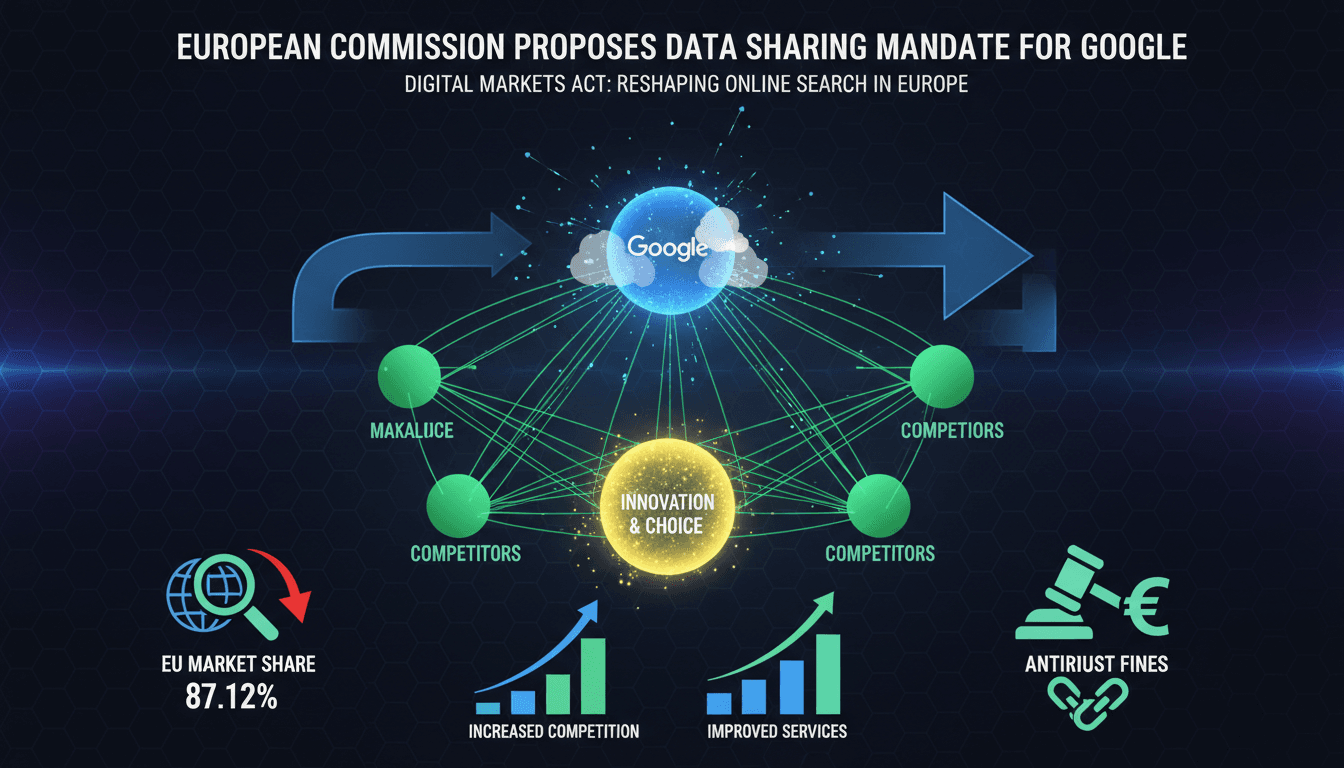
Here's what it means for you.
If you rely on search engines for business or personal use, changes in data-sharing regulations could enhance competition and improve service quality.
Why it matters
This proposal could reshape the competitive landscape of online search in Europe, impacting how data is accessed and utilized by various players in the market.
What happened (in 30 seconds)
- On April 16, 2026, the European Commission proposed that Google share search engine data with competitors under the Digital Markets Act.
- The proposal mandates access to data such as rankings, queries, clicks, and views on fair terms to promote competition against Google's dominant market position.
- Public comments are open until May 1, 2026, with a final decision expected by July 27, 2026.
The context you actually need
- The Digital Markets Act (DMA), enforced from March 2024, targets major platforms like Google to prevent anti-competitive practices.
- Google holds an 87.12% market share of search engines in Europe, raising concerns about its influence on competition and innovation.
- Previous antitrust fines against Google in the EU have exceeded €9 billion since 2017, indicating ongoing scrutiny of its market practices.
What's really happening
The European Commission's proposal to mandate Google to share search data with rivals is a significant step in enforcing the Digital Markets Act (DMA). This act aims to dismantle the monopolistic tendencies of "gatekeeper" platforms, which have been accused of stifling competition and innovation. Google, with its overwhelming 87.12% market share in Europe, has been under the microscope for its practices that limit access to essential data for competitors.
The preliminary findings suggest that Google must provide access to critical data, including search rankings, user queries, clicks, and views, under fair, reasonable, and non-discriminatory (FRAND) terms. This is designed to level the playing field for smaller search engines and AI chatbots, which have struggled to compete against Google's vast resources and data advantages. The proposal outlines eligibility criteria for third-party access, anonymization processes, and pricing parameters, which are crucial for ensuring that data sharing does not compromise user privacy.
Google's response has been one of resistance, citing concerns over user privacy and the potential risks of exposing sensitive search queries to third parties. This pushback highlights the tension between regulatory efforts to foster competition and the need to protect user data. The European Commission, however, emphasizes that access to data is essential for preventing market closure and ensuring that innovation can thrive in the search engine space.
The implications of this proposal extend beyond Europe. While the UAE and other regions may not be directly affected by the DMA, the ripple effects of increased competition could enhance service quality and innovation globally. As international platforms adapt to new standards, users in Dubai and elsewhere may benefit from improved search functionalities and options.
As the consultation period unfolds, stakeholders from various sectors will be closely monitoring the developments. The final decision, expected by July 27, 2026, will set a precedent for how data-sharing regulations are enforced in the tech industry, potentially influencing similar initiatives in other jurisdictions.
Who feels it first (and how)
- Small search engine companies: They may gain access to essential data, allowing them to compete more effectively.
- AI developers: Enhanced data availability could improve AI training and capabilities in search technologies.
- Consumers: Users may experience better search options and improved service quality as competition increases.
What to watch next
- Public feedback outcomes: The responses collected by May 1, 2026, will indicate the level of support or opposition to the proposal, shaping the final decision.
- Google's compliance strategy: How Google adapts its data-sharing practices in response to the proposal will be crucial for its operations in Europe.
- Potential legal challenges: Watch for any legal actions from Google or other stakeholders that could delay or alter the implementation of the DMA provisions.
The European Commission has proposed data-sharing measures under the DMA.
Google will continue to oppose the proposal on privacy grounds, potentially leading to legal challenges.
The long-term impact on competition and innovation in the search engine market remains to be seen.
Frequently Asked Questions
- Why it matters?
- This proposal could reshape the competitive landscape of online search in Europe, impacting how data is accessed and utilized by various players in the market.
- What happened (in 30 seconds)?
- On April 16, 2026, the European Commission proposed that Google share search engine data with competitors under the Digital Markets Act. The proposal mandates access to data such as rankings, queries, clicks, and views on fair terms to promote competition against Google's dominant market position. Public comments are open until May 1, 2026, with a final decision expected by July 27, 2026.
- What's really happening?
- The European Commission's proposal to mandate Google to share search data with rivals is a significant step in enforcing the Digital Markets Act (DMA). This act aims to dismantle the monopolistic tendencies of "gatekeeper" platforms, which have been accused of stifling competition and innovation. Google, with its overwhelming 87.12% market share in Europe, has been under the microscope for its practices that limit access to essential data for competitors. The preliminary findings suggest that G
- Who feels it first (and how)?
- Small search engine companies: They may gain access to essential data, allowing them to compete more effectively. AI developers: Enhanced data availability could improve AI training and capabilities in search technologies. Consumers: Users may experience better search options and improved service quality as competition increases.
- What to watch next?
- Public feedback outcomes: The responses collected by May 1, 2026, will indicate the level of support or opposition to the proposal, shaping the final decision. Google's compliance strategy: How Google adapts its data-sharing practices in response to the proposal will be crucial for its operations in Europe. Potential legal challenges: Watch for any legal actions from Google or other stakeholders that could delay or alter the implementation of the DMA provisions.
Consumer technology news with AI coverage.
"Gadget and tech site reporting on AI in products."
— A47 Editor
The European Commission wants Google to share search engine data with competitors
The European Commission has proposed new measures requiring Google to share its search engine data with competitors, aiming to enhance competition in the online search market. This initiative is part of the enforcement of the Digital Markets Act, whi...
Covers consumer technology, electronics, gadgets, and product reviews.
"Engadget is a trusted source for gadget reviews and consumer tech news, known for its hands-on analysis and industry coverage."
— A47 Editor
The European Commission wants Google to share search engine data with competitors
The European Commission has proposed new measures requiring Google to share its search engine data with competitors, aiming to enhance competition in the online search market. This initiative is part of the enforcement of the Digital Markets Act, whi...
Technology business and AI-related headlines.
"Data-driven tech newsroom with global scope."
— A47 Editor
Google Told to Share Search Data With AI Rivals in EU Proposal
The European Union has proposed new measures requiring Google to share its search data with rival search engines, including AI chatbots, as part of efforts to regulate the dominance of major US technology firms. This initiative aims to foster competi...
Technology business news, market impacts, and innovation trends.
"Bloomberg is a premier financial and tech news provider, respected for its in-depth reporting and analytical rigor."
— A47 Editor
Google Told to Share Search Data With AI Rivals in EU Proposal
The European Union has proposed new measures requiring Google to share its search data with rival search engines, including AI chatbots, as part of efforts to regulate the dominance of major US technology firms. This initiative aims to foster competi...
Opinionated AI coverage for general audiences.
"TNW’s AI vertical covering tools, ethics, and trends."
— A47 Editor
The EU has told Google what it must do to share search data with rivals
The European Commission has proposed six specific measures requiring Google to share search ranking, query, click, and view data with competing search engines, including AI chatbots, as part of its preliminary findings under the Digital Markets Act. ...