
Release of French Nationals Cécile Kohler and Jacques Paris from Iran After 3.5 Years of Detention
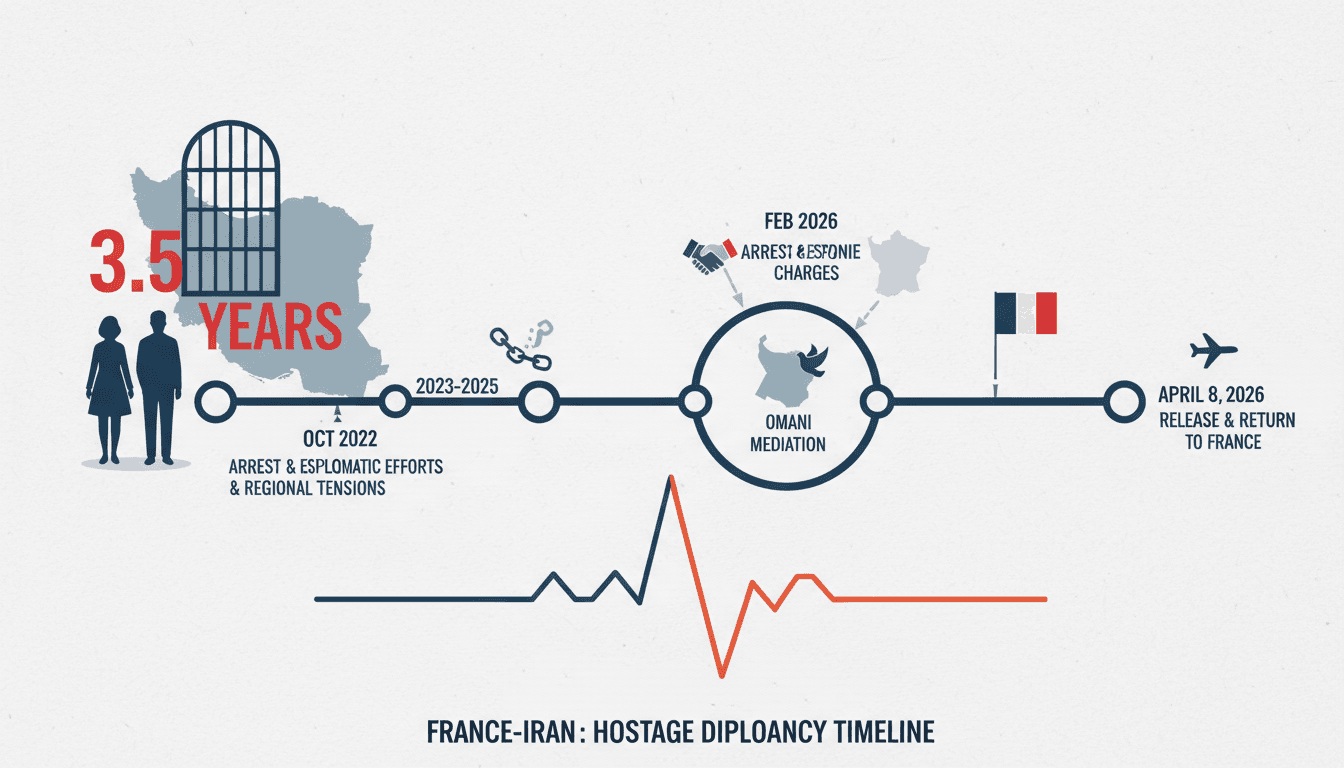
Here's what it means for you.
The release of Cécile Kohler and Jacques Paris from Iran could signal a shift in international diplomatic relations that may affect global markets and travel policies.
Why it matters
This incident highlights the ongoing use of diplomatic leverage through detentions, which can impact international relations and economic stability.
What happened (in 30 seconds)
- French nationals Cécile Kohler and Jacques Paris were released after 3.5 years of detention in Iran on disputed espionage charges.
- Their release was facilitated by Omani mediation, allowing them to depart Iran on April 7, 2026.
- French President Emmanuel Macron welcomed them back in Paris, emphasizing the end of a "terrible ordeal" for the detainees.
The context you actually need
- Kohler and Paris were arrested in May 2022 during a tourist trip to Iran, accused of espionage, which France deemed baseless.
- Their case is part of a broader pattern where Iran detains Western nationals as leverage amid geopolitical tensions, particularly concerning nuclear negotiations.
- The release occurred amid ongoing diplomatic disengagement efforts by France from regional conflicts, reflecting a strategic shift in foreign policy.
What's really happening
The release of Cécile Kohler and Jacques Paris from Iran is emblematic of a complex interplay between diplomacy, international relations, and the use of hostages as political tools. For over three years, Kohler and Paris were caught in a web of geopolitical tensions, accused of espionage—a charge that France has consistently rejected as unfounded. Their detention was not merely a legal issue but a strategic maneuver by Iran, leveraging Western nationals to gain diplomatic concessions amid escalating tensions with the West.
The mediation by Oman underscores its role as a neutral facilitator in a region fraught with conflict. This diplomatic engagement reflects a broader trend where smaller nations can exert influence in international affairs, particularly in the Middle East, where larger powers often dominate. The successful negotiation for the release of the French nationals may enhance Oman's standing in regional diplomacy, potentially leading to more mediation roles in future conflicts.
Macron's emphasis on the end of this "terrible ordeal" signals a shift in France's approach to its citizens abroad, particularly in volatile regions. The French government has been under pressure to ensure the safety of its nationals, especially as tensions rise between Iran and Western nations over nuclear issues and regional conflicts. This incident may prompt France and other Western nations to reassess their strategies regarding citizen safety and diplomatic engagement in Iran and similar countries.
The public reaction in France has been mixed, with relief at the return of the nationals but also skepticism regarding the timing of their release, particularly in light of ongoing tensions between Iran and the U.S. This skepticism may reflect broader concerns about the reliability of diplomatic negotiations in the region, especially as the geopolitical landscape continues to evolve.
In summary, the release of Kohler and Paris not only marks the end of their personal ordeal but also serves as a pivotal moment in the ongoing dialogue between Iran and Western nations. It raises questions about the future of diplomatic relations, the safety of citizens abroad, and the potential for similar incidents to arise as geopolitical tensions persist.
Who feels it first (and how)
- Travelers and tourists: Increased scrutiny and potential travel advisories for regions with high geopolitical tensions.
- Diplomatic officials: Heightened awareness of the risks associated with international negotiations and citizen safety.
- Businesses operating in or with Iran: Potential shifts in market dynamics and investment strategies based on evolving diplomatic relations.
What to watch next
- Future diplomatic negotiations: Watch for any upcoming talks between Iran and Western nations that may arise from this incident, as they could influence international relations.
- Travel advisories from Western governments: Changes in travel policies or advisories for Iran and similar regions may emerge as a response to this case.
- Oman's role in regional diplomacy: Monitor Oman’s involvement in mediating other international disputes, as this could reshape diplomatic strategies in the Middle East.
Cécile Kohler and Jacques Paris were released after 3.5 years of detention in Iran.
Increased diplomatic engagement and scrutiny of travel to Iran by Western nations.
The long-term impact on Iran-West relations and whether this will lead to more releases of detained nationals.
Frequently Asked Questions
- Why it matters?
- This incident highlights the ongoing use of diplomatic leverage through detentions, which can impact international relations and economic stability.
- What happened (in 30 seconds)?
- French nationals Cécile Kohler and Jacques Paris were released after 3.5 years of detention in Iran on disputed espionage charges. Their release was facilitated by Omani mediation, allowing them to depart Iran on April 7, 2026. French President Emmanuel Macron welcomed them back in Paris, emphasizing the end of a "terrible ordeal" for the detainees.
- What's really happening?
- The release of Cécile Kohler and Jacques Paris from Iran is emblematic of a complex interplay between diplomacy, international relations, and the use of hostages as political tools. For over three years, Kohler and Paris were caught in a web of geopolitical tensions, accused of espionage—a charge that France has consistently rejected as unfounded. Their detention was not merely a legal issue but a strategic maneuver by Iran, leveraging Western nationals to gain diplomatic concessions amid escala
- Who feels it first (and how)?
- Travelers and tourists: Increased scrutiny and potential travel advisories for regions with high geopolitical tensions. Diplomatic officials: Heightened awareness of the risks associated with international negotiations and citizen safety. Businesses operating in or with Iran: Potential shifts in market dynamics and investment strategies based on evolving diplomatic relations.
- What to watch next?
- Future diplomatic negotiations: Watch for any upcoming talks between Iran and Western nations that may arise from this incident, as they could influence international relations. Travel advisories from Western governments: Changes in travel policies or advisories for Iran and similar regions may emerge as a response to this case. Oman's role in regional diplomacy: Monitor Oman’s involvement in mediating other international disputes, as this could reshape diplomatic strategies in the Middle Ea
Arabic-language UAE newspaper coverage focused on domestic affairs, public institutions, business, society, and regional developments.
"Al Khaleej coverage generally reflects a mainstream UAE editorial lens with strong attention to public affairs, institutions, and regional developments."
— A47 Editor
ماكرون: ارتياح كبير بعد عودة مواطنينا المحتجزين في إيران
French President Emmanuel Macron welcomed the return of two citizens, Jacques Barry and Cécile Kohler, who were held in Iran for three and a half years, describing their arrival as the end of a horrific ordeal. The pair had been under house arrest at...
24/7 international news from a French perspective in multiple languages.
"France 24 is viewed as a globally focused outlet with balanced coverage and a European perspective."
— A47 Editor
French pair held in Iran says not 'broken' after return to France
French nationals Cécile Kohler and Jacques Paris have returned to France after being detained in Iran for nearly four years on espionage charges. Their release was confirmed by President Emmanuel Macron, who welcomed them back at the Elysee Palace, m...