
Kamal Kharazi dies from injuries sustained in U.S.-Israeli airstrike in Tehran
Here's what it means for you.
As geopolitical tensions escalate, your energy costs and travel plans may be directly impacted.
Why it matters
The death of Kamal Kharazi amid the ongoing Iran war signals heightened instability in the Middle East, affecting global markets and energy prices.
What happened (in 30 seconds)
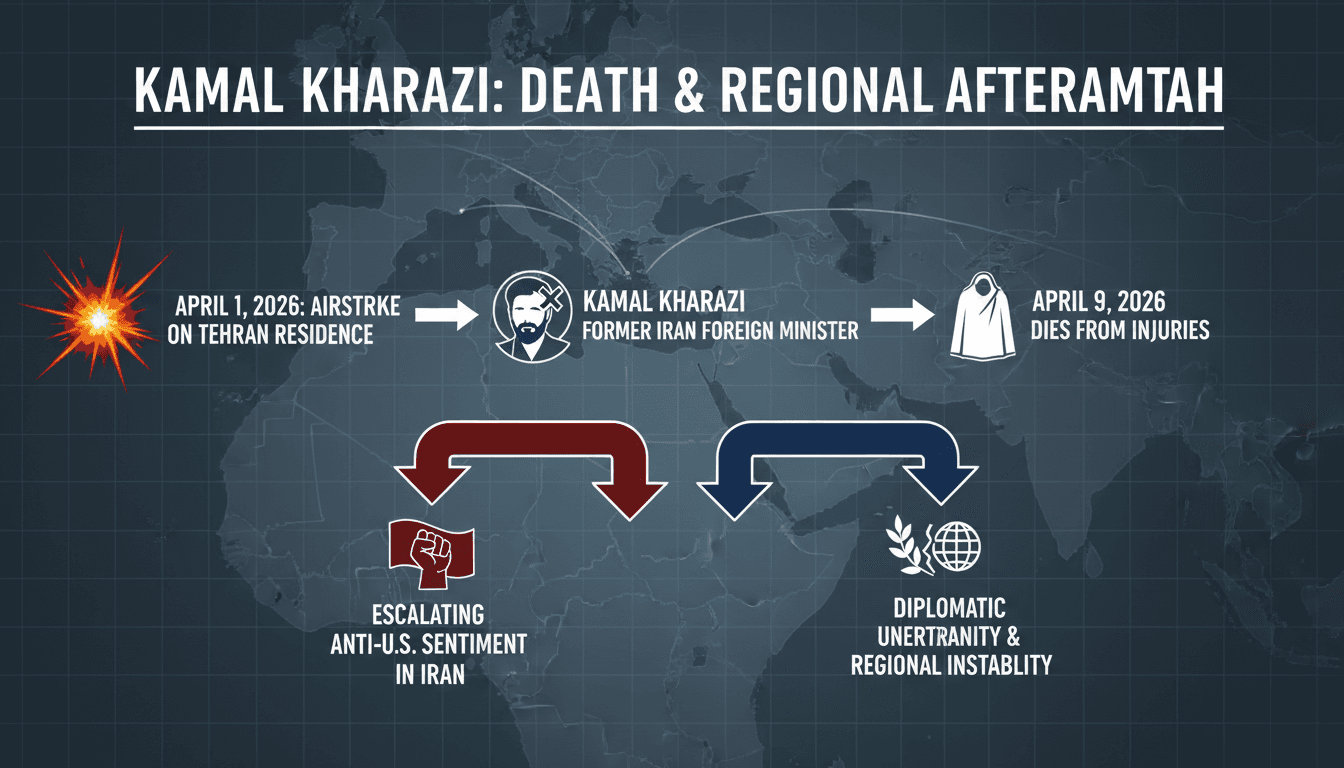
- Kamal Kharazi died on April 9, 2026, from injuries sustained in a U.S.-Israeli airstrike on his home in Tehran.
- The airstrike occurred on April 1, 2026, during the 2026 Iran war, which has already resulted in over 3,600 reported deaths.
- Iranian state media confirmed Kharazi's death, mourning him as a significant figure in Iran's foreign policy.
The context you actually need
- Kamal Kharazi served as Iran's foreign minister from 1997 to 2005 and was a key advisor to Supreme Leader Ali Khamenei.
- The 2026 Iran war began in late February with U.S.-Israeli strikes on Iranian military sites, escalating tensions in the region.
- A ceasefire brokered by Pakistan began on April 8, 2026, but targeted strikes on high-profile figures like Kharazi indicate ongoing volatility.
What's really happening
The death of Kamal Kharazi is emblematic of the broader geopolitical shifts occurring in the Middle East, particularly in the context of the 2026 Iran war. This conflict, which escalated rapidly from late February 2026, has seen a series of coordinated U.S.-Israeli airstrikes targeting Iranian military and nuclear facilities. Kharazi, a former foreign minister and a prominent strategist, was perceived as a key player in Iran's diplomatic efforts, making his death a significant blow to the Iranian leadership.
The airstrike that led to Kharazi's injuries and eventual death is part of a larger strategy by U.S. and Israeli forces to undermine Iran's influence in the region. This tactic not only aims to disrupt Iran's military capabilities but also to instill fear among its leadership, as evidenced by the Iranian First Vice President's characterization of the strike as an assassination. Such targeted actions are likely to provoke further retaliatory measures from Iran, escalating the conflict.
The impact of Kharazi's death extends beyond immediate military implications. It reflects the fragility of the ceasefire that began on April 8, 2026, and raises questions about the future of diplomatic negotiations in the region. The Iranian government has portrayed Kharazi as a martyr for the nation, which could galvanize public sentiment and support for a more aggressive stance against perceived foreign aggressors.
Moreover, the ongoing conflict has already resulted in significant casualties, with over 3,636 reported deaths since the war's inception. This loss of life not only underscores the human cost of the conflict but also highlights the potential for further escalation. As the situation develops, the international community will be closely monitoring Iran's response, which could include military retaliation or increased support for proxy groups in the region.
The economic ramifications are also noteworthy. The 2026 Iran war has already driven oil prices up, impacting global markets and economies, particularly in energy-dependent regions like Dubai. Heightened tensions could lead to supply disruptions, affecting everything from fuel prices to international trade routes. As a global trade and energy hub, Dubai's economy is particularly sensitive to these developments, making it crucial for residents and businesses to stay informed about potential disruptions.
Who feels it first (and how)
- Energy sector professionals: Fluctuations in oil prices may impact job stability and project funding.
- Travel industry stakeholders: Increased risks of flight restrictions and travel advisories could affect tourism and business travel.
- Investors: Market volatility may lead to shifts in investment strategies, particularly in energy and defense sectors.
What to watch next
- Iran's military response: Any retaliatory actions could escalate tensions further, impacting regional stability and global markets.
- Oil price fluctuations: Continued volatility in oil prices will affect energy costs and economic conditions in energy-dependent regions.
- Diplomatic negotiations: The effectiveness of the ceasefire and any subsequent peace talks will be crucial in determining the conflict's trajectory.
Kharazi's death has been confirmed by multiple Iranian state media outlets.
Increased military tensions and potential retaliatory actions from Iran in response to Kharazi's death.
The long-term impact on diplomatic relations and the effectiveness of the ceasefire.
Frequently Asked Questions
- Why it matters?
- The death of Kamal Kharazi amid the ongoing Iran war signals heightened instability in the Middle East, affecting global markets and energy prices.
- What happened (in 30 seconds)?
- Kamal Kharazi died on April 9, 2026, from injuries sustained in a U.S.-Israeli airstrike on his home in Tehran. The airstrike occurred on April 1, 2026, during the 2026 Iran war, which has already resulted in over 3,600 reported deaths. Iranian state media confirmed Kharazi's death, mourning him as a significant figure in Iran's foreign policy.
- What's really happening?
- The death of Kamal Kharazi is emblematic of the broader geopolitical shifts occurring in the Middle East, particularly in the context of the 2026 Iran war. This conflict, which escalated rapidly from late February 2026, has seen a series of coordinated U.S.-Israeli airstrikes targeting Iranian military and nuclear facilities. Kharazi, a former foreign minister and a prominent strategist, was perceived as a key player in Iran's diplomatic efforts, making his death a significant blow to the Irania
- Who feels it first (and how)?
- Energy sector professionals: Fluctuations in oil prices may impact job stability and project funding. Travel industry stakeholders: Increased risks of flight restrictions and travel advisories could affect tourism and business travel. Investors: Market volatility may lead to shifts in investment strategies, particularly in energy and defense sectors.
- What to watch next?
- Iran's military response: Any retaliatory actions could escalate tensions further, impacting regional stability and global markets. Oil price fluctuations: Continued volatility in oil prices will affect energy costs and economic conditions in energy-dependent regions. Diplomatic negotiations: The effectiveness of the ceasefire and any subsequent peace talks will be crucial in determining the conflict's trajectory.
Arabic-language coverage of international news and geopolitics.
"RT Arabic is a Russian state-funded outlet often criticized for promoting Kremlin-aligned narratives."
— A47 Editor
وكالة تسنيم الإيرانية: وفاة كمال خرازي متأثرا بإصابته إثر غارة سابقة على طهران
Iranian news agency Tasnim reported the death of Kamal Kharrazi, the head of Iran's Foreign Relations Council, due to injuries sustained from an airstrike that targeted his home last week amid the ongoing U.S.-Israeli conflict against Iran.
Arabic-language digital news outlet covering UAE, regional, and international developments with broad general-news coverage.
"Al Ain News coverage typically blends UAE-focused reporting with wider Arab regional and international news."
— A47 Editor
تقارير عن وفاة وزير الخارجية الإيراني الأسبق متأثرا بجراحه
Iranian media reported the death of former Foreign Minister Kamal Kharrazi on Thursday, who succumbed to injuries sustained during U.S.-Israeli airstrikes in early April. The incident highlights ongoing tensions in the region and the impact of milita...
Pan-Arab news coverage spanning politics, business, sports, and regional affairs.
"Asharq Al-Awsat reflects a broad Arab editorial perspective with strong attention to regional geopolitics."
— A47 Editor
مقتل كمال خرازي متأثراً بجروح جراء غارات أميركية إسرائيلية
Iranian media reported that former Iranian Foreign Minister Kamal Kharrazi passed away on Thursday due to injuries sustained from American-Israeli airstrikes on April 1.