
Saudi Arabia Supports Pakistan-Mediated Ceasefire Between US and Iran
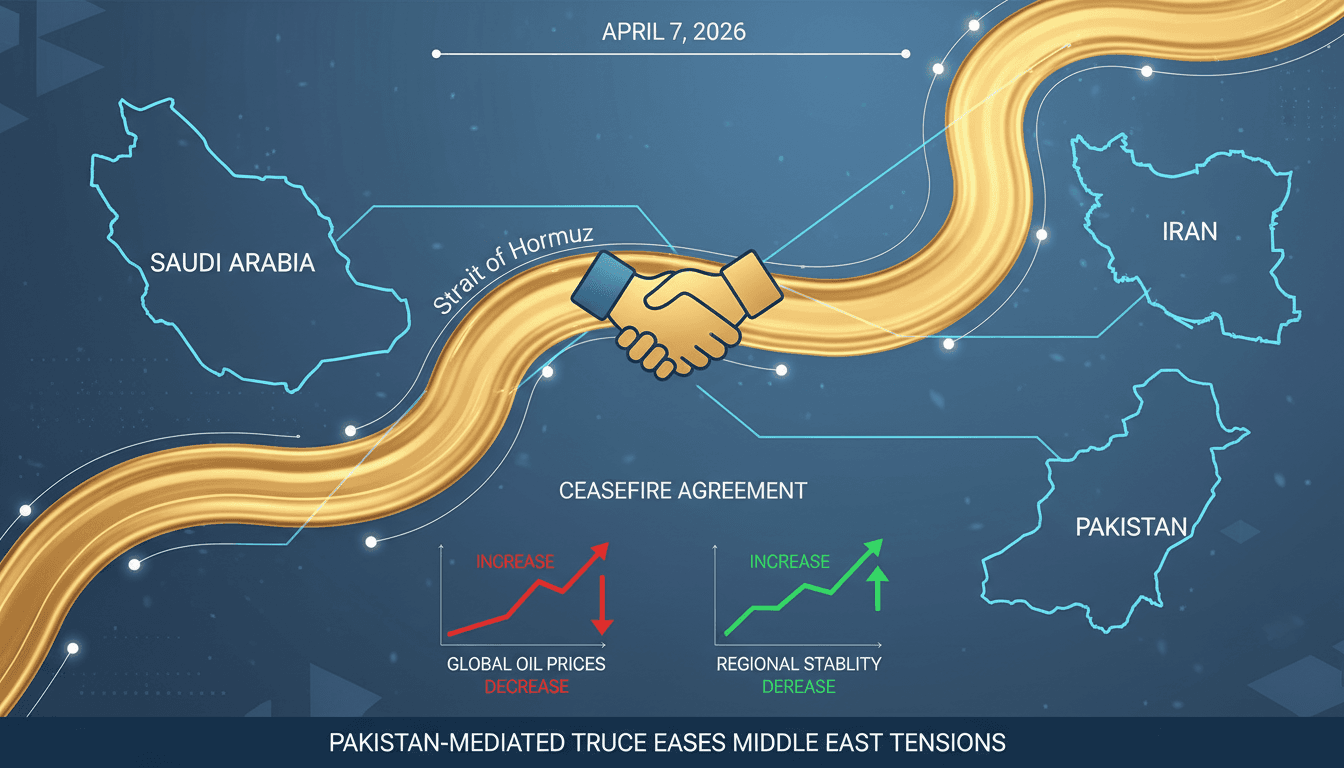
Here's what it means for you.
The recent ceasefire agreement between the U.S. and Iran could stabilize oil prices and enhance economic confidence in the Gulf region, directly impacting your cost of living and investment opportunities.
Why it matters
This ceasefire could significantly influence global oil markets and geopolitical stability, affecting everything from fuel prices to international trade.
What happened (in 30 seconds)
- Saudi Arabia endorsed a two-week ceasefire between the United States and Iran, facilitated by Pakistan's leadership.
- The ceasefire aims to reopen the Strait of Hormuz, crucial for global oil shipments, following escalating military actions.
- Global markets reacted positively, with oil prices dropping and stock indices in the Gulf surging, reflecting renewed investor confidence.
The context you actually need
- The 2026 Iran war began on February 28, 2026, following U.S. and Israeli airstrikes on Iranian military targets, leading to retaliatory strikes and regional instability.
- Pakistan emerged as a mediator, with Prime Minister Sharif and General Munir playing key roles in negotiating the ceasefire, highlighting shifting diplomatic dynamics in the region.
- The Strait of Hormuz is vital, as it handles approximately 20% of the world's oil supply; any disruption has immediate global economic repercussions.
What's really happening
The endorsement of a ceasefire by Saudi Arabia marks a pivotal moment in Middle Eastern geopolitics, particularly in the context of the ongoing conflict between the U.S. and Iran. The war, which erupted in early 2026, has seen significant military engagement, including extensive airstrikes by U.S. and Israeli forces targeting Iranian infrastructure. This aggressive posture has led to retaliatory actions from Iran, including missile strikes on Israel and Saudi Arabia, and the closure of the Strait of Hormuz—a critical chokepoint for global oil shipments.
The involvement of Pakistan as a mediator is noteworthy, as it underscores a shift in traditional alliances and diplomatic strategies in the region. Prime Minister Muhammad Shahbaz Sharif and Chief of Army Staff General Asim Munir's roles in facilitating dialogue reflect Pakistan's growing influence and willingness to engage in regional diplomacy. Their success in brokering the ceasefire has been met with cautious optimism, as it opens the door for further negotiations aimed at a more permanent resolution to the conflict.
The ceasefire agreement, announced by U.S. President Donald Trump, is conditional upon Iran's commitment to reopen the Strait of Hormuz and cease its aggressive actions. This has immediate implications for global oil prices, which plummeted by 15% following the announcement, indicating a strong market reaction to the potential for reduced conflict. The drop in oil prices is significant, as it alleviates some of the economic pressures felt by consumers and businesses alike.
Moreover, the endorsement from Saudi Arabia is crucial, as the kingdom has historically been a key player in regional stability and oil production. The positive response from Gulf states, including the UAE and Qatar, further reinforces the collective desire for a de-escalation of tensions. The surge in stock markets, particularly in Dubai, reflects a renewed investor confidence, with the main index experiencing its highest intraday gain in over 11 years.
As negotiations are set to continue in Islamabad, the international community is watching closely. The hope is that this ceasefire can lead to a more comprehensive peace process that addresses the underlying issues of instability in the region. The potential for a lasting resolution could reshape not only Middle Eastern geopolitics but also global economic dynamics, particularly in energy markets.
Who feels it first (and how)
- Consumers in the Gulf region: Lower oil prices could reduce fuel costs and living expenses.
- Investors and businesses: Increased market confidence may lead to more investment opportunities and economic growth.
- Global oil markets: Changes in supply dynamics could affect pricing and availability worldwide.
What to watch next
- Negotiations in Islamabad: The outcomes of these talks will be critical in determining the future stability of the region and the likelihood of a permanent ceasefire.
- Oil price fluctuations: Continued monitoring of Brent crude prices will indicate market reactions to developments in the ceasefire and broader geopolitical shifts.
- Regional military activities: Any escalation or de-escalation in military actions by Iran or the U.S. could significantly impact the ceasefire's longevity and effectiveness.
The ceasefire is currently active for two weeks, with negotiations scheduled.
If negotiations succeed, a more permanent resolution could emerge, stabilizing the region.
The long-term effects on U.S.-Iran relations and regional alliances remain uncertain.
Frequently Asked Questions
- Why it matters?
- This ceasefire could significantly influence global oil markets and geopolitical stability, affecting everything from fuel prices to international trade.
- What happened (in 30 seconds)?
- Saudi Arabia endorsed a two-week ceasefire between the United States and Iran, facilitated by Pakistan's leadership. The ceasefire aims to reopen the Strait of Hormuz, crucial for global oil shipments, following escalating military actions. Global markets reacted positively, with oil prices dropping and stock indices in the Gulf surging, reflecting renewed investor confidence.
- What's really happening?
- The endorsement of a ceasefire by Saudi Arabia marks a pivotal moment in Middle Eastern geopolitics, particularly in the context of the ongoing conflict between the U.S. and Iran. The war, which erupted in early 2026, has seen significant military engagement, including extensive airstrikes by U.S. and Israeli forces targeting Iranian infrastructure. This aggressive posture has led to retaliatory actions from Iran, including missile strikes on Israel and Saudi Arabia, and the closure of the Strai
- Who feels it first (and how)?
- Consumers in the Gulf region: Lower oil prices could reduce fuel costs and living expenses. Investors and businesses: Increased market confidence may lead to more investment opportunities and economic growth. Global oil markets: Changes in supply dynamics could affect pricing and availability worldwide.
- What to watch next?
- Negotiations in Islamabad: The outcomes of these talks will be critical in determining the future stability of the region and the likelihood of a permanent ceasefire. Oil price fluctuations: Continued monitoring of Brent crude prices will indicate market reactions to developments in the ceasefire and broader geopolitical shifts. Regional military activities: Any escalation or de-escalation in military actions by Iran or the U.S. could significantly impact the ceasefire's longevity and effect
English-language reporting on Saudi politics, policy, and society.
"Saudi Gazette reflects mainstream Saudi institutional perspectives."
— A47 Editor
World welcomes US-Iran ceasefire, calls for lasting peace in Middle East
A two-week ceasefire between the United States and Iran has been announced, following escalating military tensions in the region. This truce, confirmed by US President Donald Trump, will also see Iran reopen the Strait of Hormuz, a crucial maritime c...