
United States Launches Airstrikes on Iran's Kharg Island Oil Export Hub
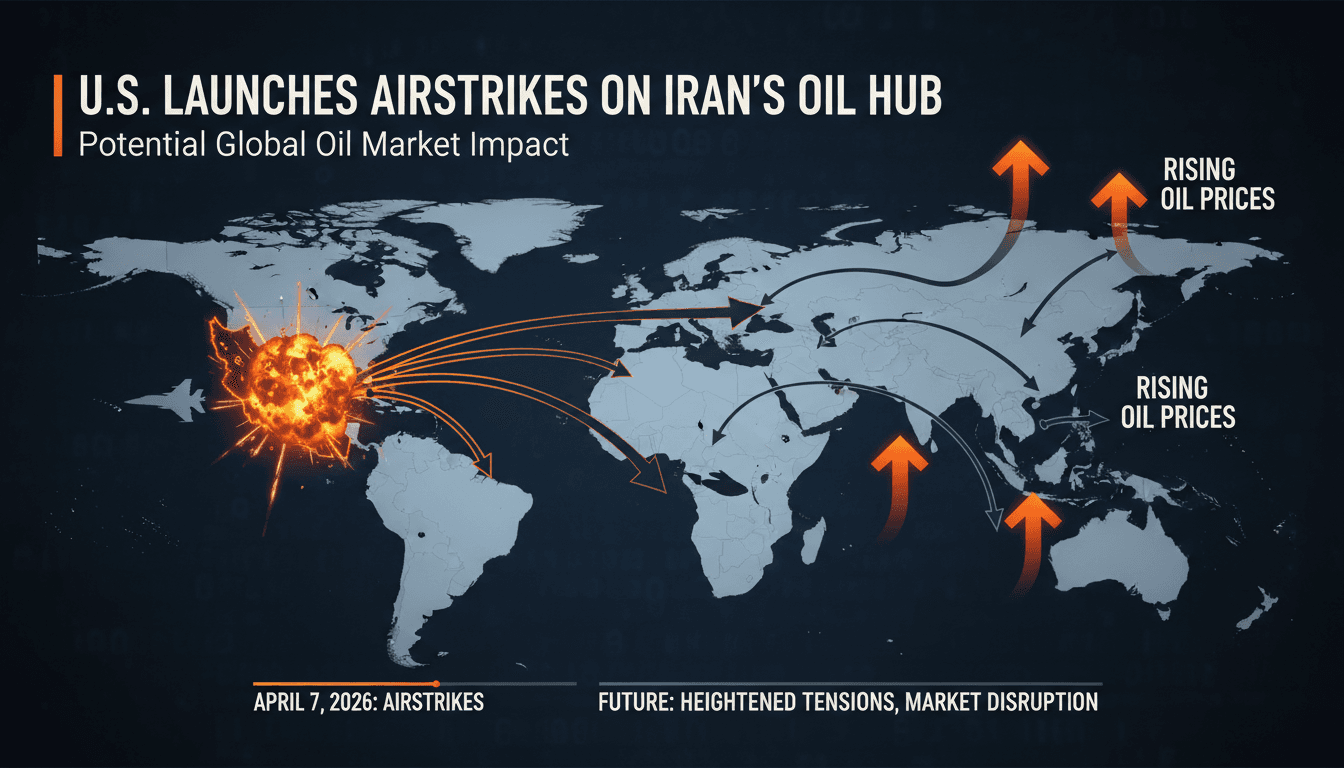
Here's what it means for you.
If you're in the energy sector or rely on oil prices, the recent U.S. airstrikes on Iran's Kharg Island could significantly impact your operations and costs.
Why it matters
The airstrikes threaten to destabilize oil supply chains, influencing global oil prices and economic conditions.
What happened (in 30 seconds)
- On April 7, 2026, the U.S. military conducted airstrikes on military targets at Kharg Island, Iran's main oil export hub.
- The strikes followed failed diplomatic negotiations, with President Trump rejecting Iran's counterproposals and issuing threats of further military action.
- Iran's Islamic Revolutionary Guard Corps (IRGC) has vowed retaliation, raising concerns over future oil supply disruptions.
The context you actually need
- Kharg Island is crucial for Iran, handling approximately 90% of its crude oil exports, making it a strategic target in U.S.-Iran tensions.
- Previous strikes in March 2026 had already heightened tensions without affecting oil infrastructure, but the latest strikes signal a shift in U.S. military strategy.
- Iran's response includes threats to disrupt oil supplies to the U.S. and its allies, which could lead to increased volatility in global oil markets.
What's really happening
The U.S. airstrikes on Kharg Island are part of a broader strategy to exert pressure on Iran amid escalating tensions that began in early March 2026. The U.S. military's focus on military installations rather than oil infrastructure reflects a calculated approach to limit Iran's military capabilities while minimizing immediate impacts on global oil supply. However, the strikes have triggered a strong response from Iran, particularly from the IRGC, which has announced the removal of previous restraints on retaliation. This escalation could lead to a cycle of military actions and counteractions that further destabilizes the region.
The backdrop to these airstrikes involves failed diplomatic negotiations, with President Trump rejecting Iran's 10-point peace proposal, which included demands for sanctions relief and reconstruction aid. The U.S. administration's hardline stance is aimed at compelling Iran to accept more favorable terms, but it risks provoking a more aggressive Iranian response. With Iran's threats to retaliate against U.S. and allied oil supplies, the potential for conflict to disrupt oil exports is significant.
Oil markets are already reacting to these developments, with prices likely to surge as fears of supply disruptions mount. The previous strikes in March had already pushed Brent crude prices above $100 per barrel, and further escalation could exacerbate this trend. The economic implications extend beyond oil prices; countries reliant on oil imports, particularly in the Middle East, may face increased costs and economic strain.
Moreover, the geopolitical landscape is shifting. Iran's threats to target U.S. interests in the region, including drone activities near U.S. facilities in the UAE, have raised security alerts and disrupted regional trade. Dubai residents, for instance, are already feeling the pinch from oil price volatility, which can ripple through local economies and impact consumer prices.
In summary, the U.S. airstrikes on Kharg Island are not just a military action; they are a catalyst for potential economic upheaval and geopolitical instability that could affect oil markets and global trade dynamics.
Who feels it first (and how)
- Energy sector professionals: Increased oil prices may affect operational costs and profitability.
- Consumers in oil-dependent economies: Higher fuel prices could lead to increased costs of living.
- Investors in oil markets: Volatility may create opportunities or risks in trading strategies.
- Dubai residents: Economic strain from oil price fluctuations could impact daily expenses and business operations.
What to watch next
- Oil price movements: Monitor Brent crude prices for indications of market reactions to ongoing tensions.
- Iran's military responses: Watch for any escalations in Iranian military actions that could threaten oil supply routes.
- Diplomatic efforts: Keep an eye on potential negotiations or ceasefire proposals that could alter the current trajectory of conflict.
The U.S. has conducted airstrikes on military targets in Iran.
Oil prices will experience volatility in response to these developments.
The extent and nature of Iran's retaliation remain uncertain.
Frequently Asked Questions
- Why it matters?
- The airstrikes threaten to destabilize oil supply chains, influencing global oil prices and economic conditions.
- What happened (in 30 seconds)?
- On April 7, 2026, the U.S. military conducted airstrikes on military targets at Kharg Island, Iran's main oil export hub. The strikes followed failed diplomatic negotiations, with President Trump rejecting Iran's counterproposals and issuing threats of further military action. Iran's Islamic Revolutionary Guard Corps (IRGC) has vowed retaliation, raising concerns over future oil supply disruptions.
- What's really happening?
- The U.S. airstrikes on Kharg Island are part of a broader strategy to exert pressure on Iran amid escalating tensions that began in early March 2026. The U.S. military's focus on military installations rather than oil infrastructure reflects a calculated approach to limit Iran's military capabilities while minimizing immediate impacts on global oil supply. However, the strikes have triggered a strong response from Iran, particularly from the IRGC, which has announced the removal of previous rest
- Who feels it first (and how)?
- Energy sector professionals: Increased oil prices may affect operational costs and profitability. Consumers in oil-dependent economies: Higher fuel prices could lead to increased costs of living. Investors in oil markets: Volatility may create opportunities or risks in trading strategies. Dubai residents: Economic strain from oil price fluctuations could impact daily expenses and business operations.
- What to watch next?
- Oil price movements: Monitor Brent crude prices for indications of market reactions to ongoing tensions. Iran's military responses: Watch for any escalations in Iranian military actions that could threaten oil supply routes. Diplomatic efforts: Keep an eye on potential negotiations or ceasefire proposals that could alter the current trajectory of conflict.
Global business headlines with AI angles.
"General business outlet that frequently covers AI."
— A47 Editor
U.S. Conducts Attack On Kharg Island, Iran's Key Hub For Oil Exports, Official Says
The U.S. military has conducted strikes on Kharg Island, a crucial hub for Iranian oil exports, amid escalating tensions between the U.S. and Iran. This action comes as President Donald Trump approaches a deadline for further military actions against...
Regional coverage and analysis focused on politics, diplomacy, and business across the Middle East.
"Al-Monitor is known for analytical reporting on Middle East politics and policy developments."
— A47 Editor
US strikes military targets on Iran's Kharg Island, US official says
The U.S. military has conducted strikes on military targets located on Iran's Kharg Island, as reported by Axios, citing an unnamed senior U.S. official. This action is part of a broader escalation in military tensions between the U.S. and Iran, whic...
Arabic-language UAE newspaper coverage focused on domestic affairs, public institutions, business, society, and regional developments.
"Al Khaleej coverage generally reflects a mainstream UAE editorial lens with strong attention to public affairs, institutions, and regional developments."
— A47 Editor
غارات تستهدف جزيرة خرج الإيرانية
Iranian media reported that U.S.-Israeli airstrikes targeted the Iranian island of Kharg, with U.S. military officials confirming strikes on military objectives. The Iranian Red Crescent stated that a railway line was hit, and residents in Tehran rep...