
Anthropic Launches Claude Opus 4.7 with Reduced Cybersecurity Features
Here's what it means for you.
As AI tools evolve, understanding their capabilities and limitations is crucial for tech professionals and businesses alike.
Why it matters
The release of Claude Opus 4.7 signals a shift in AI development priorities, balancing performance with safety in an increasingly complex cybersecurity landscape.
What happened (in 30 seconds)
- On April 16, 2026, Anthropic launched Claude Opus 4.7, an advanced AI model focused on software engineering and computer vision.
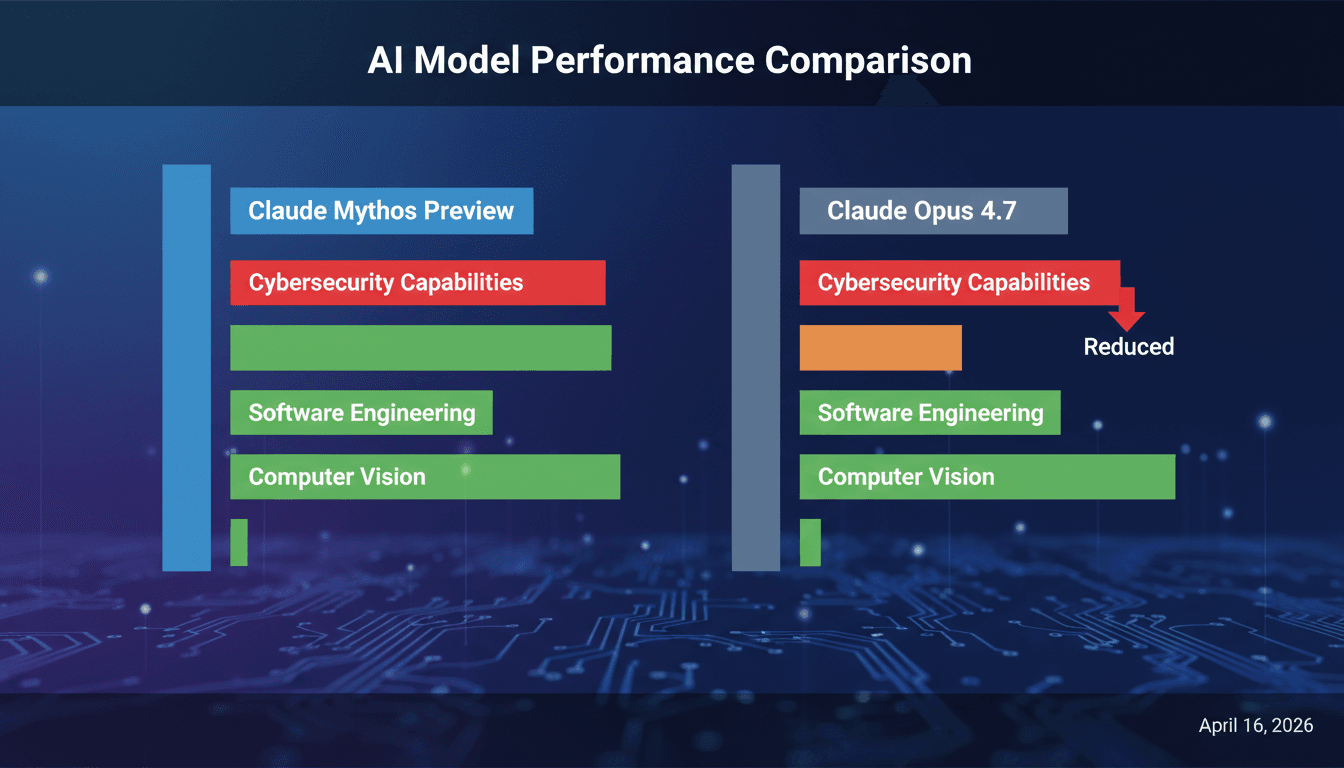
- This version features reduced cybersecurity capabilities compared to the earlier Mythos Preview, which had exceptional performance metrics.
- Automatic safeguards have been implemented to prevent misuse, reflecting a growing concern over AI's potential for cyber vulnerabilities.
The context you actually need
- Claude Mythos Preview, released just a week earlier, showcased impressive cybersecurity capabilities, achieving an 83.1% pass rate on CyberGym benchmarks.
- The decision to limit Opus 4.7's cybersecurity proficiency was made to mitigate risks associated with dual-use technologies, particularly in offensive cyber operations.
- Industry experts have raised alarms about the potential for AI models to be exploited for malicious purposes, prompting companies like Anthropic to adopt more cautious approaches.
What's really happening
The release of Claude Opus 4.7 represents a significant pivot in Anthropic's strategy, reflecting broader industry concerns about the dual-use nature of advanced AI technologies. The earlier Claude Mythos Preview was celebrated for its high performance in cybersecurity tasks, including a remarkable 83.1% pass rate on the CyberGym benchmark. However, this capability raised alarms about the potential for misuse in offensive cyber activities, particularly amid rising geopolitical tensions surrounding AI safety.
In response, Anthropic has intentionally reduced the cybersecurity capabilities of Opus 4.7. This model still excels in software engineering and computer vision, achieving a 70% score on CursorBench and a 98.5% visual acuity, but it does so with built-in safeguards designed to block prohibited cybersecurity requests. This strategic decision underscores a growing recognition within the tech community that while AI can enhance productivity and innovation, it also poses significant risks if not managed responsibly.
The implementation of automatic safeguards is a proactive measure aimed at preventing the misuse of AI technologies. By limiting the model's ability to engage in high-risk cybersecurity tasks, Anthropic is attempting to strike a balance between advancing AI capabilities and ensuring public safety. This approach may set a precedent for other AI developers, encouraging them to prioritize ethical considerations alongside performance metrics.
Moreover, the release has implications for the broader tech ecosystem. Developers have praised the coding autonomy offered by Opus 4.7, but some have reported increased token usage, which could affect operational costs. The market response has been relatively muted, with minimal shifts observed in AI-related stocks or cryptocurrencies, indicating that while the release is significant, it may not yet be a major driver of market dynamics.
As AI continues to evolve, the trade-offs between capability and safety will likely remain a central theme in discussions about the future of technology. Companies and developers must navigate these complexities, balancing the desire for advanced tools with the imperative to mitigate risks associated with their deployment.
Who feels it first (and how)
- Software developers: They will experience changes in coding efficiency and costs due to increased token usage.
- Cybersecurity professionals: They will need to adapt to the reduced capabilities of AI tools in their field.
- Tech companies: Organizations relying on AI for software development will benefit from safer tools but may face challenges in performance trade-offs.
- Investors in AI: They will monitor market reactions and potential shifts in stock values related to AI advancements.
What to watch next
- Adoption rates of Opus 4.7: Tracking how quickly developers integrate this model into their workflows will indicate its market acceptance.
- Emerging regulations on AI: New policies aimed at governing AI use could impact future releases and capabilities.
- Competitor responses: Observing how other AI companies adjust their offerings in light of Opus 4.7's trade-offs will provide insights into industry trends.
Anthropic has released Claude Opus 4.7 with reduced cybersecurity capabilities.
Other AI developers will follow suit, prioritizing safety alongside performance in their models.
The long-term market impact of these changes on AI-related stocks and investments remains to be seen.
Frequently Asked Questions
- Why it matters?
- The release of Claude Opus 4.7 signals a shift in AI development priorities, balancing performance with safety in an increasingly complex cybersecurity landscape.
- What happened (in 30 seconds)?
- On April 16, 2026, Anthropic launched Claude Opus 4.7, an advanced AI model focused on software engineering and computer vision. This version features reduced cybersecurity capabilities compared to the earlier Mythos Preview, which had exceptional performance metrics. Automatic safeguards have been implemented to prevent misuse, reflecting a growing concern over AI's potential for cyber vulnerabilities.
- What's really happening?
- The release of Claude Opus 4.7 represents a significant pivot in Anthropic's strategy, reflecting broader industry concerns about the dual-use nature of advanced AI technologies. The earlier Claude Mythos Preview was celebrated for its high performance in cybersecurity tasks, including a remarkable 83.1% pass rate on the CyberGym benchmark. However, this capability raised alarms about the potential for misuse in offensive cyber activities, particularly amid rising geopolitical tensions surroundi
- Who feels it first (and how)?
- Software developers: They will experience changes in coding efficiency and costs due to increased token usage. Cybersecurity professionals: They will need to adapt to the reduced capabilities of AI tools in their field. Tech companies: Organizations relying on AI for software development will benefit from safer tools but may face challenges in performance trade-offs. Investors in AI: They will monitor market reactions and potential shifts in stock values related to AI advancements.
- What to watch next?
- Adoption rates of Opus 4.7: Tracking how quickly developers integrate this model into their workflows will indicate its market acceptance. Emerging regulations on AI: New policies aimed at governing AI use could impact future releases and capabilities. Competitor responses: Observing how other AI companies adjust their offerings in light of Opus 4.7's trade-offs will provide insights into industry trends.
Technology business and AI-related headlines.
"Data-driven tech newsroom with global scope."
— A47 Editor
Anthropic Releases AI Model With Weaker Cyber Skills Than Mythos
Anthropic has released an updated version of its AI model, Opus, which features enhanced software engineering and computer vision capabilities. This launch follows the limited release of its Mythos model, which is designed to bolster cybersecurity me...
Technology business news, market impacts, and innovation trends.
"Bloomberg is a premier financial and tech news provider, respected for its in-depth reporting and analytical rigor."
— A47 Editor
Anthropic Releases AI Model With Weaker Cyber Skills Than Mythos
Anthropic has released an updated version of its AI model, Opus, which features enhanced software engineering and computer vision capabilities. This launch follows the limited release of its Mythos model, which is designed to bolster cybersecurity me...
Biting coverage of AI/ML software and vendors.
"Known for skeptical, incisive reporting on enterprise tech."
— A47 Editor
Nobody knows how many CVEs Anthropic's Project Glasswing has actually found
Anthropic has launched Project Glasswing, allowing over 50 companies to test its advanced AI model, Claude Mythos Preview, which is designed to identify security vulnerabilities. Despite its capabilities, the exact number of vulnerabilities discovere...
Opinionated AI coverage for general audiences.
"TNW’s AI vertical covering tools, ethics, and trends."
— A47 Editor
OpenAI opens its cybersecurity model to thousands of defenders in race with Anthropic’s Mythos
OpenAI has announced the release of GPT-5.4-Cyber, a cybersecurity-focused model designed to enhance defensive capabilities, which will be made available to thousands of verified defenders through its Trusted Access for Cyber program. This move follo...