
Saudi Arabia imposes 20,000 SAR fine on visit visa holders during Hajj season
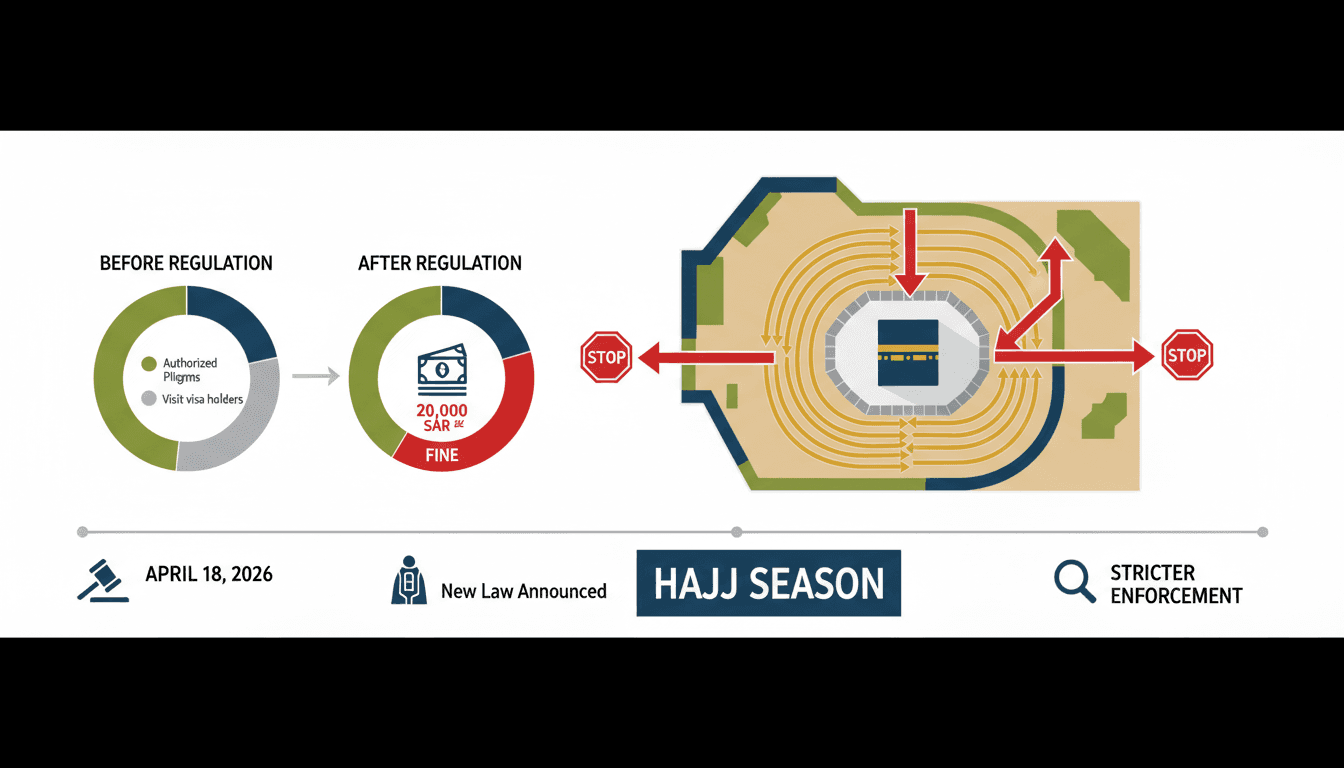
Here's what it means for you.
If you hold a visit visa and plan to enter Mecca during Hajj, you could face significant fines and restrictions.
Why it matters
This policy aims to regulate pilgrimage attendance, impacting travel plans for millions and altering the dynamics of religious tourism in the region.
What happened (in 30 seconds)
- On April 18, 2026, Saudi Arabia's Ministry of Interior announced a fine of up to 20,000 SAR for visit visa holders entering Mecca during Hajj.
- Enforcement begins from 1 Dhul al-Qadah to 14 Dhul al-Hijjah, targeting unauthorized participation in Hajj rituals.
- Violators face immediate fines, deportation for residents, and a 10-year entry ban.
The context you actually need
- Annual restrictions on Hajj entry are common in Saudi Arabia to manage pilgrim numbers and ensure safety.
- Visit visas are not valid for Hajj, which is strictly regulated under Saudi law, emphasizing the need for proper permits.
- Previous years have seen similar penalties, but this year's announcement has heightened awareness and compliance among travelers.
What's really happening
The Saudi Ministry of Interior's recent announcement reflects a broader strategy to manage the influx of pilgrims during the Hajj season, which is one of the largest annual gatherings in the world. By imposing a hefty fine of up to 20,000 SAR on visit visa holders attempting to enter Mecca, the government aims to deter unauthorized participation in Hajj rituals. This move is part of a systematic approach to ensure the safety and security of millions of pilgrims who flock to the holy city each year.
The enforcement period, spanning from 1 Dhul al-Qadah to 14 Dhul al-Hijjah, is critical as it coincides with the peak of Hajj activities. The Saudi authorities have activated checkpoints and patrols to monitor compliance, emphasizing the seriousness of the regulations. Residents found violating these rules face not only fines but also deportation and a decade-long ban from re-entering the Kingdom, which underscores the government's commitment to maintaining order during this sacred time.
This policy is not just about fines; it reflects the Kingdom's ongoing efforts to streamline Hajj operations and enhance the overall experience for legitimate pilgrims. By restricting access to only those with proper Hajj visas, Saudi Arabia aims to prevent overcrowding and potential security risks that could arise from unauthorized participants. The government has historically faced challenges in managing the logistics of such a massive event, and this regulation is a proactive measure to mitigate those issues.
Moreover, the announcement has sparked discussions among travel agencies and potential pilgrims, particularly those from Dubai and other Gulf states. Many residents who typically hold Saudi e-visas for Umrah and short trips to Mecca are now reconsidering their travel plans. Travel agencies report an uptick in inquiries for alternative destinations, such as Madinah, or for trips scheduled after the Hajj season, indicating a shift in travel behavior due to these new restrictions.
The broader implications of this policy extend beyond immediate fines. It signals a tightening of regulations around religious tourism in Saudi Arabia, which could reshape how pilgrims plan their journeys in the future. As the Kingdom continues to promote its Vision 2030 initiative, which includes enhancing the Hajj experience, such measures may become more common as authorities seek to balance accessibility with safety and security.
Who feels it first (and how)
- Pilgrims: Those planning to visit Mecca on visit visas will face fines and potential legal issues.
- Travel agencies: Increased inquiries for alternative travel plans may shift business dynamics.
- Residents: Local residents risk deportation and long-term bans, affecting their ability to travel freely.
What to watch next
- Travel trends: Monitor shifts in pilgrimage patterns and travel bookings to Saudi Arabia, particularly for Umrah and post-Hajj visits.
- Regulatory changes: Watch for any adjustments in visa policies or enforcement measures as the Hajj season approaches.
- Public sentiment: Keep an eye on social media and public reactions to the fines, which could influence future policy decisions.
The fine for unauthorized entry during Hajj is set at 20,000 SAR.
Increased scrutiny and enforcement of visa regulations will continue in the lead-up to Hajj.
The long-term impact on religious tourism and travel behavior in the region remains to be seen.
Frequently Asked Questions
- Why it matters?
- This policy aims to regulate pilgrimage attendance, impacting travel plans for millions and altering the dynamics of religious tourism in the region.
- What happened (in 30 seconds)?
- On April 18, 2026, Saudi Arabia's Ministry of Interior announced a fine of up to 20,000 SAR for visit visa holders entering Mecca during Hajj. Enforcement begins from 1 Dhul al-Qadah to 14 Dhul al-Hijjah, targeting unauthorized participation in Hajj rituals. Violators face immediate fines, deportation for residents, and a 10-year entry ban.
- What's really happening?
- The Saudi Ministry of Interior's recent announcement reflects a broader strategy to manage the influx of pilgrims during the Hajj season, which is one of the largest annual gatherings in the world. By imposing a hefty fine of up to 20,000 SAR on visit visa holders attempting to enter Mecca, the government aims to deter unauthorized participation in Hajj rituals. This move is part of a systematic approach to ensure the safety and security of millions of pilgrims who flock to the holy city each ye
- Who feels it first (and how)?
- Pilgrims: Those planning to visit Mecca on visit visas will face fines and potential legal issues. Travel agencies: Increased inquiries for alternative travel plans may shift business dynamics. Residents: Local residents risk deportation and long-term bans, affecting their ability to travel freely.
- What to watch next?
- Travel trends: Monitor shifts in pilgrimage patterns and travel bookings to Saudi Arabia, particularly for Umrah and post-Hajj visits. Regulatory changes: Watch for any adjustments in visa policies or enforcement measures as the Hajj season approaches. Public sentiment: Keep an eye on social media and public reactions to the fines, which could influence future policy decisions.
Arabic-language coverage of Saudi, regional, and international affairs.
"Al Bilad offers mainstream Saudi newspaper coverage across domestic and broader Arab topics."
— A47 Editor
20 ألف ريال غرامة دخول مكة أو المكوث بها من حاملي تأشيرات الزيارة
The Ministry of Interior has announced that holders of all types of visit visas, except for the Hajj visa, are not permitted to perform the Hajj pilgrimage. A financial penalty of up to 20,000 Saudi Riyals will be imposed on those who attempt to ente...
Arabic-language reporting focused on domestic developments in Saudi Arabia.
"Okaz is a mainstream Saudi newspaper that often reflects domestic priorities and official-facing coverage."
— A47 Editor
20000 ريال غرامة مالية لمخالفي دخول مكة من حاملي تأشيرات الزيارة
The Ministry of Interior has announced that holders of all types of visit visas, except for the Hajj visa, are prohibited from performing the Hajj pilgrimage and entering the holy city of Mecca and its sacred sites from the 1st of Dhul-Qi'dah until t...
Arabic-language reporting focused on domestic developments in Saudi Arabia.
"Okaz is a mainstream Saudi newspaper that often reflects domestic priorities and official-facing coverage."
— A47 Editor
المهلة انتهت اليوم.. «الحج»: لا تساهل مع محاولات أداء النسك دون تصريح
The deadline set by the Ministry of Hajj for pilgrims to leave the Kingdom has ended today, April 18, 2026. The ministry emphasized that remaining in the country beyond this date constitutes a violation, subjecting violators to legal penalties. It al...