
Trump Confirms Ongoing Naval Blockade of Iran Amid Ceasefire Uncertainty
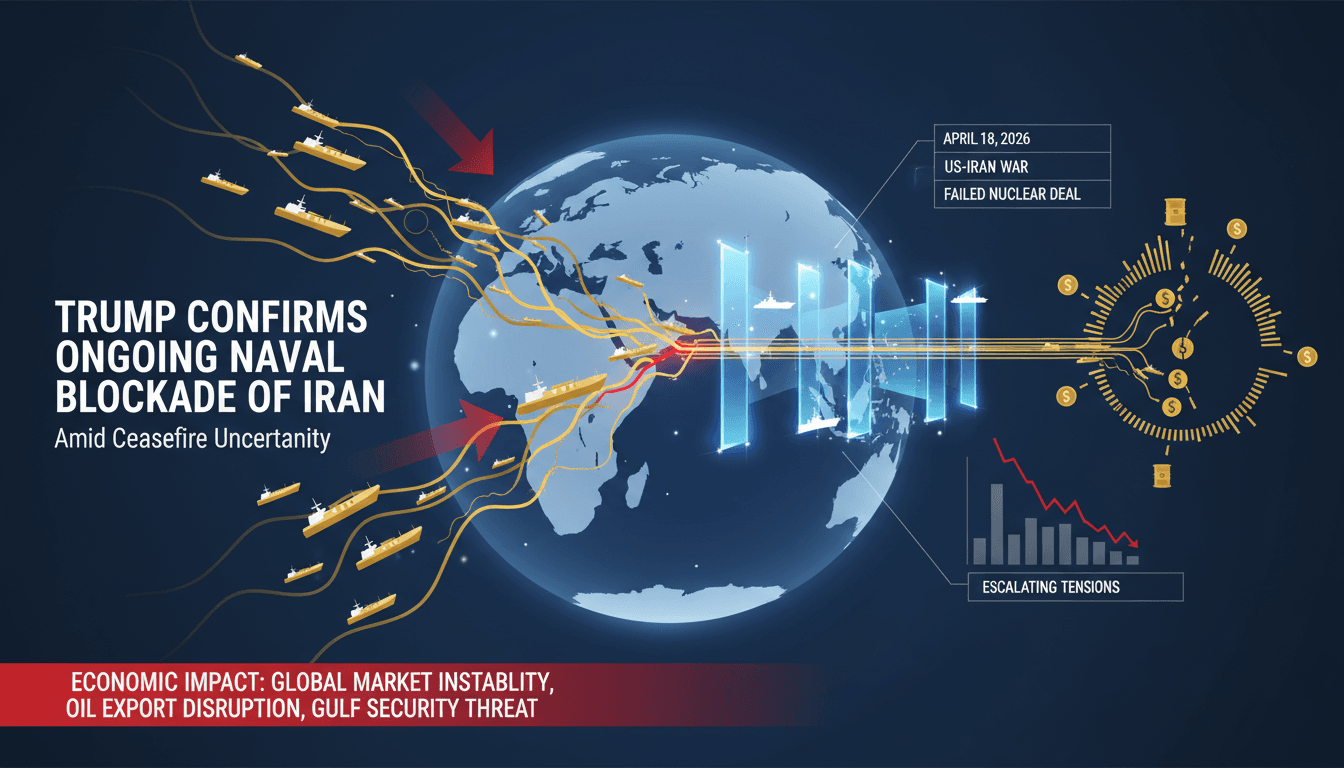
Here's what it means for you.
If you rely on Gulf oil or trade routes, expect rising costs and potential disruptions.
Why it matters
The ongoing blockade impacts global oil prices and trade dynamics, affecting economies far beyond the Middle East.
What happened (in 30 seconds)
- On April 18, 2026, President Trump confirmed the U.S. naval blockade of Iranian ports will continue even if the current ceasefire expires.
- The blockade, initiated amid the U.S.-Iran war, aims to pressure Iran regarding its nuclear program and control over the Strait of Hormuz.
- Iran has responded by threatening to restrict access to the Strait of Hormuz, a critical maritime route for global oil shipments.
The context you actually need
- The U.S.-Iran war began on February 28, 2026, following U.S.-Israeli airstrikes on Iranian nuclear sites, escalating existing tensions.
- The blockade, enforced since April 14, targets Iran's oil exports and uranium stockpiles, with Iran estimated to lose $435 million daily due to the blockade.
- The ceasefire, mediated by Pakistan and Egypt, is set to expire around April 22, 2026, with both sides showing reluctance to extend it.
What's really happening
The U.S. naval blockade of Iranian ports is a strategic maneuver designed to exert pressure on Tehran amid escalating tensions that have roots in long-standing nuclear disputes and regional power dynamics. The blockade serves multiple purposes: it aims to cripple Iran's economy by cutting off vital oil exports and toll revenues from the Strait of Hormuz, a crucial passage for global oil shipments. With Iran's estimated daily economic loss from the blockade at $435 million, the U.S. hopes to compel Tehran to negotiate on its nuclear program and halt its military ambitions.
President Trump's recent statements aboard Air Force One indicate a firm stance against extending the ceasefire without a comprehensive peace agreement. His reluctance to extend the truce reflects a broader strategy to maintain leverage over Iran, suggesting that the U.S. is prepared to continue military enforcement if necessary. This approach is not without risks; it could lead to further escalation of hostilities, particularly if Iran perceives the blockade as an existential threat.
The geopolitical implications are significant. The blockade has already led to heightened tensions in the Gulf region, with Iran threatening to restrict access to the Strait of Hormuz if the blockade persists. This could disrupt global oil supplies, leading to increased prices and economic instability in oil-dependent nations. Additionally, the blockade has caused investor flight from Gulf markets, with UAE stock values reportedly evaporating by $120 billion amid uncertainty.
As the situation unfolds, the U.S. is also looking to strengthen alliances, as evidenced by Trump's praise for Chinese President Xi Jinping's satisfaction with the reopening of Hormuz. This indicates a potential pivot towards multilateral negotiations involving key global players, which could reshape the dynamics of the conflict.
Who feels it first (and how)
- Oil-dependent countries: Nations reliant on Gulf oil imports will face rising costs and potential supply shortages.
- Shipping and logistics companies: Increased maritime insurance and disrupted routes will affect operational costs and delivery timelines.
- Investors in Gulf markets: Heightened volatility and uncertainty may lead to significant financial losses and reduced confidence in regional investments.
What to watch next
- Ceasefire negotiations: Monitor any developments in talks mediated by countries like Pakistan and Egypt, as they could influence the blockade's duration.
- Iran's military responses: Watch for any escalations in Iranian naval threats or military actions in response to the blockade, which could impact global shipping routes.
- Global oil prices: Keep an eye on fluctuations in oil prices as the blockade continues, as they will reflect the broader economic impact of the ongoing conflict.
The U.S. blockade of Iranian ports is currently enforced and will persist absent a comprehensive peace agreement.
Iran will continue to respond with threats and military posturing, potentially escalating tensions in the region.
The outcome of future negotiations and their impact on the blockade and regional stability remain uncertain.
Frequently Asked Questions
- Why it matters?
- The ongoing blockade impacts global oil prices and trade dynamics, affecting economies far beyond the Middle East.
- What happened (in 30 seconds)?
- On April 18, 2026, President Trump confirmed the U.S. naval blockade of Iranian ports will continue even if the current ceasefire expires. The blockade, initiated amid the U.S.-Iran war, aims to pressure Iran regarding its nuclear program and control over the Strait of Hormuz. Iran has responded by threatening to restrict access to the Strait of Hormuz, a critical maritime route for global oil shipments.
- What's really happening?
- The U.S. naval blockade of Iranian ports is a strategic maneuver designed to exert pressure on Tehran amid escalating tensions that have roots in long-standing nuclear disputes and regional power dynamics. The blockade serves multiple purposes: it aims to cripple Iran's economy by cutting off vital oil exports and toll revenues from the Strait of Hormuz, a crucial passage for global oil shipments. With Iran's estimated daily economic loss from the blockade at $435 million, the U.S. hopes to comp
- Who feels it first (and how)?
- Oil-dependent countries: Nations reliant on Gulf oil imports will face rising costs and potential supply shortages. Shipping and logistics companies: Increased maritime insurance and disrupted routes will affect operational costs and delivery timelines. Investors in Gulf markets: Heightened volatility and uncertainty may lead to significant financial losses and reduced confidence in regional investments.
- What to watch next?
- Ceasefire negotiations: Monitor any developments in talks mediated by countries like Pakistan and Egypt, as they could influence the blockade's duration. Iran's military responses: Watch for any escalations in Iranian naval threats or military actions in response to the blockade, which could impact global shipping routes. Global oil prices: Keep an eye on fluctuations in oil prices as the blockade continues, as they will reflect the broader economic impact of the ongoing conflict.
Pan-Arab news coverage spanning politics, business, sports, and regional affairs.
"Asharq Al-Awsat reflects a broad Arab editorial perspective with strong attention to regional geopolitics."
— A47 Editor
ترمب: حصار موانىء إيران «سيظل قائماً» في حال عدم التوصل إلى اتفاق
U.S. President Donald Trump stated that he intends to continue the blockade of Iranian ports if no agreement is reached with Tehran, indicating a potential lack of extension for the ceasefire.
Arabic-language coverage of international news and geopolitics.
"RT Arabic is a Russian state-funded outlet often criticized for promoting Kremlin-aligned narratives."
— A47 Editor
ترامب: الخلافات مع إيران كبيرة في قضايا قليلة والحصار على الموانئ سيرفع فور توقيع الاتفاق
U.S. President Donald Trump announced that the country will lift the blockade on Iranian ports immediately upon reaching an agreement with Tehran, emphasizing that the blockade will end as soon as the deal is signed.
Arabic-language UAE newspaper coverage focused on domestic affairs, public institutions, business, society, and regional developments.
"Al Khaleej coverage generally reflects a mainstream UAE editorial lens with strong attention to public affairs, institutions, and regional developments."
— A47 Editor
ترامب : «لا نقاط عالقة» في الاتفاق مع إيران
On Friday, U.S. President Donald Trump announced that there are no longer any outstanding issues preventing an agreement with Iran, signaling a potential breakthrough in diplomatic relations. This statement reflects a shift in the negotiations that h...