
Google Negotiates with Marvell Technology for Custom AI Chips Development
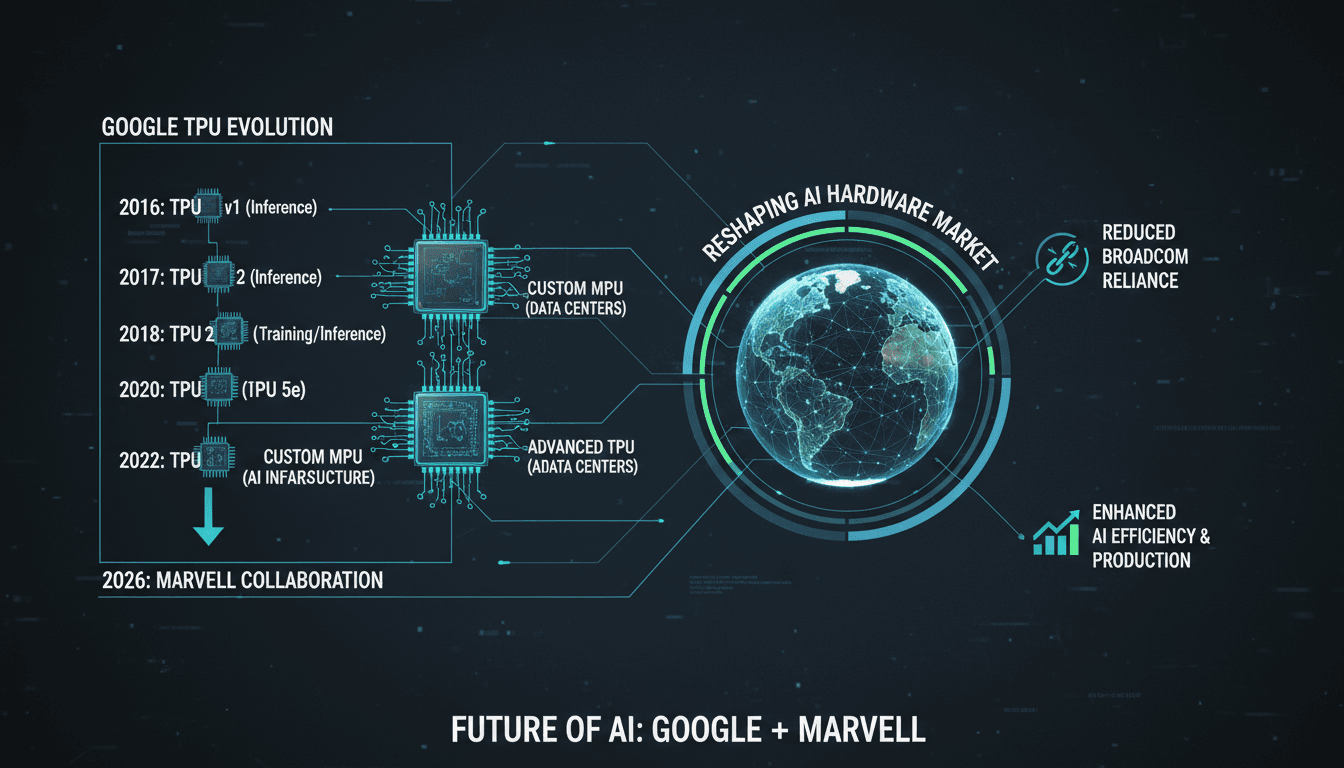
Here's what it means for you.
If you work in tech or data management, the outcome of Google's negotiations could reshape the landscape of AI hardware and influence your operational costs.
Why it matters
This partnership could significantly alter the competitive dynamics in the AI hardware market, impacting pricing and availability for businesses reliant on AI technologies.
What happened (in 30 seconds)
- On April 19, 2026, Google began negotiations with Marvell Technology to develop two specialized AI chips for data centers.
- The collaboration aims to produce nearly two million memory processing units (MPUs) and a new tensor processing unit (TPU) optimized for AI model inference.
- This move is part of Google's strategy to reduce reliance on Broadcom, its current partner, amid rising demand for efficient AI hardware.
The context you actually need
- Google pioneered tensor processing units (TPUs) in the mid-2010s to enhance machine learning workloads, initially for internal use before expanding to cloud services.
- Broadcom has been Google's primary design partner for TPUs, with a contract recently extended through 2031, but high fees have prompted Google to seek alternatives.
- Marvell's expertise in designing efficient AI hardware, including Groq's language processing unit, positions it as a viable partner for Google's new chip development.
What's really happening
Google's negotiations with Marvell Technology represent a strategic pivot in the tech giant's approach to AI hardware development. Historically, Google has relied heavily on Broadcom for its TPU production, which has been instrumental in its cloud services and AI capabilities. However, as demand for AI-driven solutions surges, the need for more specialized and cost-effective hardware has become critical.
The decision to partner with Marvell stems from several factors. First, the rising costs associated with Broadcom's services have made it increasingly difficult for Google to maintain competitive pricing for its AI offerings. By developing its own chips in collaboration with Marvell, Google aims to reduce these costs and enhance its profit margins. The planned production of nearly two million MPUs indicates a significant investment in custom hardware that can handle memory-intensive tasks, which is essential for the efficient processing of AI workloads.
Moreover, the new TPU optimized for AI model inference is a direct response to the evolving needs of AI applications. As models become more complex and data-intensive, the demand for hardware that can efficiently manage these tasks is paramount. Google's shift towards Marvell not only reflects a desire for innovation but also a strategic move to ensure that it remains competitive against other tech giants, particularly Nvidia, which has dominated the GPU market.
The implications of this partnership extend beyond just hardware development. By diversifying its supplier base, Google is also mitigating risks associated with over-reliance on a single partner. This move could lead to a more resilient supply chain, allowing Google to adapt more swiftly to market changes and technological advancements.
In summary, Google's negotiations with Marvell are not just about creating new chips; they represent a broader strategy to enhance its AI capabilities, reduce costs, and maintain a competitive edge in a rapidly evolving market.
Who feels it first (and how)
- Tech companies: Those relying on AI solutions may see changes in pricing and availability of hardware.
- Data centers: Facilities that utilize TPUs and MPUs will need to adapt to new hardware specifications and capabilities.
- Investors: Stakeholders in Marvell Technology may experience immediate financial impacts from stock price fluctuations based on the outcome of these negotiations.
What to watch next
- Finalization of designs: The completion of MPU designs in 2027 will indicate the timeline for production and market entry, affecting supply chains.
- Market response: Watch for shifts in stock prices for both Google and Marvell, as well as competitors like Broadcom, which may react to these developments.
- AI hardware trends: Monitor advancements in AI hardware efficiency and capabilities, as they will influence the broader tech landscape and operational costs.
Google is negotiating with Marvell for new AI chips.
The production of nearly two million MPUs will proceed as planned, pending successful negotiations.
The long-term impact on Google's relationship with Broadcom and how it will affect pricing strategies in the AI hardware market.
Frequently Asked Questions
- Why it matters?
- This partnership could significantly alter the competitive dynamics in the AI hardware market, impacting pricing and availability for businesses reliant on AI technologies.
- What happened (in 30 seconds)?
- On April 19, 2026, Google began negotiations with Marvell Technology to develop two specialized AI chips for data centers. The collaboration aims to produce nearly two million memory processing units (MPUs) and a new tensor processing unit (TPU) optimized for AI model inference. This move is part of Google's strategy to reduce reliance on Broadcom, its current partner, amid rising demand for efficient AI hardware.
- What's really happening?
- Google's negotiations with Marvell Technology represent a strategic pivot in the tech giant's approach to AI hardware development. Historically, Google has relied heavily on Broadcom for its TPU production, which has been instrumental in its cloud services and AI capabilities. However, as demand for AI-driven solutions surges, the need for more specialized and cost-effective hardware has become critical. The decision to partner with Marvell stems from several factors. First, the rising costs as
- Who feels it first (and how)?
- Tech companies: Those relying on AI solutions may see changes in pricing and availability of hardware. Data centers: Facilities that utilize TPUs and MPUs will need to adapt to new hardware specifications and capabilities. Investors: Stakeholders in Marvell Technology may experience immediate financial impacts from stock price fluctuations based on the outcome of these negotiations.
- What to watch next?
- Finalization of designs: The completion of MPU designs in 2027 will indicate the timeline for production and market entry, affecting supply chains. Market response: Watch for shifts in stock prices for both Google and Marvell, as well as competitors like Broadcom, which may react to these developments. AI hardware trends: Monitor advancements in AI hardware efficiency and capabilities, as they will influence the broader tech landscape and operational costs.
Daily AI news: models, tools, and policy.
"Independent outlet tracking the fast pace of AI."
— A47 Editor
Google plans nearly two million new AI chips as it turns to Marvell for custom designs
Google is collaborating with Marvell Technology to develop nearly two million new AI chips, including a memory processing unit and an optimized tensor processing unit (TPU) for its data centers. This partnership aims to enhance the efficiency of AI m...
Opinionated AI coverage for general audiences.
"TNW’s AI vertical covering tools, ethics, and trends."
— A47 Editor
Google is in talks with Marvell to build custom AI inference chips as it diversifies beyond Broadcom
Google is currently in discussions with Marvell Technology to create two new AI chips, specifically a memory processing unit and an inference-optimized TPU, as part of its strategy to diversify its custom silicon supply chain beyond existing partners...
Curated tech headlines including AI stories.
"Influential aggregator surfacing the day’s top tech/AI links."
— A47 Editor
Sources: Google is in talks with Marvell Technology to develop a memory processing unit that works alongside TPUs, and a new TPU for running AI models (Qianer Liu/The Information)
Google is currently in discussions with Marvell Technology to develop two new chips, including a memory processing unit and an optimized tensor processing unit (TPU) for running artificial intelligence models more efficiently. This collaboration aims...
Market-moving headlines impacting equities, bonds, and related risk assets.
"Real-time catalysts and volatility drivers across indices and sectors."
— A47 Editor
Google in talks with Marvell to build new AI chips, The Information reports
Google is reportedly in discussions with Marvell to develop new artificial intelligence chips, as reported by The Information. This collaboration aims to enhance Google's capabilities in the AI sector, aligning with its ongoing efforts to innovate in...