
UAE Welcomes IMO Decision Supporting Transit Rights in Strait of Hormuz
Here's what it means for you.
If you rely on global energy markets, the recent developments in the Strait of Hormuz could impact fuel prices and supply chains.
Why it matters
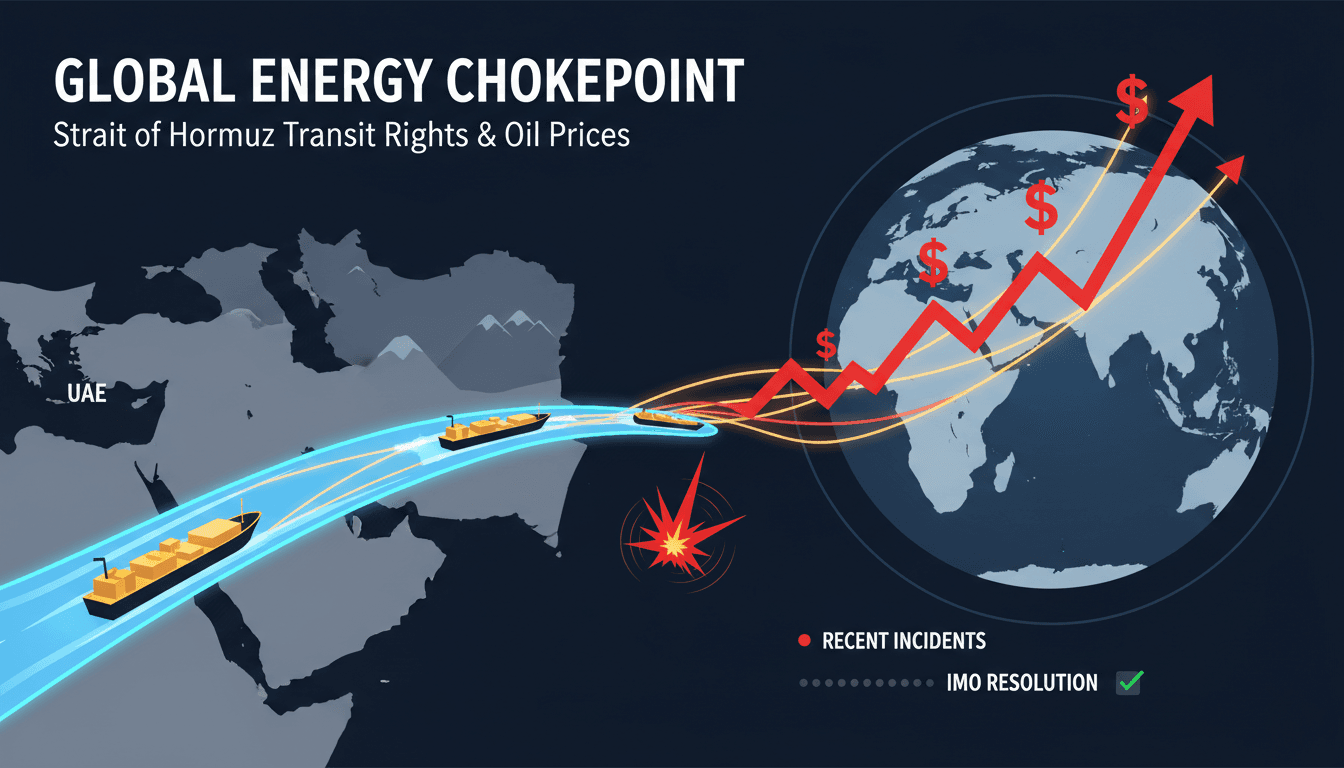
The Strait of Hormuz is a critical chokepoint for global oil transit, affecting energy prices and international trade.
What happened (in 30 seconds)
- On April 18, 2026, the UAE welcomed a resolution from the International Maritime Organization (IMO) affirming transit passage rights through the Strait of Hormuz.
- The resolution condemned Iran's actions, including the closure of the strait and attacks on vessels, demanding an end to hostilities.
- This decision follows a crisis that began in February 2026, where Iranian actions disrupted the transit of 20 million barrels of oil per day, stranding thousands of vessels and seafarers.
The context you actually need
- The 2026 Strait of Hormuz crisis began after U.S. and Israeli airstrikes killed Iran's Supreme Leader, leading to Iranian retaliation and the declaration of the strait's closure.
- Iran's aggressive actions included missile attacks on commercial vessels and the imposition of tolls exceeding $1 million per ship, severely impacting global oil trade.
- The UAE's resolution at the IMO reflects a unified stance among Gulf Cooperation Council states against Iranian violations of international maritime law.
What's really happening
The recent decision by the IMO's Legal Committee to affirm transit passage rights through the Strait of Hormuz is a significant diplomatic move amid escalating tensions in the region. The crisis began on February 28, 2026, when U.S. and Israeli airstrikes targeted Iran, resulting in the assassination of Supreme Leader Ali Khamenei. In retaliation, Iran declared the closure of the Strait of Hormuz on March 1, leading to a series of aggressive actions against commercial vessels, including missile strikes and mine-laying operations.
The closure of the strait, which is responsible for approximately 20% of global seaborne oil trade, resulted in the stranding of around 2,000 vessels and 20,000 seafarers. This disruption not only affected oil prices but also raised insurance premiums, which quadrupled due to the heightened risk in the region. The UAE's resolution at the IMO was a direct response to these violations, emphasizing the need for adherence to international maritime law and the importance of maintaining open shipping lanes.
The resolution called for Iran to cease its hostile actions, remove mines, and ensure unobstructed passage through the strait. The UAE's Permanent Representative to the IMO, Mohammed Khamis Saeed Al-Kaabi, highlighted the committee's unified defense of maritime principles, signaling a collective stance against Iran's aggressive maneuvers. Following the resolution, Iran announced a reopening of the strait to commercial shipping under specific conditions, although this was still subject to Iranian Revolutionary Guard Corps (IRGC) oversight.
The implications of this situation extend beyond immediate maritime safety; they resonate throughout global energy markets. As oil prices peaked at $126 per barrel for Brent crude during the crisis, the reopening of the strait led to an 11% decline in prices, indicating the market's sensitivity to geopolitical developments. The UAE's proactive stance in securing international support through the IMO reflects its strategic interests in maintaining stability in the region and safeguarding its economic interests.
Who feels it first (and how)
- Energy companies: Increased operational costs due to heightened insurance premiums and potential supply chain disruptions.
- Consumers: Fluctuating fuel prices at the pump as global oil prices react to geopolitical tensions.
- Shipping and logistics firms: Adjustments in routing and increased costs due to the need for alternative shipping lanes or insurance.
- Seafarers: Ongoing risks and uncertainties regarding safety and employment in the region.
What to watch next
- Compliance monitoring by the IMO: The effectiveness of the IMO Secretary-General's oversight on Iran's adherence to the resolution will be crucial for maritime safety.
- Global oil price fluctuations: Watch for changes in oil prices as the market reacts to developments in the Strait of Hormuz and broader geopolitical tensions.
- Iran's future actions: Iran's response to the resolution and any subsequent military or economic maneuvers could further impact regional stability and global trade.
The Strait of Hormuz is vital for global oil transit, and disruptions will affect energy prices.
Continued monitoring and potential escalation of tensions in the region as Iran responds to international pressure.
The long-term effectiveness of the IMO resolution in deterring Iranian aggression and ensuring safe passage through the strait.
Frequently Asked Questions
- Why it matters?
- The Strait of Hormuz is a critical chokepoint for global oil transit, affecting energy prices and international trade.
- What happened (in 30 seconds)?
- On April 18, 2026, the UAE welcomed a resolution from the International Maritime Organization (IMO) affirming transit passage rights through the Strait of Hormuz. The resolution condemned Iran's actions, including the closure of the strait and attacks on vessels, demanding an end to hostilities. This decision follows a crisis that began in February 2026, where Iranian actions disrupted the transit of 20 million barrels of oil per day, stranding thousands of vessels and seafarers.
- What's really happening?
- The recent decision by the IMO's Legal Committee to affirm transit passage rights through the Strait of Hormuz is a significant diplomatic move amid escalating tensions in the region. The crisis began on February 28, 2026, when U.S. and Israeli airstrikes targeted Iran, resulting in the assassination of Supreme Leader Ali Khamenei. In retaliation, Iran declared the closure of the Strait of Hormuz on March 1, leading to a series of aggressive actions against commercial vessels, including missile
- Who feels it first (and how)?
- Energy companies: Increased operational costs due to heightened insurance premiums and potential supply chain disruptions. Consumers: Fluctuating fuel prices at the pump as global oil prices react to geopolitical tensions. Shipping and logistics firms: Adjustments in routing and increased costs due to the need for alternative shipping lanes or insurance. Seafarers: Ongoing risks and uncertainties regarding safety and employment in the region.
- What to watch next?
- Compliance monitoring by the IMO: The effectiveness of the IMO Secretary-General's oversight on Iran's adherence to the resolution will be crucial for maritime safety. Global oil price fluctuations: Watch for changes in oil prices as the market reacts to developments in the Strait of Hormuz and broader geopolitical tensions. Iran's future actions: Iran's response to the resolution and any subsequent military or economic maneuvers could further impact regional stability and global trade.
Arabic-language local coverage focused on UAE domestic issues, civic affairs, and community reporting.
"Emarat Al Youm local coverage emphasizes UAE institutions, public services, and community-level developments."
— A47 Editor
الإمارات ترحّب بقرار «قانونية المنظمة البحرية الدولية» تأكيد حق المرور العابر في مضيق هرمز الإمارات ترحّب بقرار «قانونية المنظمة البحرية الدولية» تأكيد حق المرور العابر في مضيق هرمز
The United Arab Emirates welcomed the decision by the Legal Committee of the International Maritime Organization, which was adopted during its 113th session, affirming the right of transit passage through the Strait of Hormuz. This decision comes in ...
UAE-based English-language newspaper covering regional politics, economics, and global affairs.
"The National reflects Emirati policy perspectives while maintaining international editorial standards."
— A47 Editor
UAE welcomes IMO condemnation of Iranian actions in Strait of Hormuz
The United Arab Emirates (UAE) has welcomed the International Maritime Organization's (IMO) condemnation of Iranian actions in the Strait of Hormuz, highlighting the importance of maritime security in the region. This response follows a resolution ad...
Pan-Arab news coverage spanning politics, business, sports, and regional affairs.
"Asharq Al-Awsat reflects a broad Arab editorial perspective with strong attention to regional geopolitics."
— A47 Editor
ترحيب دولي بفتح مضيق هرمز
World leaders have welcomed the announcement from Iran and the United States regarding the reopening of the Strait of Hormuz, emphasizing the importance of keeping this vital waterway open. This development comes as a significant step towards easing ...
Arabic-language UAE newspaper coverage focused on domestic affairs, public institutions, business, society, and regional developments.
"Al Khaleej coverage generally reflects a mainstream UAE editorial lens with strong attention to public affairs, institutions, and regional developments."
— A47 Editor
الإمارات ترحّب بقرار «البحرية الدولية» تأكيد حق المرور في «هرمز » وإدانة إغلاقه من قِبل إيران
The United Arab Emirates welcomed the decision of the International Maritime Organization's legal committee, which affirmed the right of passage through the Strait of Hormuz and condemned its closure by Iran. This decision underscores the importance ...