
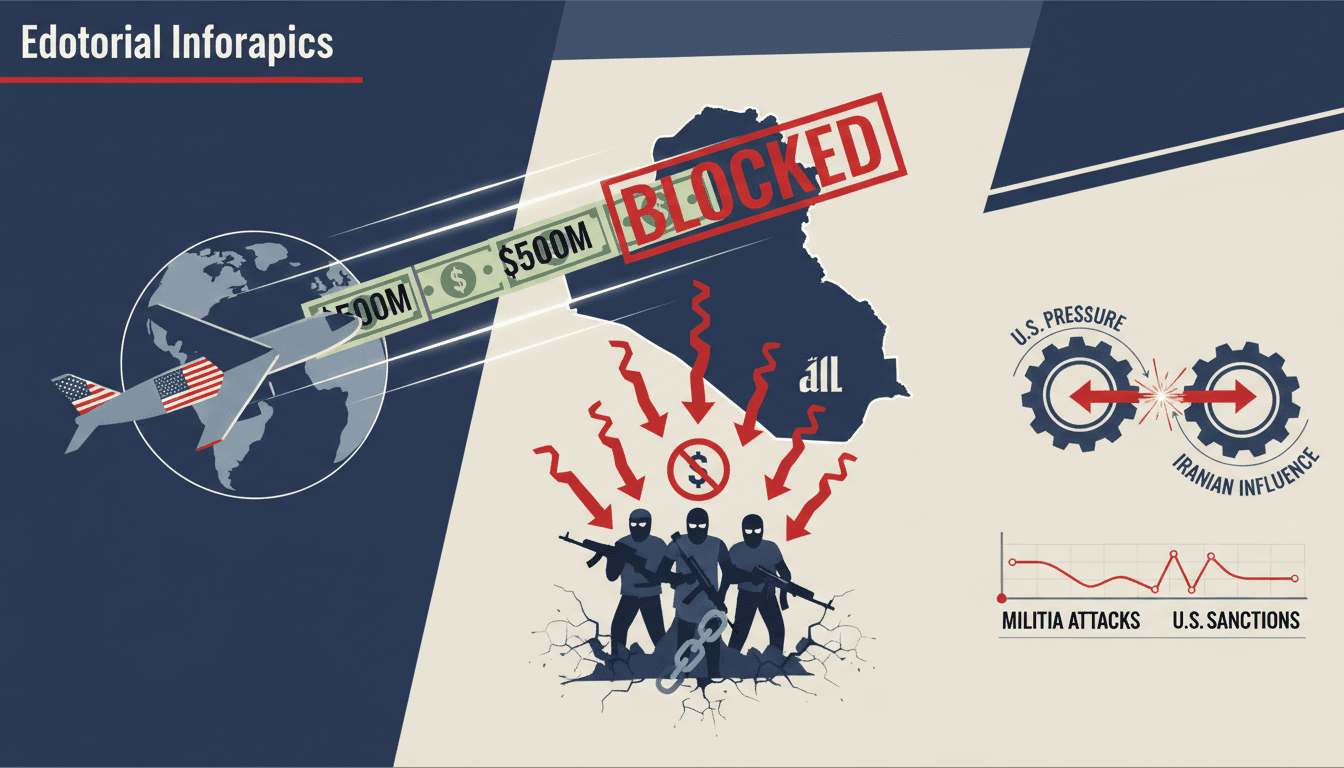
United States Blocks $500 Million in Dollar Shipments to Iraq to Pressure Against Iran-Backed Militias
Here's what it means for you.
If you operate in or with Iraq, expect increased financial scrutiny and potential disruptions in cash flow.
Why it matters
This financial maneuver underscores the U.S. strategy to leverage economic pressure against Iran-backed militias, impacting regional stability and international business operations.
What happened (in 30 seconds)
- The U.S. blocked a cargo plane carrying nearly $500 million in cash to Iraq on April 21, 2026, as part of a strategy to dismantle Iran-backed militias.
- The Trump administration suspended ongoing cash shipments from Iraqi oil revenues held at the Federal Reserve Bank of New York and froze funding for Iraqi security programs.
- The Central Bank of Iraq reported sufficient dollar reserves, indicating no immediate cash shortage despite the U.S. actions.
The context you actually need
- Iraq's economy relies heavily on cash shipments from oil sales, which have historically been managed through the Federal Reserve Bank of New York.
- Iran-backed militias have gained significant political and financial power in Iraq, complicating U.S. efforts to stabilize the region.
- The U.S.-Iran war, which began in February 2026, has escalated tensions, leading to increased militia attacks on U.S. interests in Iraq.
What's really happening
The U.S. decision to block nearly $500 million in dollar shipments to Iraq is a calculated move in the broader context of the ongoing U.S.-Iran war. Since the conflict's escalation in late February 2026, Iran-backed militias have intensified their attacks on U.S. facilities, prompting a robust response from the U.S. government. This includes airstrikes and a series of financial restrictions aimed at crippling the operational capabilities of these militias.
Historically, proceeds from Iraqi oil sales have been held at the Federal Reserve Bank of New York, allowing the U.S. to exert financial influence over Iraq. The recent blockade of cash shipments is not merely a punitive measure; it is part of a strategic effort to compel the Iraqi government to take decisive action against militias like Kataib Hezbollah and Asaib Ahl al-Haq, which have been implicated in attacks on American personnel and interests.
The suspension of cash shipments and security cooperation funding reflects a broader strategy to leverage economic pressure as a tool of foreign policy. By cutting off access to cash, the U.S. aims to destabilize the financial networks that support these militias, thereby reducing their capacity to operate. The U.S. Treasury's actions are also a response to the Iraqi government's perceived inability or unwillingness to confront these groups effectively.
Despite the U.S. actions, the Central Bank of Iraq has publicly stated that it has sufficient dollar reserves to meet demand, indicating that the immediate impact on the Iraqi economy may be limited. However, the long-term implications could be significant, as ongoing financial restrictions may lead to increased instability and factional strife within Iraq. The potential for a liquidity crisis in the region could also have ripple effects, particularly in neighboring countries that are economically intertwined with Iraq.
Moreover, the blockade has implications beyond Iraq. The UAE, particularly Dubai, serves as a hub for dollar arbitrage schemes involving Iran-backed militias. These groups exploit financial channels to convert payment cards into cash, which is then smuggled back to Iraq. The U.S. actions could disrupt these operations, further straining the financial networks that support these militias.
In summary, the U.S. blockade of dollar shipments to Iraq is a multifaceted strategy aimed at curbing the influence of Iran-backed militias while navigating the complex geopolitical landscape of the region. The effectiveness of these measures will depend on the Iraqi government's response and the broader dynamics of U.S.-Iran relations.
Who feels it first (and how)
- Iraqi Government Officials: Increased pressure to act against militias may lead to political instability.
- U.S. Military Personnel: Heightened risk from militia attacks as tensions escalate.
- Local Businesses: Potential cash flow disruptions affecting operations and transactions.
- International Investors: Increased risk perception may deter investment in Iraq.
What to watch next
- Iraqi Government Response: Monitor how Baghdad addresses U.S. demands regarding militia dismantlement, as this will influence regional stability.
- Militia Activity Levels: Watch for changes in militia attacks on U.S. interests, which could signal escalating tensions or a shift in strategy.
- Economic Indicators: Keep an eye on the Iraqi dinar's exchange rate and Central Bank statements regarding dollar reserves, as these will reflect the economic impact of U.S. actions.
The U.S. has blocked nearly $500 million in dollar shipments to Iraq.
Increased financial scrutiny and pressure on the Iraqi government to act against militias.
The long-term economic impact on Iraq and the effectiveness of U.S. measures in curbing militia influence.
Frequently Asked Questions
- Why it matters?
- This financial maneuver underscores the U.S. strategy to leverage economic pressure against Iran-backed militias, impacting regional stability and international business operations.
- What happened (in 30 seconds)?
- The U.S. blocked a cargo plane carrying nearly $500 million in cash to Iraq on April 21, 2026, as part of a strategy to dismantle Iran-backed militias. The Trump administration suspended ongoing cash shipments from Iraqi oil revenues held at the Federal Reserve Bank of New York and froze funding for Iraqi security programs. The Central Bank of Iraq reported sufficient dollar reserves, indicating no immediate cash shortage despite the U.S. actions.
- What's really happening?
- The U.S. decision to block nearly $500 million in dollar shipments to Iraq is a calculated move in the broader context of the ongoing U.S.-Iran war. Since the conflict's escalation in late February 2026, Iran-backed militias have intensified their attacks on U.S. facilities, prompting a robust response from the U.S. government. This includes airstrikes and a series of financial restrictions aimed at crippling the operational capabilities of these militias. Historically, proceeds from Iraqi oil
- Who feels it first (and how)?
- Iraqi Government Officials: Increased pressure to act against militias may lead to political instability. U.S. Military Personnel: Heightened risk from militia attacks as tensions escalate. Local Businesses: Potential cash flow disruptions affecting operations and transactions. International Investors: Increased risk perception may deter investment in Iraq.
- What to watch next?
- Iraqi Government Response: Monitor how Baghdad addresses U.S. demands regarding militia dismantlement, as this will influence regional stability. Militia Activity Levels: Watch for changes in militia attacks on U.S. interests, which could signal escalating tensions or a shift in strategy. Economic Indicators: Keep an eye on the Iraqi dinar's exchange rate and Central Bank statements regarding dollar reserves, as these will reflect the economic impact of U.S. actions.
Regional and international reporting focused on Middle Eastern politics, diplomacy, and economics.
"Asharq Al-Awsat is a Saudi-owned international newspaper reflecting mainstream Gulf political perspectives."
— A47 Editor
Report Says US Blocked $500M Cash Shipment to Iraq Over Pro-Iran Attacks
A recent report indicates that the United States has blocked a $500 million cash shipment to Iraq, citing concerns over pro-Iranian attacks. This decision reflects ongoing tensions between the U.S. and Iran, particularly in the context of Iraq's poli...
Comprehensive coverage of Middle Eastern and global issues.
"Al Jazeera is a prominent voice from the Global South, especially the Middle East, with an emphasis on underreported stories."
— A47 Editor
US halts shipment of Iraq’s oil dollars in bid to curb Iran-linked groups
The U.S. Treasury has blocked a shipment of nearly $500 million in cash intended for Iraq, aiming to curb the financial activities of Iran-linked groups. This action highlights ongoing tensions between the U.S. and Iran, particularly regarding financ...
Global news coverage with extensive reporting on Middle Eastern conflicts and geopolitics.
"Al Jazeera is a Qatar-based broadcaster known for wide regional coverage and alternative perspectives."
— A47 Editor
US halts shipment of Iraq’s oil dollars to curb Iran-linked groups: WSJ
The U.S. Treasury has blocked a shipment of nearly $500 million in cash intended for Iraq, aiming to curb the financial activities of Iran-linked groups. This action highlights ongoing tensions between the U.S. and Iran, particularly regarding financ...
Arabic-language coverage of international news and geopolitics.
"RT Arabic is a Russian state-funded outlet often criticized for promoting Kremlin-aligned narratives."
— A47 Editor
"وول ستريت جورنال": واشنطن أوقفت شحنة أموال للعراق بقيمة 500 مليون دولار من عائدات النفط
The Wall Street Journal reported that Washington has halted a shipment of $500 million to Iraq, derived from oil revenues, and frozen security cooperation programs with Baghdad as part of efforts to exert pressure on Iran-backed groups.
Pan-Arab news coverage spanning politics, business, sports, and regional affairs.
"Asharq Al-Awsat reflects a broad Arab editorial perspective with strong attention to regional geopolitics."
— A47 Editor
تقرير: أميركا توقف شحنات الدولار للعراق
The Wall Street Journal reported that the Trump administration has suspended dollar shipments to Iraq, according to Iraqi and American officials. This decision marks a significant shift in the financial relationship between the United States and Iraq...
Global political, business, and cultural coverage from WSJ international desks.
"The Wall Street Journal offers extensive international reporting with a reputation for financial insight and a center-right editorial stance."
— A47 Editor
U.S. Blocks Iraq’s Dollar Shipments to Squeeze Its Iran-Backed Militias
The U.S. has blocked nearly $500 million in cash shipments intended for Iraq, a move aimed at curbing the financial activities of Iran-backed militias in the region. This decision follows the Trump administration's suspension of security cooperation ...
UAE-based English-language newspaper covering regional politics, economics, and global affairs.
"The National reflects Emirati policy perspectives while maintaining international editorial standards."
— A47 Editor
US suspends Iraq’s dollar access as pressure tactic to curb Iranian influence and militias
The United States has suspended Iraq's access to dollar transactions as a strategy to limit Iranian influence and the activities of militias linked to Iran. This decision follows the blocking of a nearly $500 million cash shipment intended for Iraq, ...