
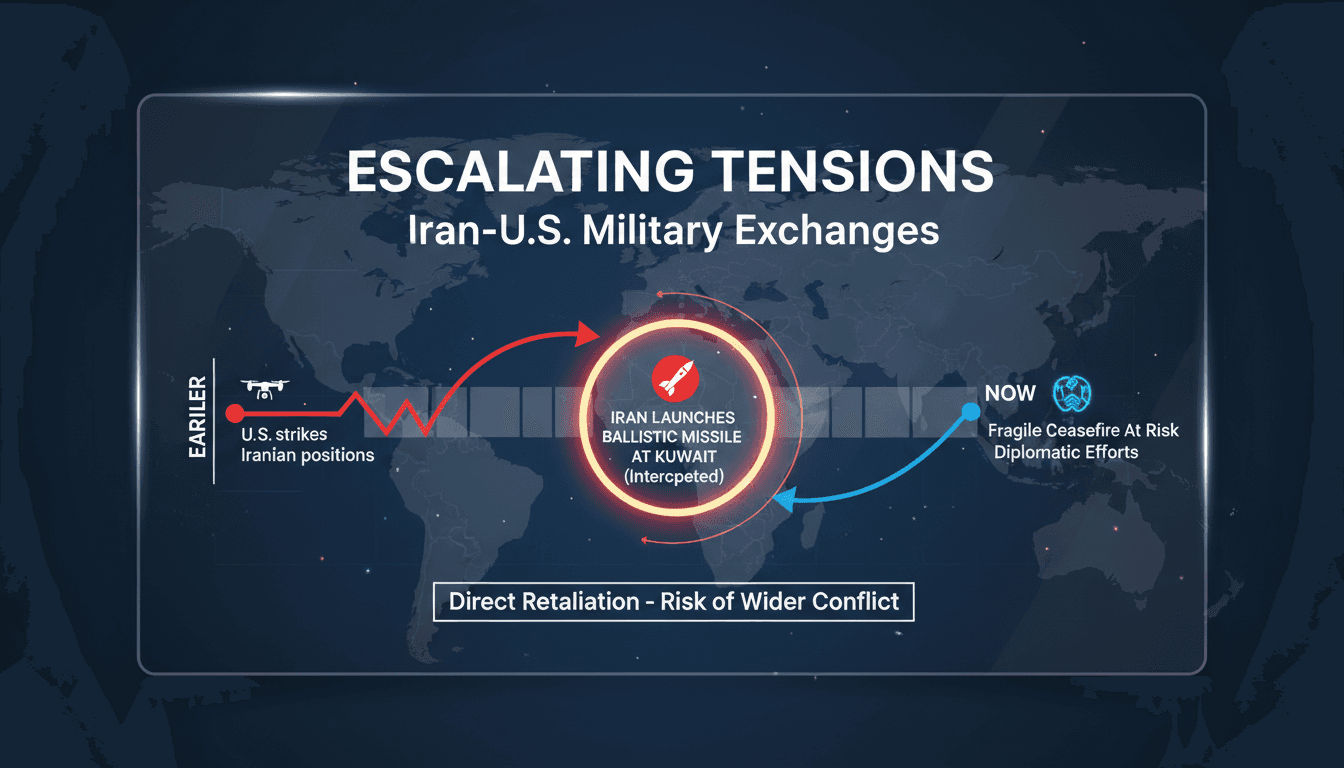
Iran launches ballistic missile at Kuwait amid escalating U.S.-Iran tensions
Here's what it means for you.
The recent missile strike by Iran on Kuwait underscores the escalating tensions in the Middle East, particularly between the U.S. and Iran. This incident could have significant implications for regional stability and international relations, as it highlights the fragility of existing ceasefires. Stakeholders in the region, including the Gulf Cooperation Council, may need to reassess their security strategies in light of these developments. The potential for further military exchanges raises concerns for global markets, particularly in oil and defense sectors. As diplomatic efforts intensify, the international community will be closely monitoring the situation to prevent a broader conflict.
What happened
Iran launched a ballistic missile at Kuwait, which was intercepted by Kuwaiti forces. The missile strike occurred at 10:17 PM ET on Wednesday, marking a significant escalation in hostilities. This action was a direct retaliation for recent U.S. military strikes against Iranian positions in the region, particularly targeting Iranian drones in the Strait of Hormuz.
Kuwait's air defenses successfully intercepted the missile, preventing any damage or casualties. The incident has drawn condemnation from Kuwait and the Gulf Cooperation Council, highlighting the regional implications of this military exchange.
The Context
The missile strike is part of a broader pattern of escalating military exchanges between the U.S. and Iran, which have been ongoing for some time. The recent U.S. actions, including the downing of four Iranian drones, have heightened tensions and prompted Iran's response. This situation reflects the delicate balance of power in the region and the potential for further conflict.
The timing of the missile launch is critical, as it coincides with ongoing diplomatic efforts to stabilize the situation. The fragile ceasefire is now at risk, necessitating urgent discussions among regional and international stakeholders to prevent further escalation.
Takeaway
The ongoing military exchanges suggest that the fragile ceasefire may be at risk of collapse, prompting a need for immediate diplomatic intervention. Observers will be watching for potential U.S. responses to Iranian aggression and further developments in ceasefire negotiations. The situation remains fluid, and any miscalculation could lead to a broader conflict in the region.
As tensions rise, the international community must remain vigilant and proactive in addressing the underlying issues to restore stability. The implications of this incident extend beyond the immediate region, affecting global security dynamics.
English-language reporting on Saudi politics, policy, and society.
"Saudi Gazette reflects mainstream Saudi institutional perspectives."
— A47 Editor
Iran confirms targeting US air base in Kuwait
Iran's Islamic Revolutionary Guard Corps (IRGC) confirmed that it targeted a US airbase in Kuwait early Thursday, claiming the action was a response to a US aerial strike near Bandar Abbas airport in southern Iran. The IRGC stated that this strike se...
Breaking news, politics, business, and entertainment from the U.S. and around the world.
"The New York Post is a tabloid-format newspaper known for its sensationalist headlines and conservative-leaning editorial tone."
— A47 Editor
Iran fired ballistic missile at Kuwait after US military took out Iranian drones in Strait of Hormuz: ‘egregious ceasefire violation’
Iran launched a ballistic missile targeting Kuwait at 10:17 p.m. ET, which was intercepted by Kuwaiti forces. This action follows a series of U.S. military strikes that successfully downed Iranian drones in the Strait of Hormuz, escalating tensions i...
Global political, business, and cultural coverage from WSJ international desks.
"The Wall Street Journal offers extensive international reporting with a reputation for financial insight and a center-right editorial stance."
— A47 Editor
U.S., Iran Exchange Fire for Second Time in Days
In a significant escalation of military tensions, Iran launched a missile toward Kuwait, which was intercepted by local forces, following recent U.S. strikes targeting Iranian military assets. This exchange marks the second instance of direct fire be...
UAE-based English-language newspaper covering regional politics, economics, and global affairs.
"The National reflects Emirati policy perspectives while maintaining international editorial standards."
— A47 Editor
Iran war latest: US and Tehran reach tentative ceasefire deal pending Trump approval
The United States and Iran have reached a tentative ceasefire deal, pending approval from former President Donald Trump, following a series of military escalations between the two nations. This development comes after recent strikes by the U.S. on Ir...
Regional coverage and analysis focused on politics, diplomacy, and business across the Middle East.
"Al-Monitor is known for analytical reporting on Middle East politics and policy developments."
— A47 Editor
US, Iran trade strikes in most serious clash since truce began
The United States and Iran engaged in a series of military strikes on Thursday, marking the most significant clash since a ceasefire was established in April. This escalation involved U.S. forces targeting Iranian positions, while Iran retaliated, fu...