
Israel and Iran Reach Two-Week Ceasefire Amid Ongoing Tensions
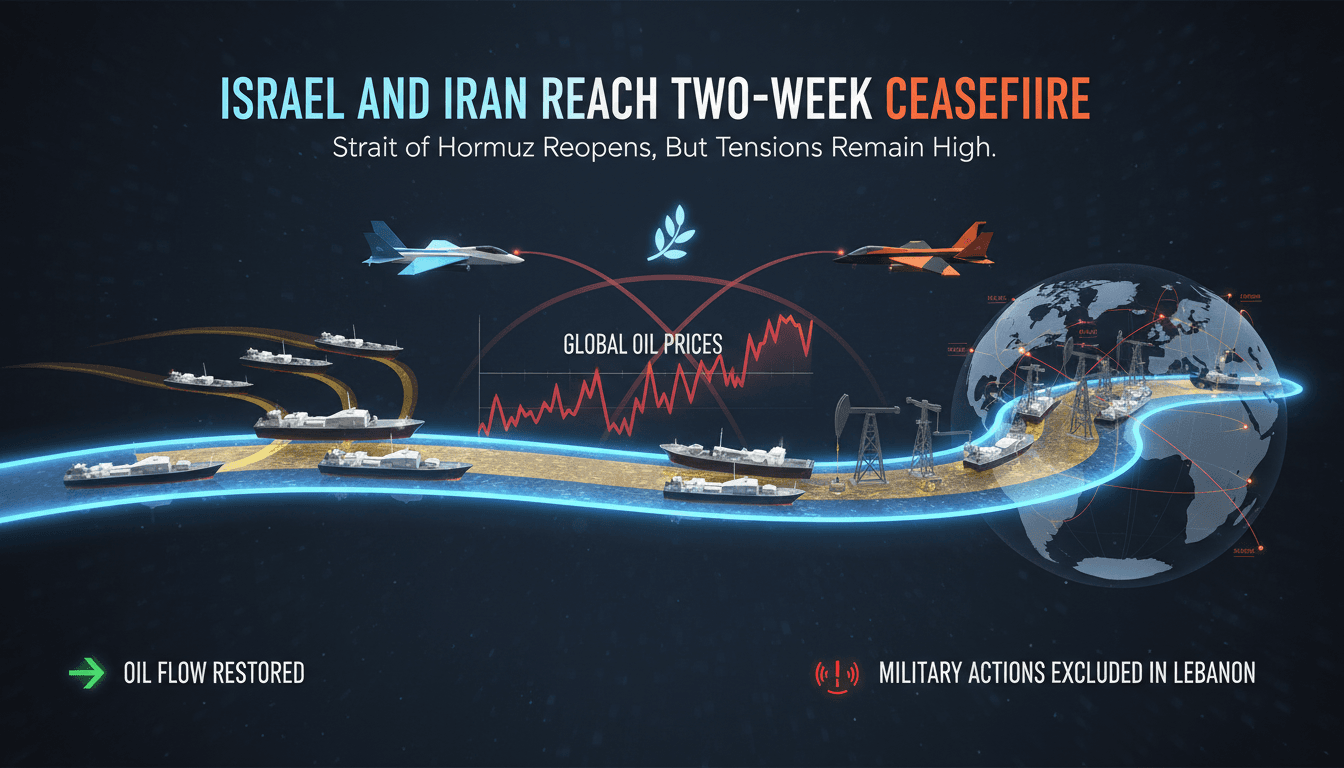
Here's what it means for you.
The temporary ceasefire could stabilize oil prices and impact global markets, affecting your costs and investments.
Why it matters
This ceasefire is pivotal in a conflict that has disrupted global oil supplies, directly influencing energy prices and economic stability.
What happened (in 30 seconds)
- On April 8, 2026, Israel agreed to a two-week ceasefire with Iran, brokered by the U.S. and mediated by Pakistan, to reopen the vital Strait of Hormuz.
- The agreement excludes ongoing military operations against Hezbollah in Lebanon, where tensions remain high following Iranian missile launches toward Israel.
- Brent crude oil prices dropped 13%, marking the largest single-day decline since the 1991 Gulf War, signaling immediate market reactions.
The context you actually need
- The ceasefire emerged from escalating tensions in the U.S.-Israel-Iran war, which began earlier in 2026 with Iran's closure of the Strait of Hormuz, severely impacting global oil shipments.
- President Trump issued an ultimatum for the reopening of the Strait by April 8, threatening strikes on Iranian infrastructure if demands were not met.
- Pakistani mediators facilitated a framework for negotiations, incorporating Iran's proposals, which allowed for a temporary pause in hostilities.
What's really happening
The ceasefire agreement between Israel and Iran is a calculated move amid escalating regional tensions that have significant implications for global markets. The U.S. and Israel have been engaged in a military campaign against Iranian influence, particularly in the context of oil supply routes critical to the global economy. The Strait of Hormuz is a vital chokepoint through which approximately 20% of the world's oil passes. The closure of this strait by Iran had already caused a ripple effect, leading to soaring oil prices and economic instability.
By agreeing to a temporary ceasefire, Israel aims to stabilize the situation and mitigate the immediate threat to its economy and security. The U.S. involvement, particularly under President Trump's administration, underscores the strategic importance of maintaining open shipping lanes and ensuring energy security for global markets. The agreement to suspend attacks on Iran is a tactical pause, allowing both sides to reassess their positions without the immediate pressure of military engagement.
However, the exclusion of Hezbollah from this ceasefire raises concerns about ongoing hostilities in Lebanon, which could escalate if Iranian support continues to flow to the militant group. Israel's military operations in Lebanon are aimed at countering perceived threats, and the situation remains volatile. The Iranian missile launches toward Israel following the ceasefire announcement indicate that tensions are far from resolved, and the fragile nature of this truce could lead to further conflict.
The market's immediate reaction, with Brent crude oil prices plummeting 13%, reflects investor sentiment regarding the potential for reduced conflict and stabilized supply chains. This drop is significant, as it not only impacts oil prices but also has broader implications for inflation and commodity costs globally. For Dubai and the wider UAE, this could mean relief from wartime spikes in fuel prices, which have strained local economies.
Who feels it first (and how)
- Energy sector professionals: Fluctuations in oil prices will directly impact jobs and investments in this sector.
- Consumers in the UAE: Lower oil prices may lead to reduced fuel and commodity costs, easing financial pressures.
- Global investors: Market volatility will affect investment strategies and risk assessments in energy and related sectors.
What to watch next
- Iran's military actions: Continued missile launches or military operations could destabilize the ceasefire and lead to renewed conflict.
- Oil price trends: Watch for fluctuations in Brent crude prices as the ceasefire progresses and market reactions unfold.
- Diplomatic negotiations: Future talks involving the U.S., Iran, and Israel could reshape the regional landscape and impact global energy security.
The ceasefire is temporary and excludes Hezbollah, maintaining ongoing tensions in Lebanon.
Oil prices will remain volatile as markets react to developments in the ceasefire and military actions.
The long-term implications of this ceasefire on regional stability and U.S.-Iran relations remain uncertain.
Frequently Asked Questions
- Why it matters?
- This ceasefire is pivotal in a conflict that has disrupted global oil supplies, directly influencing energy prices and economic stability.
- What happened (in 30 seconds)?
- On April 8, 2026, Israel agreed to a two-week ceasefire with Iran, brokered by the U.S. and mediated by Pakistan, to reopen the vital Strait of Hormuz. The agreement excludes ongoing military operations against Hezbollah in Lebanon, where tensions remain high following Iranian missile launches toward Israel. Brent crude oil prices dropped 13%, marking the largest single-day decline since the 1991 Gulf War, signaling immediate market reactions.
- What's really happening?
- The ceasefire agreement between Israel and Iran is a calculated move amid escalating regional tensions that have significant implications for global markets. The U.S. and Israel have been engaged in a military campaign against Iranian influence, particularly in the context of oil supply routes critical to the global economy. The Strait of Hormuz is a vital chokepoint through which approximately 20% of the world's oil passes. The closure of this strait by Iran had already caused a ripple effect,
- Who feels it first (and how)?
- Energy sector professionals: Fluctuations in oil prices will directly impact jobs and investments in this sector. Consumers in the UAE: Lower oil prices may lead to reduced fuel and commodity costs, easing financial pressures. Global investors: Market volatility will affect investment strategies and risk assessments in energy and related sectors.
- What to watch next?
- Iran's military actions: Continued missile launches or military operations could destabilize the ceasefire and lead to renewed conflict. Oil price trends: Watch for fluctuations in Brent crude prices as the ceasefire progresses and market reactions unfold. Diplomatic negotiations: Future talks involving the U.S., Iran, and Israel could reshape the regional landscape and impact global energy security.
Arabic-language coverage of Saudi, regional, and international affairs.
"Al Bilad offers mainstream Saudi newspaper coverage across domestic and broader Arab topics."
— A47 Editor
إسرائيل توافق على وقف إطلاق النار مع إيران ولبنان
A senior official from the White House announced that Israel has agreed to a temporary ceasefire with Iran and Lebanon, as part of a two-week truce declared by President Donald Trump shortly before the deadline for Iran to reopen the Strait of Hormuz...
Arabic-language digital news outlet covering UAE, regional, and international developments with broad general-news coverage.
"Al Ain News coverage typically blends UAE-focused reporting with wider Arab regional and international news."
— A47 Editor
أول خرق للهدنة.. رشقات صاروخية من إيران واليمن على إسرائيل
Rocket fire from Iran and Yemen targeted northern, central, and southern Israel following U.S. President Donald Trump's announcement of a temporary ceasefire with Iran. This marks the first breach of the ceasefire, escalating tensions in the region.