
ECB Considers Interest Rate Hike Amid Middle East Energy Crisis
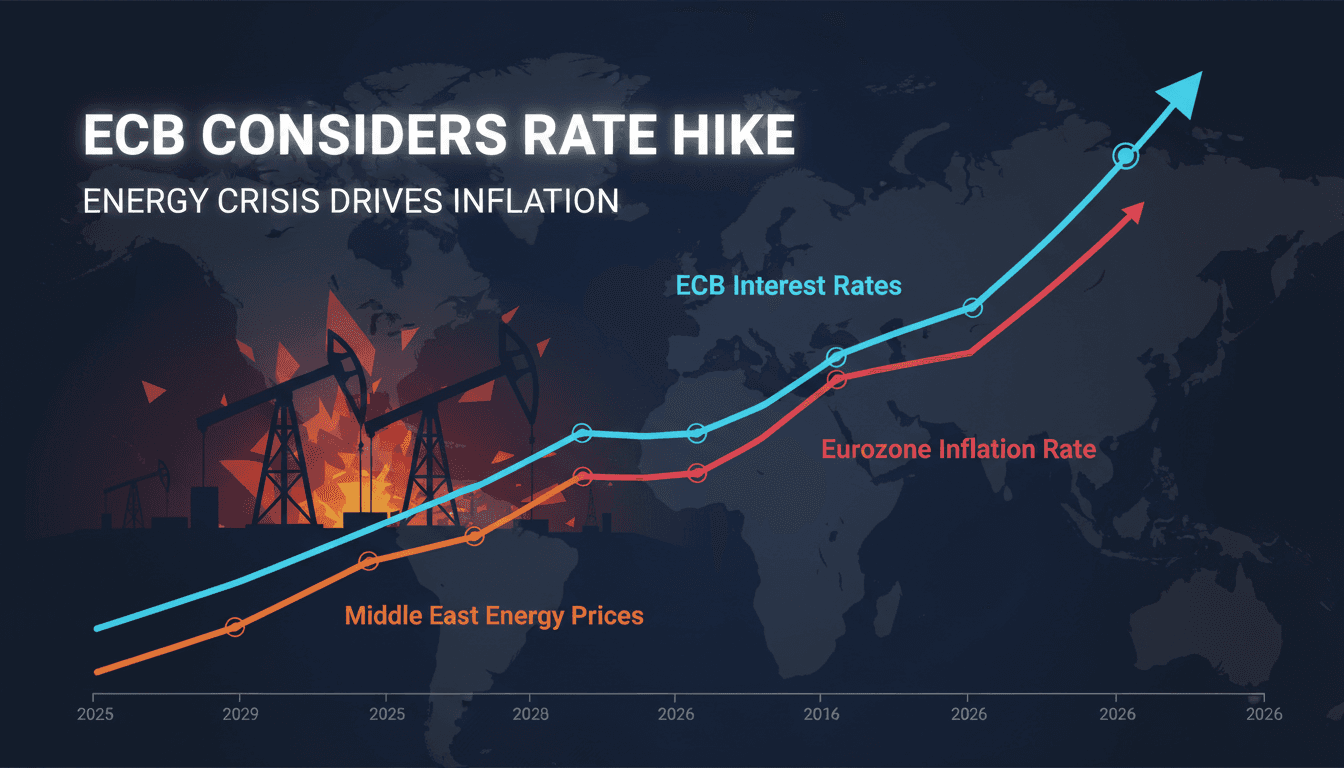
Here's what it means for you.
If you’re in Europe or have financial ties to the eurozone, expect rising costs as the ECB considers increasing interest rates to combat inflation.
Why it matters
The ECB's monetary policy decisions directly influence borrowing costs and economic stability across the eurozone, impacting consumers and businesses alike.
What happened (in 30 seconds)
- Pierre Wunsch, a member of the ECB Governing Council, indicated on April 7, 2026, that a key interest rate hike could occur as early as the April meeting.
- Energy prices have surged due to escalating conflict in the Middle East, contributing to rising inflation in the eurozone, which reached 2.5% in March 2026.
- The ECB held rates steady at its March meeting but is now reassessing its stance in light of geopolitical tensions and their economic implications.
The context you actually need
- Geopolitical tensions in the Middle East, particularly involving Iran, have disrupted energy supplies, leading to increased oil and gas prices.
- Eurostat reported that annual inflation accelerated to 2.5% in March 2026 from 1.9% in February, primarily driven by energy costs.
- Wunsch's remarks have prompted other ECB officials to align with the possibility of a rate hike, indicating a consensus on the need to address inflationary pressures.
What's really happening
The ongoing conflict in the Middle East has created significant disruptions in energy supplies, leading to a surge in oil and gas prices. This has reignited inflationary pressures across the eurozone, with Eurostat reporting an increase in annual inflation to 2.5% in March 2026, up from 1.9% in February. The European Central Bank (ECB) has been closely monitoring these developments, and in its March 19 meeting, it opted to maintain key interest rates unchanged, with the deposit facility at 2.00%, main refinancing operations at 2.15%, and marginal lending facility at 2.40%.
However, the ECB's outlook has shifted in light of these geopolitical tensions. Wunsch's comments on April 7, 2026, during a Wall Street Journal podcast, suggested that if inflation pressures persist, the ECB may need to consider raising interest rates sooner rather than later. He stated, "The way I feel comfortable putting it is, if this is not done by June, I think we’re going to have to hike, but I don’t want to exclude a hike in April." This indicates a proactive approach to controlling indirect inflationary effects on non-energy goods and services, which could have broader implications for the eurozone economy.
The ECB's decision-making process is influenced by the need to balance economic growth with inflation control. A rate hike could help curb inflation but may also slow down economic recovery by increasing borrowing costs for consumers and businesses. This delicate balance is further complicated by the uncertainty surrounding the Middle East conflict and its potential duration. If energy prices remain elevated, the ECB may have no choice but to implement rate hikes to stabilize the economy.
Moreover, the market has begun to recalibrate in response to these signals, pricing in approximately 75 basis points of rate increases by the end of 2026. The euro has appreciated modestly against major currencies, reflecting market expectations of tighter monetary policy. Energy equities have also exhibited volatility, indicating investor concerns about the impact of rising energy costs on corporate profitability.
Who feels it first (and how)
- Consumers in the eurozone: Higher interest rates could lead to increased costs for loans and mortgages.
- Businesses: Companies reliant on borrowing may face higher financing costs, impacting investment and growth.
- Financial markets: Investors may see increased volatility in equities and currencies as they adjust to potential rate hikes.
What to watch next
- Inflation reports: Keep an eye on upcoming Eurostat inflation data; sustained high inflation could prompt the ECB to act sooner.
- Geopolitical developments: Monitor the situation in the Middle East; prolonged conflict could exacerbate energy price pressures, influencing ECB decisions.
- ECB communications: Pay attention to statements from ECB officials; any hints at policy shifts will provide insight into future rate decisions.
The ECB is considering a rate hike in response to rising inflation driven by energy prices.
If inflation continues to rise, expect the ECB to implement interest rate increases within the next few months.
The duration and impact of the Middle East conflict on energy prices remain uncertain, complicating the ECB's decision-making process.
Frequently Asked Questions
- Why it matters?
- The ECB's monetary policy decisions directly influence borrowing costs and economic stability across the eurozone, impacting consumers and businesses alike.
- What happened (in 30 seconds)?
- Pierre Wunsch, a member of the ECB Governing Council, indicated on April 7, 2026, that a key interest rate hike could occur as early as the April meeting. Energy prices have surged due to escalating conflict in the Middle East, contributing to rising inflation in the eurozone, which reached 2.5% in March 2026. The ECB held rates steady at its March meeting but is now reassessing its stance in light of geopolitical tensions and their economic implications.
- What's really happening?
- The ongoing conflict in the Middle East has created significant disruptions in energy supplies, leading to a surge in oil and gas prices. This has reignited inflationary pressures across the eurozone, with Eurostat reporting an increase in annual inflation to 2.5% in March 2026, up from 1.9% in February. The European Central Bank (ECB) has been closely monitoring these developments, and in its March 19 meeting, it opted to maintain key interest rates unchanged, with the deposit facility at 2.00%
- Who feels it first (and how)?
- Consumers in the eurozone: Higher interest rates could lead to increased costs for loans and mortgages. Businesses: Companies reliant on borrowing may face higher financing costs, impacting investment and growth. Financial markets: Investors may see increased volatility in equities and currencies as they adjust to potential rate hikes.
- What to watch next?
- Inflation reports: Keep an eye on upcoming Eurostat inflation data; sustained high inflation could prompt the ECB to act sooner. Geopolitical developments: Monitor the situation in the Middle East; prolonged conflict could exacerbate energy price pressures, influencing ECB decisions. ECB communications: Pay attention to statements from ECB officials; any hints at policy shifts will provide insight into future rate decisions.
Key macro releases (CPI, jobs, PMIs), surprise indexes, and market implications.
"Great for data-print awareness and instant read-through to rates and risk assets."
— A47 Editor
ECB may raise rates as soon as April on energy crisis concerns: ECB’s Wunsch
The European Central Bank (ECB), represented by Wunsch, has indicated that it may raise interest rates as early as April due to concerns surrounding the ongoing energy crisis. This potential move comes amid rising inflation pressures exacerbated by g...
Global political, business, and cultural coverage from WSJ international desks.
"The Wall Street Journal offers extensive international reporting with a reputation for financial insight and a center-right editorial stance."
— A47 Editor
ECB’s Wunsch Open to April Rate Rise, More May Follow if Crisis Lasts
Pierre Wunsch, head of Belgium's central bank, expressed openness to a potential interest rate increase by the European Central Bank (ECB) in April, suggesting that further hikes may be necessary if current economic crises persist.