
US and Iran Engage in Pakistan-Mediated Ceasefire Talks Following Recent Conflict
Here's what it means for you.
If you rely on global energy markets, the outcome of these negotiations could directly impact oil prices and supply chains.
Why it matters
This ceasefire could stabilize energy markets and reduce geopolitical tensions, affecting global economies.
What happened (in 30 seconds)
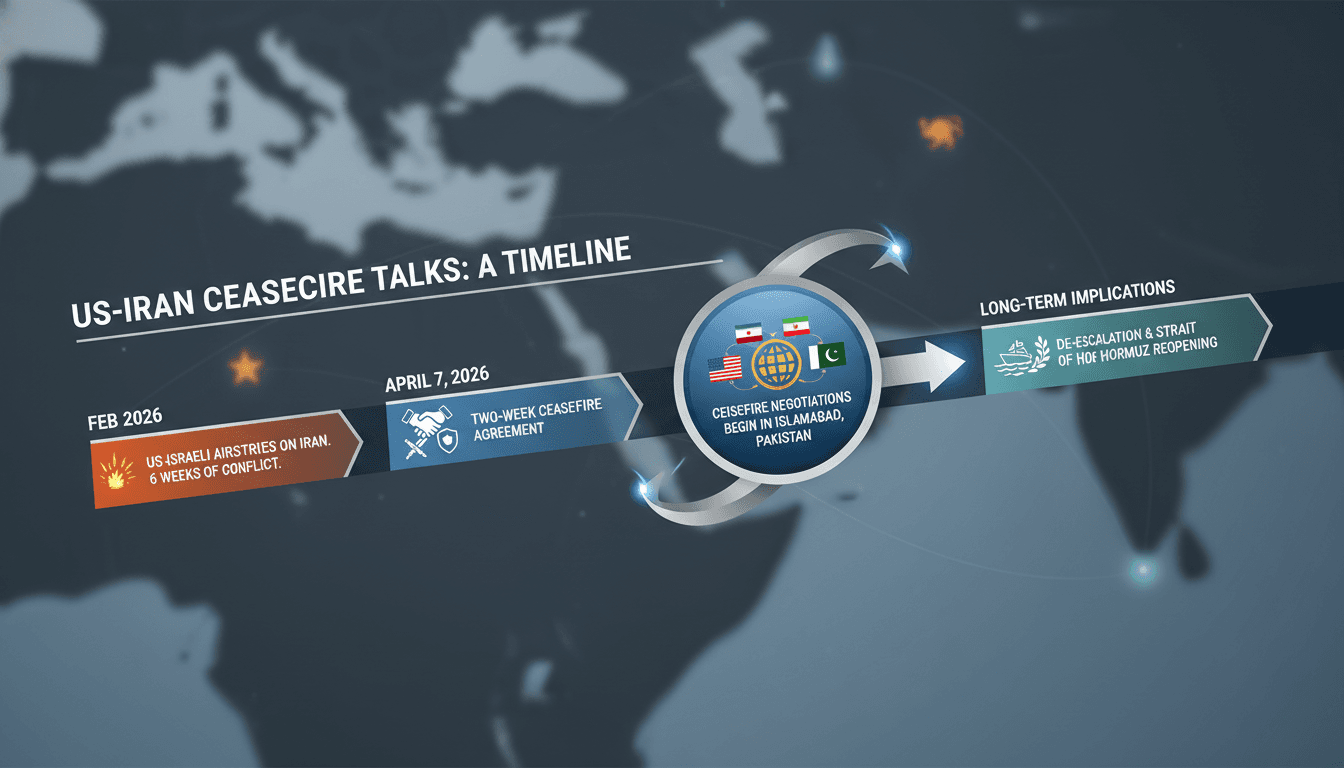
- April 8, 2026: The US and Iran confirmed participation in ceasefire negotiations mediated by Pakistan, set to begin on April 10.
- April 7, 2026: A two-week ceasefire was agreed upon after a six-week conflict that disrupted the Strait of Hormuz and caused thousands of casualties.
- February 28, 2026: The conflict began with US-Israeli airstrikes on Iran, leading to Iranian retaliation and a blockade affecting global oil supplies.
The context you actually need
- US-Israel airstrikes: The conflict escalated when the US and Israel targeted Iran's nuclear facilities and leadership, igniting widespread retaliation.
- Energy crisis: The partial blockade of the Strait of Hormuz, a vital oil transit route, caused a significant spike in global oil prices and supply disruptions.
- Pakistan's mediation: Leveraging its diplomatic ties, Pakistan proposed a two-phase truce to facilitate peace talks, highlighting its role as a regional stabilizer.
What's really happening
The US-Iran conflict, which erupted in February 2026, stemmed from a series of aggressive military actions initiated by the US and Israel. The airstrikes, dubbed "Epic Fury," aimed to cripple Iran's nuclear ambitions and eliminate its leadership, specifically targeting Supreme Leader Ali Khamenei. This provoked a fierce Iranian response, including missile strikes and the activation of proxy groups like Hezbollah and the Houthis, escalating the conflict into a broader regional crisis.
The situation intensified with Iran's blockade of the Strait of Hormuz, a critical artery for global oil transport, leading to a surge in oil prices and widespread economic repercussions. As the conflict unfolded, the international community faced mounting pressure to intervene, with Pakistan stepping in as a mediator. The two-week ceasefire agreement, reached on April 7, 2026, was a crucial first step towards de-escalation, but it remains fragile.
The negotiations set to begin in Islamabad on April 10, 2026, involve key figures from both the US and Iran, including President Donald Trump and Iranian President Masoud Pezeshkian. The talks are framed as a good-faith effort to establish a lasting peace, but the underlying tensions and mistrust between the nations pose significant challenges. The fragile nature of the ceasefire is underscored by ongoing incidents, such as missile interceptions by UAE air defenses, which highlight the volatility of the situation.
The economic implications of the ceasefire are already being felt, with Brent crude oil prices dropping by 14% to $94 per barrel following the announcement. This decline offers some relief to global energy markets, which had been under pressure from the conflict. For Dubai and the UAE, which experienced fuel price spikes and airspace disruptions, the ceasefire could signal a return to stability, although the situation remains precarious.
As the negotiations unfold, the stakes are high for all parties involved. A successful outcome could lead to a more stable Middle East and a reduction in energy prices, while failure could reignite hostilities and further destabilize the region.
Who feels it first (and how)
- Energy sector: Companies reliant on stable oil prices will experience immediate impacts on costs and supply chains.
- Global markets: Investors and stock markets will react to fluctuations in oil prices and geopolitical stability.
- Middle Eastern nations: Countries in the region will feel the effects of either escalating tensions or a potential peace agreement, influencing trade and security dynamics.
What to watch next
- Negotiation outcomes: The success or failure of the Islamabad talks will determine the future of US-Iran relations and regional stability.
- Oil price fluctuations: Monitor Brent crude prices for immediate market reactions to developments in the negotiations.
- Regional military activities: Keep an eye on military actions in the Gulf, particularly any incidents involving Iran or its proxies, which could derail the ceasefire.
The US and Iran are participating in ceasefire negotiations mediated by Pakistan.
Oil prices will remain volatile as the situation evolves, influenced by the outcomes of the negotiations.
The long-term effectiveness of the ceasefire and the potential for lasting peace in the region remain uncertain.
Frequently Asked Questions
- Why it matters?
- This ceasefire could stabilize energy markets and reduce geopolitical tensions, affecting global economies.
- What happened (in 30 seconds)?
- April 8, 2026: The US and Iran confirmed participation in ceasefire negotiations mediated by Pakistan, set to begin on April 10. April 7, 2026: A two-week ceasefire was agreed upon after a six-week conflict that disrupted the Strait of Hormuz and caused thousands of casualties. February 28, 2026: The conflict began with US-Israeli airstrikes on Iran, leading to Iranian retaliation and a blockade affecting global oil supplies.
- What's really happening?
- The US-Iran conflict, which erupted in February 2026, stemmed from a series of aggressive military actions initiated by the US and Israel. The airstrikes, dubbed "Epic Fury," aimed to cripple Iran's nuclear ambitions and eliminate its leadership, specifically targeting Supreme Leader Ali Khamenei. This provoked a fierce Iranian response, including missile strikes and the activation of proxy groups like Hezbollah and the Houthis, escalating the conflict into a broader regional crisis. The situat
- Who feels it first (and how)?
- Energy sector: Companies reliant on stable oil prices will experience immediate impacts on costs and supply chains. Global markets: Investors and stock markets will react to fluctuations in oil prices and geopolitical stability. Middle Eastern nations: Countries in the region will feel the effects of either escalating tensions or a potential peace agreement, influencing trade and security dynamics.
- What to watch next?
- Negotiation outcomes: The success or failure of the Islamabad talks will determine the future of US-Iran relations and regional stability. Oil price fluctuations: Monitor Brent crude prices for immediate market reactions to developments in the negotiations. Regional military activities: Keep an eye on military actions in the Gulf, particularly any incidents involving Iran or its proxies, which could derail the ceasefire.
Arabic-language UAE newspaper coverage focused on domestic affairs, public institutions, business, society, and regional developments.
"Al Khaleej coverage generally reflects a mainstream UAE editorial lens with strong attention to public affairs, institutions, and regional developments."
— A47 Editor
أمريكا وإيران تؤكدان المشاركة في مفاوضات باكستان
The Prime Minister's Office of Pakistan announced that Iranian President Masoud Bezhakian will participate in negotiations in Pakistan, highlighting a collaborative effort between the two nations. This development was confirmed in a statement release...
Arabic-language digital news outlet covering UAE, regional, and international developments with broad general-news coverage.
"Al Ain News coverage typically blends UAE-focused reporting with wider Arab regional and international news."
— A47 Editor
من سيمثل إيران أمام واشنطن في محادثات باكستان؟
Pakistani Prime Minister Shahbaz Sharif announced that Iran has confirmed its participation in talks with the United States scheduled for Friday in Islamabad. This meeting is expected to address key issues between the two nations and their regional i...