
Bahrain's King Orders Accountability Measures Following Iranian Espionage During War
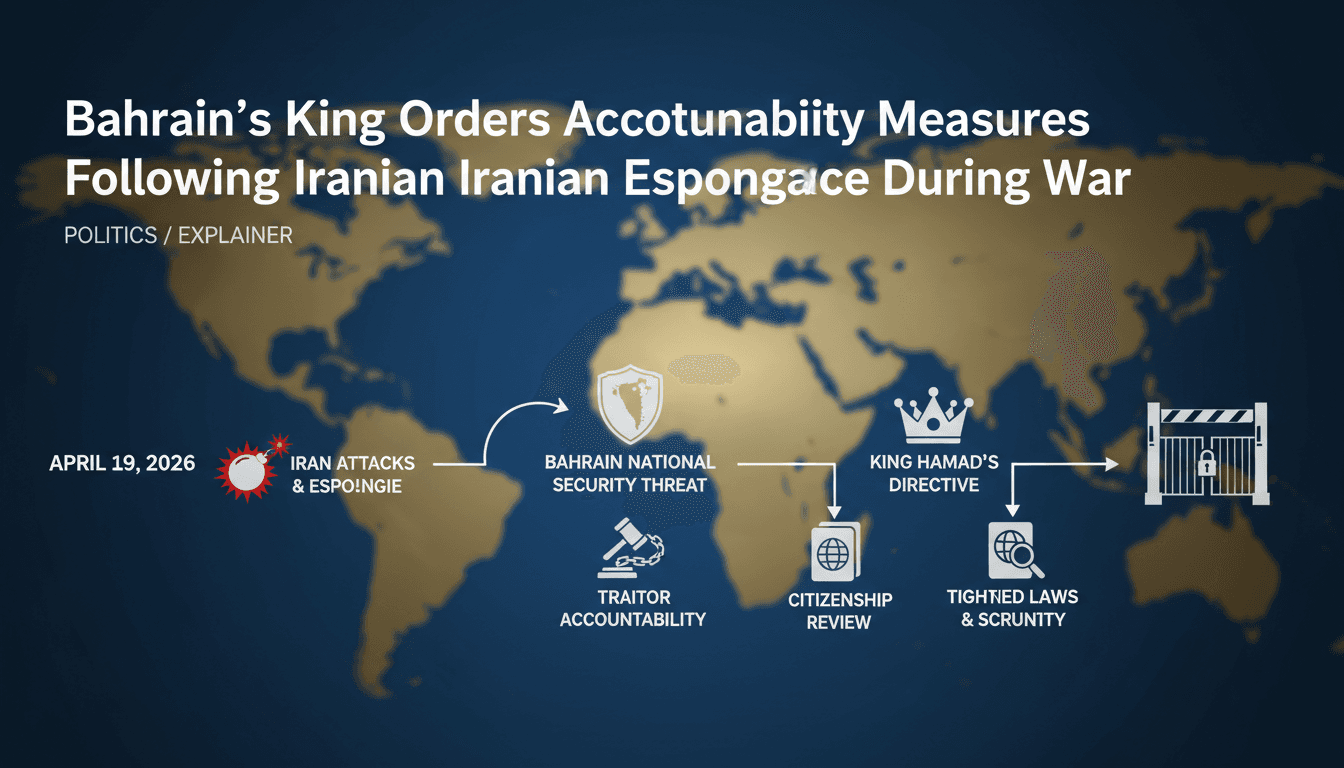
Here's what it means for you.
Increased scrutiny on citizenship and security could impact your travel and business ties in the Gulf region.
Why it matters
This directive signals a tightening of national security protocols in Bahrain, which may influence regional stability and economic interactions.
What happened (in 30 seconds)
- King Hamad bin Isa Al Khalifa ordered immediate accountability measures against perceived traitors and a review of citizenship eligibility.
- Crown Prince Salman bin Hamad Al Khalifa is tasked with implementing these measures to enhance national security following the 2026 Iran war.
- Bahrain reported multiple arrests linked to espionage activities, highlighting the ongoing threat from Iranian influence.
The context you actually need
- The 2026 Iran war began with US-Israeli strikes on Iran, leading to retaliatory attacks on Gulf states, including Bahrain.
- Bahrain's response includes a review of citizenship for individuals deemed a threat to national security, reflecting heightened tensions in the region.
- Regional dynamics are shifting, with Bahrain's actions potentially influencing security policies in neighboring countries, including the UAE.
What's really happening
King Hamad's directive on April 19, 2026, comes in the wake of significant geopolitical upheaval following the 2026 Iran war. This conflict, which saw US-Israeli military actions against Iran, resulted in retaliatory strikes that directly impacted Bahrain, among other Gulf states. The Bahraini government has reported dozens of injuries from these attacks and has successfully thwarted multiple espionage attempts linked to Iran's Islamic Revolutionary Guard Corps (IRGC).
In this context, the King’s call for accountability and a review of citizenship is a strategic move to reinforce national security. By identifying and acting against individuals who may have compromised the nation during the conflict, Bahrain aims to deter future threats and maintain internal stability. The Crown Prince's office is now responsible for executing these measures, which may include stripping citizenship from those found guilty of espionage or collaboration with hostile entities.
This directive is not merely a reaction to recent events; it reflects a broader trend of increasing nationalism and security consciousness in the Gulf region. Countries are becoming more vigilant about internal threats, particularly those perceived to be linked to foreign adversaries. The implications of this are significant, as it could lead to a more restrictive environment for expatriates and dual nationals, particularly those with ties to Iran or other nations viewed as adversarial.
Moreover, the regional security landscape is evolving. The UAE, including Dubai, has also faced similar threats during the Iran war, prompting a collective response among Gulf states. As Bahrain implements these measures, it may encourage other nations in the region to adopt similar policies, further tightening security protocols and potentially affecting cross-border relations and economic activities.
Who feels it first (and how)
- Bahraini citizens: Those with dual citizenship or ties to Iran may face increased scrutiny and potential loss of citizenship.
- Expatriates in Bahrain: Foreign nationals, particularly those involved in business or family connections with Bahrain, could experience travel disruptions.
- Investors: Individuals and businesses with investments in Bahrain may reconsider their positions due to heightened security risks and potential instability.
What to watch next
- Implementation of citizenship reviews: Monitoring how Bahrain executes these reviews will indicate the extent of the crackdown on perceived threats.
- Regional security collaborations: Watch for increased coordination among Gulf states in response to shared security concerns, which could reshape diplomatic relations.
- Public sentiment: Observing social media and public reactions will provide insights into the domestic support or opposition to these measures.
King Hamad's directive is a direct response to the recent Iran war and its repercussions.
Other Gulf states may adopt similar security measures, leading to a regional trend of increased nationalism.
The long-term economic impact on Bahrain and its relations with expatriates and foreign investors remains uncertain.
Frequently Asked Questions
- Why it matters?
- This directive signals a tightening of national security protocols in Bahrain, which may influence regional stability and economic interactions.
- What happened (in 30 seconds)?
- King Hamad bin Isa Al Khalifa ordered immediate accountability measures against perceived traitors and a review of citizenship eligibility. Crown Prince Salman bin Hamad Al Khalifa is tasked with implementing these measures to enhance national security following the 2026 Iran war. Bahrain reported multiple arrests linked to espionage activities, highlighting the ongoing threat from Iranian influence.
- What's really happening?
- King Hamad's directive on April 19, 2026, comes in the wake of significant geopolitical upheaval following the 2026 Iran war. This conflict, which saw US-Israeli military actions against Iran, resulted in retaliatory strikes that directly impacted Bahrain, among other Gulf states. The Bahraini government has reported dozens of injuries from these attacks and has successfully thwarted multiple espionage attempts linked to Iran's Islamic Revolutionary Guard Corps (IRGC). In this context, the Kin
- Who feels it first (and how)?
- Bahraini citizens: Those with dual citizenship or ties to Iran may face increased scrutiny and potential loss of citizenship. Expatriates in Bahrain: Foreign nationals, particularly those involved in business or family connections with Bahrain, could experience travel disruptions. Investors: Individuals and businesses with investments in Bahrain may reconsider their positions due to heightened security risks and potential instability.
- What to watch next?
- Implementation of citizenship reviews: Monitoring how Bahrain executes these reviews will indicate the extent of the crackdown on perceived threats. Regional security collaborations: Watch for increased coordination among Gulf states in response to shared security concerns, which could reshape diplomatic relations. Public sentiment: Observing social media and public reactions will provide insights into the domestic support or opposition to these measures.
Arabic-language UAE newspaper coverage focused on domestic affairs, public institutions, business, society, and regional developments.
"Al Khaleej coverage generally reflects a mainstream UAE editorial lens with strong attention to public affairs, institutions, and regional developments."
— A47 Editor
ملك البحرين: سنحاسب الخونة.. وسننظر في مستحقي المواطنة
King Hamad bin Isa Al Khalifa of Bahrain announced that the state will decisively address the repercussions of the unjust war and unprovoked attacks by Iran, assigning Crown Prince Salman bin Hamad Al Khalifa to implement comprehensive measures in th...
Arabic-language political and world news coverage for UAE readers.
"Emarat Al Youm world coverage usually presents international developments through a UAE and Arab audience lens."
— A47 Editor
ملك البحرين يوجّه بالنظر فيمن يستحق المواطنة البحرينية ومن لا يستحقها ملك البحرين يوجّه بالنظر فيمن يستحق المواطنة البحرينية ومن لا يستحقها
King Hamad bin Isa Al Khalifa of Bahrain has directed a review of citizenship eligibility, emphasizing the state's commitment to addressing the repercussions of ongoing conflicts. This initiative reflects the government's intention to reassess who qu...
English-language reporting on Saudi politics, policy, and society.
"Saudi Gazette reflects mainstream Saudi institutional perspectives."
— A47 Editor
Bahrain to review citizenship cases after security concerns: King
King Hamad bin Isa Al Khalifa of Bahrain has ordered an immediate review of citizenship cases amid security concerns, emphasizing the need for legal action against individuals accused of betraying the nation or threatening its stability. During a mee...