
U.S. Utilities Plan $1.4 Trillion Investment to Upgrade Power Grid by 2030
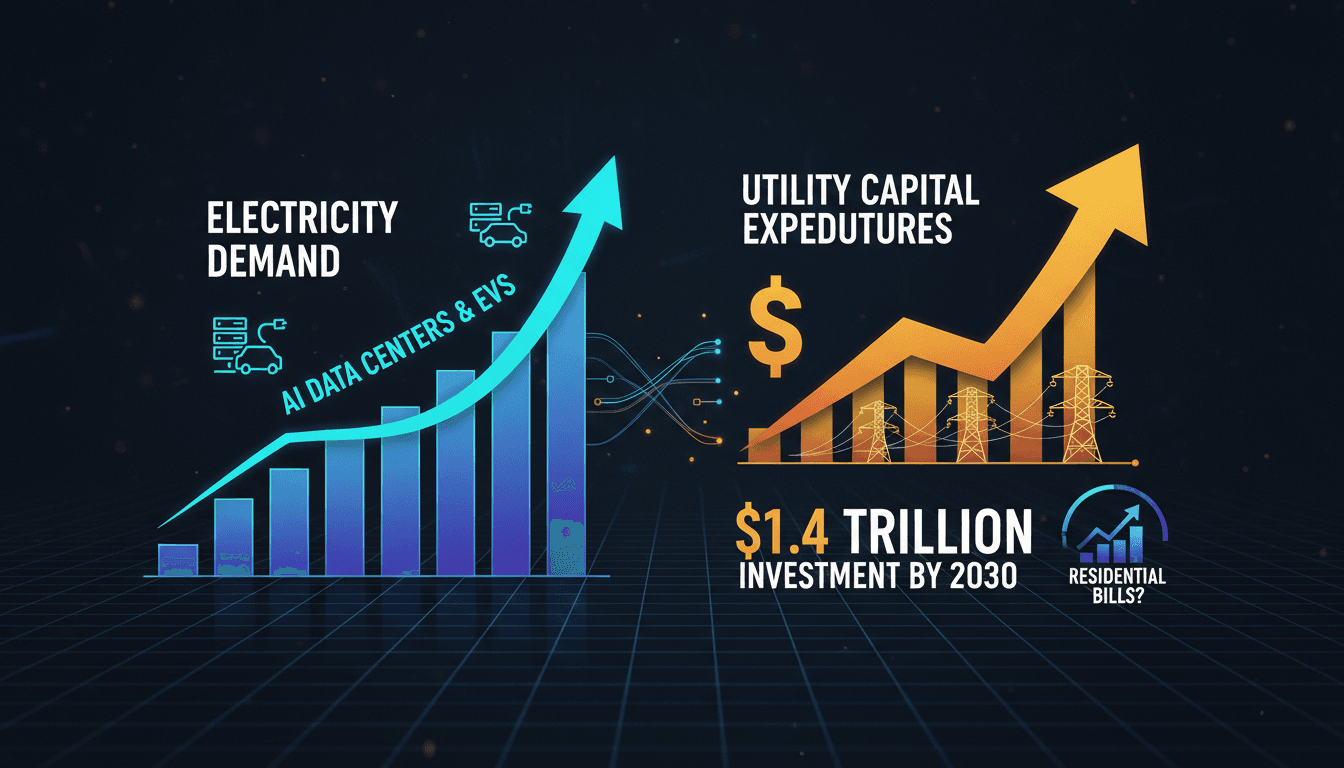
Here's what it means for you.
As electricity costs rise, your household budget may feel the strain from utility investments aimed at powering the AI boom.
Why it matters
This unprecedented capital expenditure signals a shift in energy demand dynamics, impacting both consumers and the broader economy.
What happened (in 30 seconds)
- Utilities announced $1.4 trillion in planned capital expenditures through 2030 to upgrade the power grid.
- Electricity demand from AI data centers is a primary driver, with utilities citing it in 32 of 51 cases analyzed.
- Residential electric bills could rise further, following a 40% increase since 2021, as utilities seek to fund these upgrades.
The context you actually need
- AI infrastructure growth has reversed decades of stagnant electricity demand, with data centers projected to consume up to 9% of national power by 2030.
- Utility bills have surged 40% since 2021, with electricity price increases outpacing inflation, raising concerns about affordability.
- Tech firms' commitments to fund data center power needs aim to alleviate household burdens, but local opposition to rate hikes is growing.
What's really happening
The $1.4 trillion in proposed capital expenditures by 51 U.S. investor-owned utilities represents a significant response to the surging demand for electricity driven by AI data centers, electric vehicles, and a resurgence in manufacturing. This planned spending marks a 21% increase over previous five-year forecasts, reflecting the urgency of upgrading the power grid to accommodate new energy demands.
Utilities have identified data centers as a primary driver of this demand, with 32 out of 51 utilities citing it in their Q4 2025 earnings disclosures. The rapid expansion of AI infrastructure has fundamentally altered the landscape of electricity consumption, reversing a long-standing trend of stagnant demand. As a result, utilities are compelled to invest heavily in grid upgrades to ensure reliability and resilience.
However, this investment comes at a cost. The anticipated upgrades are likely to lead to further increases in residential electric bills, which have already risen by 40% since 2021. The average electricity price increase of 4.6% in March 2026 outpaced the 3.3% inflation rate, indicating that consumers are already feeling the financial pressure. The report from PowerLines highlights that utilities have submitted $31 billion in rate hike requests for 2025, with a historical approval rate of 64% since 2021.
In response to these challenges, seven major tech firms signed a White House-backed Ratepayer Protection Pledge in March 2026, committing to cover the costs associated with data center power needs without burdening households. This pledge aims to mitigate the impact of rising utility costs on consumers, but local opposition to potential rate hikes remains a concern.
Regulators are urging utilities to adopt transparency and efficiency reforms to ensure that investments do not disproportionately affect consumers. The balance between necessary infrastructure upgrades and affordability will be a critical issue as utilities navigate this new energy landscape.
Who feels it first (and how)
- Households: Increased electric bills will directly impact monthly budgets, especially for low- and middle-income families.
- Utilities: Investor-owned utilities will face pressure to justify rate hikes while maintaining service reliability.
- Tech Companies: Firms like Amazon and Google will need to manage their energy consumption and costs, potentially affecting pricing strategies.
- Regulators: State public utility commissions will be tasked with overseeing rate requests and ensuring consumer protections are in place.
What to watch next
- Rate hike approvals: Monitor the approval rates of utility rate hike requests, as they will indicate how much of the capital expenditure burden will fall on consumers.
- Tech firm commitments: Watch for updates on the Ratepayer Protection Pledge and whether tech companies follow through on their commitments to cover data center costs.
- Legislative actions: Keep an eye on any new regulations or reforms proposed by state regulators aimed at enhancing transparency and efficiency in utility spending.
Utilities are planning $1.4 trillion in capital expenditures through 2030.
Residential electric bills will continue to rise as utilities seek to fund infrastructure upgrades.
The long-term effectiveness of tech firms' commitments to mitigate household burdens remains to be seen.
Frequently Asked Questions
- Why it matters?
- This unprecedented capital expenditure signals a shift in energy demand dynamics, impacting both consumers and the broader economy.
- What happened (in 30 seconds)?
- Utilities announced $1.4 trillion in planned capital expenditures through 2030 to upgrade the power grid. Electricity demand from AI data centers is a primary driver, with utilities citing it in 32 of 51 cases analyzed. Residential electric bills could rise further, following a 40% increase since 2021, as utilities seek to fund these upgrades.
- What's really happening?
- The $1.4 trillion in proposed capital expenditures by 51 U.S. investor-owned utilities represents a significant response to the surging demand for electricity driven by AI data centers, electric vehicles, and a resurgence in manufacturing. This planned spending marks a 21% increase over previous five-year forecasts, reflecting the urgency of upgrading the power grid to accommodate new energy demands. Utilities have identified data centers as a primary driver of this demand, with 32 out of 51 u
- Who feels it first (and how)?
- Households: Increased electric bills will directly impact monthly budgets, especially for low- and middle-income families. Utilities: Investor-owned utilities will face pressure to justify rate hikes while maintaining service reliability. Tech Companies: Firms like Amazon and Google will need to manage their energy consumption and costs, potentially affecting pricing strategies. Regulators: State public utility commissions will be tasked with overseeing rate requests and ensuring consumer
- What to watch next?
- Rate hike approvals: Monitor the approval rates of utility rate hike requests, as they will indicate how much of the capital expenditure burden will fall on consumers. Tech firm commitments: Watch for updates on the Ratepayer Protection Pledge and whether tech companies follow through on their commitments to cover data center costs. Legislative actions: Keep an eye on any new regulations or reforms proposed by state regulators aimed at enhancing transparency and efficiency in utility spendin
Breaking news, politics, business, and entertainment from the U.S. and around the world.
"The New York Post is a tabloid-format newspaper known for its sensationalist headlines and conservative-leaning editorial tone."
— A47 Editor
$1.4 trillion utility spending spree to keep up with AI data centers could hike electric bills: study
US utilities are set to invest a record $1.4 trillion in the power grid to meet the increasing demands of data centers, particularly those driven by artificial intelligence. This significant expenditure is expected to lead to higher electricity bills...
Corporate leadership, finance, technology, and market trends.
"Fortune covers financial trends, leadership, and innovation with a pragmatic editorial approach."
— A47 Editor
U.S. utilities are planning a $1.4 trillion spending spree, up 30%, over the next five years amid the AI construction boom
U.S. utilities are set to embark on a significant $1.4 trillion spending spree over the next five years, marking a 30% increase in capital spending plans. This surge in investment is occurring alongside rising consumer rate hikes, although the two fa...
U.S. business news, corporate developments, and economy.
"The Wall Street Journal is respected for deep financial and economic reporting with a center-right editorial perspective."
— A47 Editor
Utilities Plan to Spend $1.4 Trillion Over Next Five Years to Power AI Boom
A recent report reveals that 51 investor-owned utilities plan to invest $1.4 trillion over the next five years to upgrade the aging power grid and accommodate the increasing electricity demand driven by artificial intelligence (AI) technologies.