
UAE Condemns Israeli Airstrikes on Lebanon Amid Ongoing Conflict
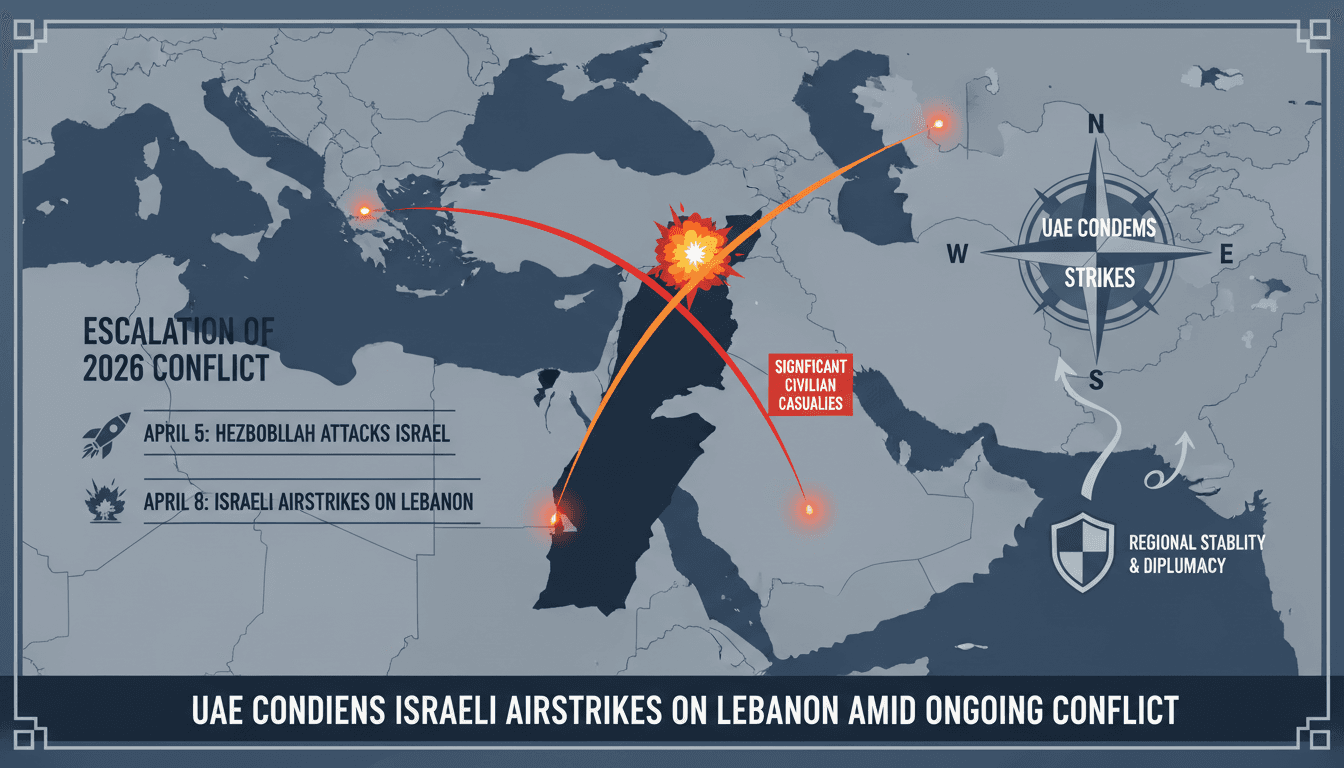
Here's what it means for you.
If you operate in the Middle East, heightened tensions could disrupt travel and business operations.
Why it matters
The UAE's condemnation signals a shift in regional alliances and could impact diplomatic relations across the Middle East.
What happened (in 30 seconds)
- On April 8, 2026, Israel launched extensive airstrikes on Lebanon, targeting over 100 Hezbollah sites, resulting in at least 254 deaths.
- The following day, the UAE Ministry of Foreign Affairs issued a strong condemnation, emphasizing the need for diplomatic resolutions to the conflict.
- Ongoing regional tensions have prompted international calls for de-escalation, with the United Nations also condemning the strikes.
The context you actually need
- The 2026 Lebanon war began on March 2, 2026, following Hezbollah's missile and drone attacks on northern Israel, escalating into full-scale conflict.
- The UAE's statement reflects its growing role as a mediator in regional conflicts, seeking stability amid rising tensions involving Iran-backed groups.
- Lebanon's current crisis exacerbates existing economic challenges, with the airstrikes further destabilizing an already fragile state.
What's really happening
The recent escalation in the Israel-Hezbollah conflict is a culmination of long-standing geopolitical tensions in the Middle East, particularly involving Iran's influence in the region. The airstrikes on April 8, 2026, represent Israel's most aggressive military response to date, targeting Hezbollah's infrastructure in Lebanon. This operation was not only a direct retaliation for previous attacks but also a strategic move to undermine Hezbollah's capabilities.
The UAE's condemnation of these airstrikes highlights its commitment to regional stability and its solidarity with Lebanon. This stance is significant, as the UAE has been navigating a complex diplomatic landscape following its normalization of relations with Israel in 2020. By publicly opposing Israeli military actions, the UAE is reinforcing its position as a proponent of diplomatic solutions rather than military escalation.
The implications of this conflict extend beyond immediate casualties. The airstrikes have the potential to destabilize the region further, prompting other Gulf states to reassess their diplomatic strategies. The UAE's call for de-escalation may resonate with other nations concerned about the repercussions of a wider conflict, particularly as the humanitarian crisis in Lebanon deepens.
Moreover, the situation affects the UAE's significant Lebanese expatriate community, which exceeds 200,000. While there have been no direct casualties or infrastructure impacts reported for UAE residents, the heightened tensions could lead to travel disruptions and increased security concerns. Businesses with ties to Lebanon may also face challenges as the conflict escalates, impacting trade and investment flows.
As the situation develops, the UAE's diplomatic efforts will be crucial in shaping the regional response to the conflict. The international community's reaction, particularly from the United Nations and other Gulf states, will influence the trajectory of the conflict and the potential for a diplomatic resolution.
Who feels it first (and how)
- Lebanese citizens: Directly affected by the violence and humanitarian crisis.
- UAE expatriates: Increased travel concerns and potential disruptions to family connections.
- Businesses in the region: Heightened security risks and potential trade disruptions.
- Diplomatic entities: Increased pressure to mediate and resolve the conflict.
What to watch next
- International diplomatic responses: Monitor how other nations, particularly Gulf states, react to the UAE's condemnation and whether they align with or oppose it.
- Humanitarian developments in Lebanon: Keep an eye on the humanitarian situation, as worsening conditions may prompt international aid efforts or further military actions.
- Market reactions in the UAE: Watch for any shifts in business sentiment or travel advisories that could impact economic activity in the region.
The airstrikes resulted in significant casualties and heightened regional tensions.
Continued diplomatic efforts from the UAE and other nations to de-escalate the conflict.
The long-term impact on UAE-Israel relations and regional stability.
Frequently Asked Questions
- Why it matters?
- The UAE's condemnation signals a shift in regional alliances and could impact diplomatic relations across the Middle East.
- What happened (in 30 seconds)?
- On April 8, 2026, Israel launched extensive airstrikes on Lebanon, targeting over 100 Hezbollah sites, resulting in at least 254 deaths. The following day, the UAE Ministry of Foreign Affairs issued a strong condemnation, emphasizing the need for diplomatic resolutions to the conflict. Ongoing regional tensions have prompted international calls for de-escalation, with the United Nations also condemning the strikes.
- What's really happening?
- The recent escalation in the Israel-Hezbollah conflict is a culmination of long-standing geopolitical tensions in the Middle East, particularly involving Iran's influence in the region. The airstrikes on April 8, 2026, represent Israel's most aggressive military response to date, targeting Hezbollah's infrastructure in Lebanon. This operation was not only a direct retaliation for previous attacks but also a strategic move to undermine Hezbollah's capabilities. The UAE's condemnation of these ai
- Who feels it first (and how)?
- Lebanese citizens: Directly affected by the violence and humanitarian crisis. UAE expatriates: Increased travel concerns and potential disruptions to family connections. Businesses in the region: Heightened security risks and potential trade disruptions. Diplomatic entities: Increased pressure to mediate and resolve the conflict.
- What to watch next?
- International diplomatic responses: Monitor how other nations, particularly Gulf states, react to the UAE's condemnation and whether they align with or oppose it. Humanitarian developments in Lebanon: Keep an eye on the humanitarian situation, as worsening conditions may prompt international aid efforts or further military actions. Market reactions in the UAE: Watch for any shifts in business sentiment or travel advisories that could impact economic activity in the region.
Arabic-language local coverage focused on UAE domestic issues, civic affairs, and community reporting.
"Emarat Al Youm local coverage emphasizes UAE institutions, public services, and community-level developments."
— A47 Editor
الإمارات تدين بشدة الهجمات الإسرائيلية على لبنان الإمارات تدين بشدة الهجمات الإسرائيلية على لبنان
The United Arab Emirates has strongly condemned the Israeli attacks on various regions in Lebanon, expressing deep concern over the ongoing violence. This statement reflects the UAE's position on regional stability and its commitment to addressing co...
Arabic-language digital news outlet covering UAE, regional, and international developments with broad general-news coverage.
"Al Ain News coverage typically blends UAE-focused reporting with wider Arab regional and international news."
— A47 Editor
«ملتزمون بدعم بيروت».. الإمارات تدين بشدة هجمات إسرائيل على لبنان
The United Arab Emirates has strongly condemned the attacks carried out by Israel on various regions in Lebanon, expressing deep concern over the ongoing escalation and its implications for security and stability in the region.
Arabic-language UAE newspaper coverage focused on domestic affairs, public institutions, business, society, and regional developments.
"Al Khaleej coverage generally reflects a mainstream UAE editorial lens with strong attention to public affairs, institutions, and regional developments."
— A47 Editor
الإمارات تدين بشدة الهجمات الإسرائيلية على لبنان
The United Arab Emirates has strongly condemned the Israeli attacks on various regions in Lebanon, expressing deep concern over the ongoing escalation and its implications for security and stability in the region.