
KMT Chairwoman Advocates Peace in China Amid Defense Budget Boycott
Here's what it means for you.
The ongoing tensions between Taiwan and China could influence global supply chains, particularly in technology and semiconductors.
Why it matters
This political maneuvering impacts regional stability, which is crucial for international markets and trade relationships.
What happened (in 30 seconds)
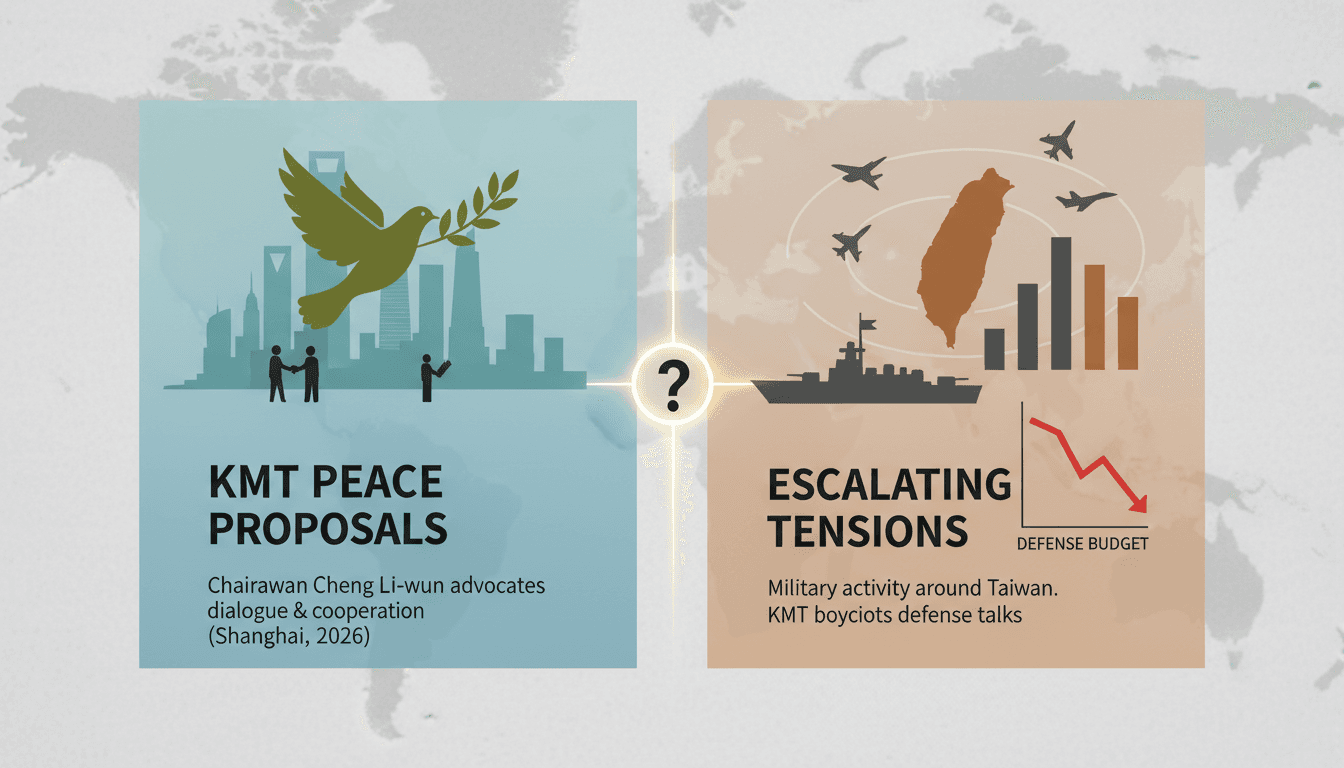
- Cheng Li-wun, Chairwoman of Taiwan's Kuomintang (KMT), advocated for peace during her visit to Shanghai while her party boycotted defense budget talks in Taipei.
- Taiwan's proposed defense budget of $40 billion is stalled due to the KMT's parliamentary boycott, prompting backlash from the ruling Democratic Progressive Party (DPP).
- Chinese military activity around Taiwan continues, with reports of incursions, highlighting the ongoing tensions despite calls for dialogue.
The context you actually need
- Cross-strait tensions have escalated as China's military incursions around Taiwan increase, with Beijing asserting its claim over the island.
- The KMT's stance prioritizes dialogue and peace over military readiness, contrasting sharply with the DPP's focus on national defense and sovereignty.
- Cheng's visit marks the first by a KMT leader in a decade, occurring amid invitations from Chinese officials and potential U.S.-China diplomatic engagements.
What's really happening
Cheng Li-wun's visit to China represents a strategic pivot for the Kuomintang (KMT), Taiwan's largest opposition party, which is advocating for cross-strait peace at a time of heightened military tensions. The KMT's decision to boycott the $40 billion special defense budget negotiations in Taipei has sparked significant backlash from the ruling Democratic Progressive Party (DPP), which accuses the KMT of prioritizing relations with China over Taiwan's national security. This political maneuvering reflects a broader ideological divide in Taiwan regarding how to approach relations with China.
Cheng's speech at Shanghai's Yangshan Port emphasized a desire for peaceful coexistence, invoking imagery of nature over warfare. Her message, "What should fly in the sky are birds, not missiles. What should swim in the water are fish, not warships," resonates with a segment of the Taiwanese populace that favors dialogue over confrontation. However, this stance is met with skepticism by the DPP, which views the KMT's approach as naive given the ongoing military threats from China.
The backdrop of Cheng's visit is critical; Taiwan has seen a surge in Chinese military activity, with daily incursions reported. The DPP government under President Lai Ching-te has adopted a firm stance against Beijing's sovereignty claims, labeling Lai as a "separatist" and limiting dialogue. The KMT, in contrast, seeks to reduce hostilities through engagement, but this has led to accusations of undermining Taiwan's defense capabilities.
The KMT's boycott of the defense budget talks is a calculated risk. By submitting a counter-proposal rather than participating in the negotiations, the KMT aims to position itself as a peace-oriented alternative to the DPP. However, this move could backfire, as the DPP and other critics argue that it compromises Taiwan's security in the face of persistent Chinese threats. The ongoing military operations by China, including the presence of aircraft and warships around Taiwan, underscore the urgency of the defense budget discussions.
As Cheng continues her peace mission, the implications for Taiwan's defense strategy and cross-strait relations remain uncertain. The KMT's approach may appeal to voters seeking stability, but it risks alienating those who prioritize national security in an increasingly volatile geopolitical landscape.
Who feels it first (and how)
- Taiwanese lawmakers: The political divide between KMT and DPP impacts legislative processes and national defense strategies.
- Defense contractors: Companies involved in Taiwan's defense sector may face uncertainty regarding budget allocations and contracts.
- Taiwanese citizens: Public sentiment may shift based on perceptions of national security and cross-strait relations, influencing voter behavior in upcoming elections.
What to watch next
- Upcoming KMT proposals: How the KMT's counter-proposal to the defense budget is received could signal shifts in public support and political dynamics.
- Chinese military activities: Monitoring the frequency and scale of incursions around Taiwan will provide insight into Beijing's strategic intentions.
- U.S.-China diplomatic engagements: Any developments in U.S.-China relations could impact Taiwan's geopolitical standing and defense considerations.
Cheng Li-wun's visit is aimed at promoting peace and dialogue with China.
Continued tensions between Taiwan and China will influence regional stability and market dynamics.
The long-term impact of the KMT's boycott on Taiwan's defense capabilities and public opinion remains uncertain.
Frequently Asked Questions
- Why it matters?
- This political maneuvering impacts regional stability, which is crucial for international markets and trade relationships.
- What happened (in 30 seconds)?
- Cheng Li-wun, Chairwoman of Taiwan's Kuomintang (KMT), advocated for peace during her visit to Shanghai while her party boycotted defense budget talks in Taipei. Taiwan's proposed defense budget of $40 billion is stalled due to the KMT's parliamentary boycott, prompting backlash from the ruling Democratic Progressive Party (DPP). Chinese military activity around Taiwan continues, with reports of incursions, highlighting the ongoing tensions despite calls for dialogue.
- What's really happening?
- Cheng Li-wun's visit to China represents a strategic pivot for the Kuomintang (KMT), Taiwan's largest opposition party, which is advocating for cross-strait peace at a time of heightened military tensions. The KMT's decision to boycott the $40 billion special defense budget negotiations in Taipei has sparked significant backlash from the ruling Democratic Progressive Party (DPP), which accuses the KMT of prioritizing relations with China over Taiwan's national security. This political maneuverin
- Who feels it first (and how)?
- Taiwanese lawmakers: The political divide between KMT and DPP impacts legislative processes and national defense strategies. Defense contractors: Companies involved in Taiwan's defense sector may face uncertainty regarding budget allocations and contracts. Taiwanese citizens: Public sentiment may shift based on perceptions of national security and cross-strait relations, influencing voter behavior in upcoming elections.
- What to watch next?
- Upcoming KMT proposals: How the KMT's counter-proposal to the defense budget is received could signal shifts in public support and political dynamics. Chinese military activities: Monitoring the frequency and scale of incursions around Taiwan will provide insight into Beijing's strategic intentions. U.S.-China diplomatic engagements: Any developments in U.S.-China relations could impact Taiwan's geopolitical standing and defense considerations.
English-language news from Qatar covering domestic and regional affairs.
"Gulf Times reflects Qatari perspectives on regional developments."
— A47 Editor
Taiwan opposition leader talks peace with China as her party skips defence talks in Taipei
Taiwan's opposition leader, Cheng Li-wun, called for peace with China during her visit to Shanghai, emphasizing that 'birds not missiles' should fly in the skies, while her party faced criticism for skipping defense talks in Taipei.
English-language news from Qatar covering domestic and regional affairs.
"Gulf Times reflects Qatari perspectives on regional developments."
— A47 Editor
Taiwan opposition leader says China visit to sow 'seeds of peace'
Taiwan's opposition leader, Cheng Li-wun, made a rare visit to China, expressing her hope to sow the 'seeds of peace' between the two sides. This visit comes amid ongoing tensions and concerns regarding Beijing's influence over U.S. arms sales to Tai...
Political, social, and economic news across Asia and the Pacific.
"France 24 is viewed as a globally focused outlet with balanced coverage and a European perspective."
— A47 Editor
Taiwan opposition leader makes rare visit to China
Taiwanese opposition leader Cheng Li-wun arrived in China on April 7, 2026, for a six-day visit aimed at improving relations with Beijing, following an invitation from President Xi Jinping. This visit marks a significant shift as Cheng, who has histo...