
Keir Starmer Calls for Gulf States Inclusion in US-Iran Ceasefire Agreement
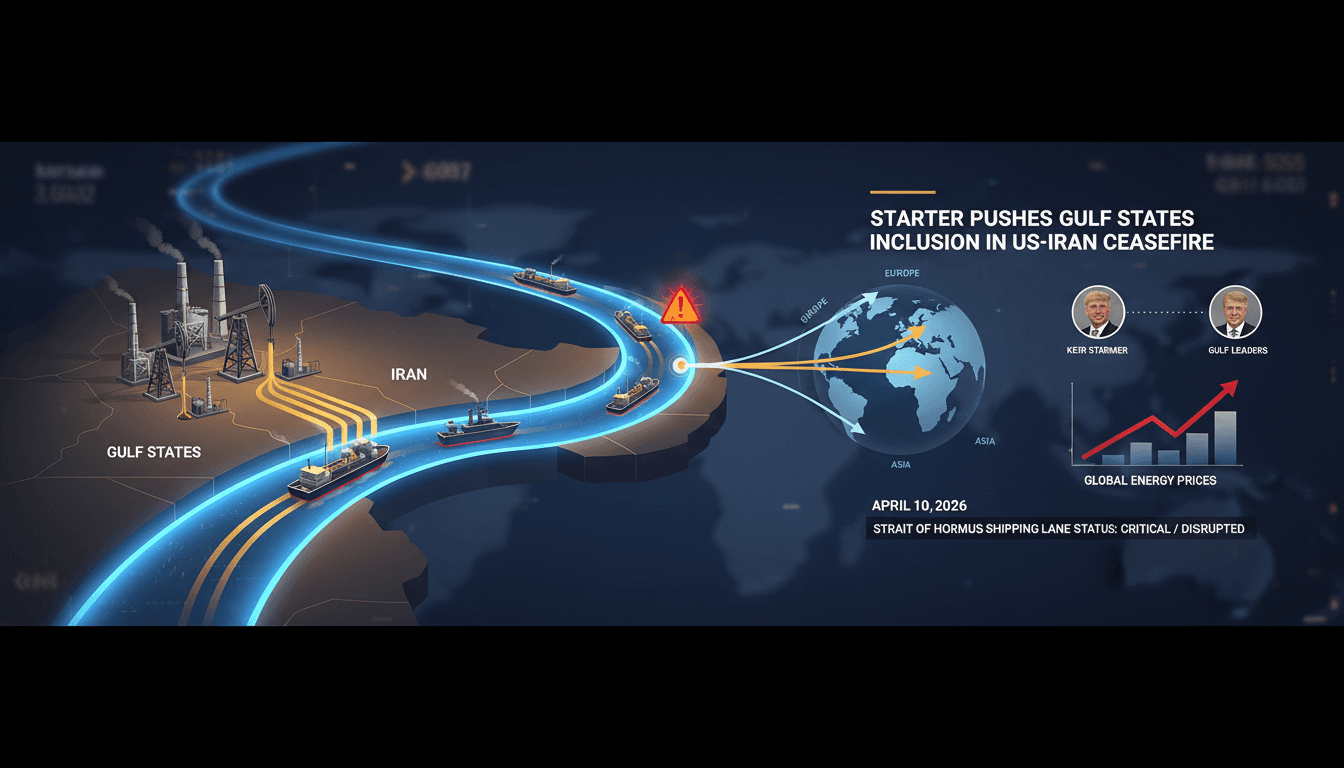
Here's what it means for you.
Your energy costs and supply stability are at risk as geopolitical tensions escalate.
Why it matters
The stability of the Strait of Hormuz is critical for global oil supply, affecting energy prices worldwide.
What happened (in 30 seconds)
- Keir Starmer urged U.S. President Donald Trump to involve Gulf states in stabilizing the fragile US-Iran ceasefire.
- The Strait of Hormuz remains closed to commercial traffic, impacting oil exports and global prices.
- A two-week ceasefire was brokered on 7-8 April, but tensions persist amid ongoing military planning.
The context you actually need
- The 2026 Iran war began with U.S.-Israeli airstrikes on Iranian targets, leading to Iranian retaliation and a closure of the Strait of Hormuz.
- 21 million barrels of petroleum liquids, representing 20-25% of global consumption, passed through the Strait daily before its closure.
- Gulf states are directly impacted by the conflict, as they rely on the strait for oil exports and economic stability.
What's really happening
On 10 April 2026, British Prime Minister Keir Starmer concluded a three-day diplomatic tour in the Gulf, where he emphasized the necessity of including Gulf states in discussions to stabilize the US-Iran ceasefire. His call to U.S. President Donald Trump on 9 April highlighted the urgent need for unrestricted commercial shipping through the Strait of Hormuz, a vital waterway for global oil transport. The closure of the strait has already led to significant disruptions in oil exports and a spike in global energy prices, with Brent crude exceeding $120 per barrel.
Starmer's intervention reflects a broader strategy to secure the interests of Gulf states, which are geographically close to Iran and have a vested interest in maintaining open shipping lanes. The two-week ceasefire, brokered by Pakistan, is tenuous at best, and Starmer's remarks underscore the fragility of the situation. He stressed that any sustainable ceasefire must include Gulf leaders, who are advocating for no fees or restrictions on navigation through the strait.
The backdrop of this diplomatic push is a complex web of military and economic interests. The UK has limited its involvement in the conflict to defensive measures, while the U.S. has threatened to withdraw from NATO if allies do not contribute more significantly to the war effort. This has created a precarious balance, with Gulf states urging swift reopening of the strait to avoid further economic fallout.
As the UK coordinates military contingency plans for strait security, the implications extend beyond the immediate region. Dubai residents, for instance, are already feeling the pinch from elevated energy costs and supply disruptions due to the closure. The UAE government has allocated $270 million in aid to support businesses and families affected by the global energy shock.
Starmer's remarks also serve to reinforce NATO's relevance amid criticisms from Trump, who has accused allies of inadequate support. The ongoing tensions highlight the interconnectedness of global markets and the potential for localized conflicts to ripple through economies worldwide.
Who feels it first (and how)
- Energy consumers: Higher oil prices directly impact household energy bills and transportation costs.
- Businesses in Dubai: Companies reliant on stable energy prices face increased operational costs and potential supply chain disruptions.
- Gulf state governments: Economies heavily dependent on oil exports are at risk of significant revenue losses, prompting emergency measures.
What to watch next
- Ceasefire negotiations: Continued discussions involving Gulf states could stabilize the situation, impacting oil prices and trade.
- Energy market volatility: Watch for fluctuations in Brent crude prices as geopolitical tensions evolve.
- U.S. military strategy: Changes in U.S. military involvement or NATO dynamics could shift the balance of power in the region.
The Strait of Hormuz is critical for global oil transport, with 21 million barrels transiting daily pre-closure.
Continued diplomatic efforts will involve Gulf states to ensure their interests are represented in ceasefire discussions.
The long-term stability of the ceasefire and its impact on global energy prices remains uncertain.
Frequently Asked Questions
- Why it matters?
- The stability of the Strait of Hormuz is critical for global oil supply, affecting energy prices worldwide.
- What happened (in 30 seconds)?
- Keir Starmer urged U.S. President Donald Trump to involve Gulf states in stabilizing the fragile US-Iran ceasefire. The Strait of Hormuz remains closed to commercial traffic, impacting oil exports and global prices. A two-week ceasefire was brokered on 7-8 April, but tensions persist amid ongoing military planning.
- What's really happening?
- On 10 April 2026, British Prime Minister Keir Starmer concluded a three-day diplomatic tour in the Gulf, where he emphasized the necessity of including Gulf states in discussions to stabilize the US-Iran ceasefire. His call to U.S. President Donald Trump on 9 April highlighted the urgent need for unrestricted commercial shipping through the Strait of Hormuz, a vital waterway for global oil transport. The closure of the strait has already led to significant disruptions in oil exports and a spike
- Who feels it first (and how)?
- Energy consumers: Higher oil prices directly impact household energy bills and transportation costs. Businesses in Dubai: Companies reliant on stable energy prices face increased operational costs and potential supply chain disruptions. Gulf state governments: Economies heavily dependent on oil exports are at risk of significant revenue losses, prompting emergency measures.
- What to watch next?
- Ceasefire negotiations: Continued discussions involving Gulf states could stabilize the situation, impacting oil prices and trade. Energy market volatility: Watch for fluctuations in Brent crude prices as geopolitical tensions evolve. U.S. military strategy: Changes in U.S. military involvement or NATO dynamics could shift the balance of power in the region.
Arabic-language coverage of political affairs and current events.
"Okaz political coverage typically follows mainstream Saudi framing on national and regional affairs."
— A47 Editor
ستارمر يطالب ترمب بإشراك دول الخليج في اتفاق إنهاء حرب إيران
British Prime Minister Keir Starmer emphasized the importance of reopening the Strait of Hormuz to strengthen the fragile ceasefire between Iran and the United States. During his three-day visit to the Gulf region, he communicated with U.S. President...
Pan-Arab news coverage spanning politics, business, sports, and regional affairs.
"Asharq Al-Awsat reflects a broad Arab editorial perspective with strong attention to regional geopolitics."
— A47 Editor
ستارمر: ناقشت مع ترمب الخيارات العسكرية بشأن مضيق هرمز
British Prime Minister Keir Starmer stated that he discussed military options and logistical matters concerning the passage of ships through the Strait of Hormuz during a conversation with U.S. President Donald Trump. This dialogue highlights ongoing...
Arabic-language digital news outlet covering UAE, regional, and international developments with broad general-news coverage.
"Al Ain News coverage typically blends UAE-focused reporting with wider Arab regional and international news."
— A47 Editor
ستارمر يمر إلى ترامب عبر مضيق هرمز.. «خطة عمل» قريبا
British Prime Minister Keir Starmer has eased tensions with U.S. President Donald Trump as both leaders agreed to develop a plan to restore navigation in the Strait of Hormuz. This agreement signals a collaborative effort between the two nations to a...