
Trump Acknowledges CIA's 'Ghost Murmur' Tool in Successful Rescue of Downed Airman in Iran
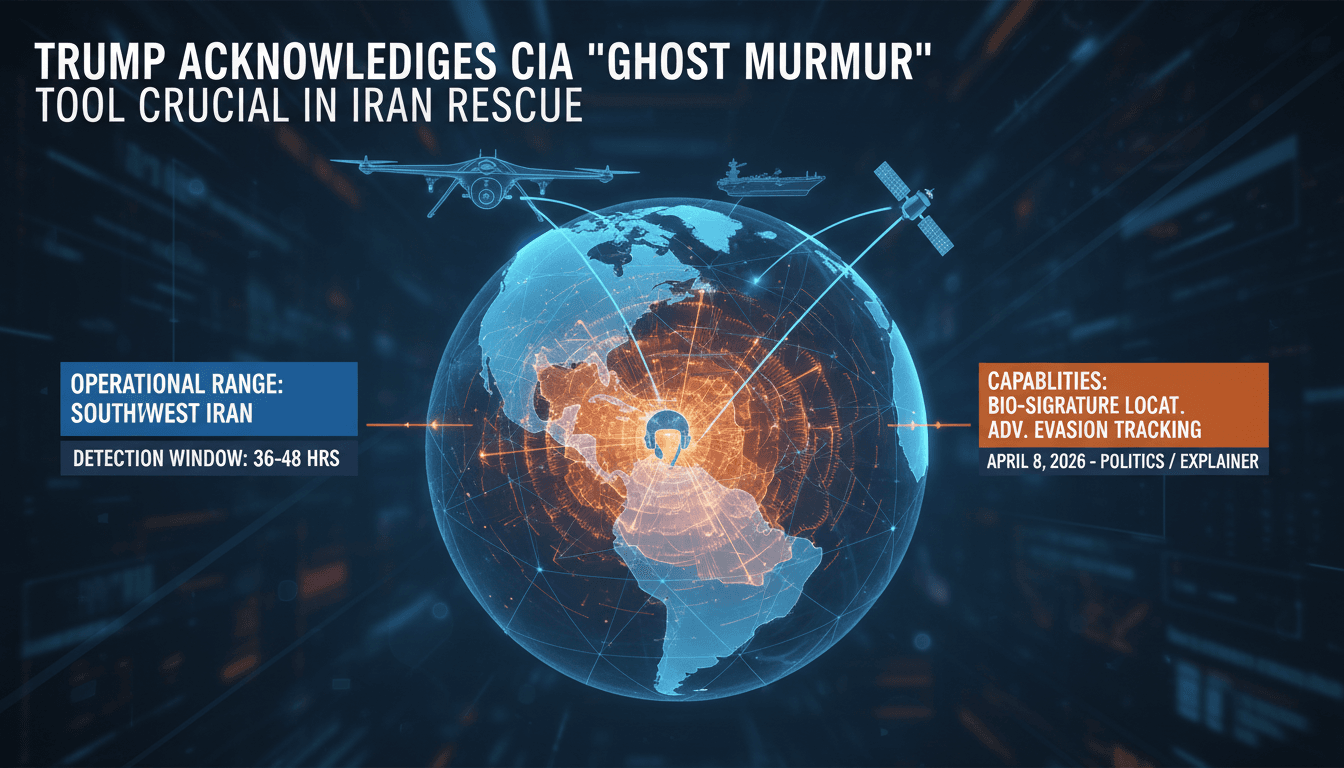
Here's what it means for you.
The use of advanced detection technology in military operations could reshape defense strategies and impact global security dynamics.
Why it matters
This incident highlights the evolving role of technology in military operations, influencing geopolitical tensions and defense spending.
What happened (in 30 seconds)
- Trump confirmed that the CIA's 'Ghost Murmur' tool was crucial in locating a downed U.S. airman in Iran.
- The airman, a weapons systems officer, evaded capture for 36-48 hours before being rescued amid U.S.-Iran hostilities.
- The CIA deployed the 'Ghost Murmur' tool, which uses advanced sensors and AI, marking its first operational use in a combat scenario.
The context you actually need
- The U.S.-Iran conflict escalated in early 2026, with airstrikes and retaliatory threats affecting regional stability.
- The 'Ghost Murmur' tool utilizes nitrogen-vacancy diamond sensors to detect heartbeats from up to 40 miles away, a significant technological advancement.
- The rescue operation involved SEAL Team 6 and hundreds of troops, demonstrating the complexities of modern military engagements.
What's really happening
The confirmation of the CIA's 'Ghost Murmur' tool by President Trump underscores a pivotal moment in military technology and operational strategy. This tool, which employs quantum magnetometry and AI, represents a leap in capabilities for locating personnel in hostile environments. The operational deployment of 'Ghost Murmur' in a low-interference desert setting is significant because it showcases how advanced technology can enhance situational awareness and rescue operations in real-time.
The context of the operation is critical. The downing of the F-15E Strike Eagle by Iranian forces on April 3, 2026, was part of a broader pattern of escalating military confrontations between the U.S. and Iran. The airman, identified as 'Dude 44 Bravo,' utilized survival training to evade capture, activating his Combat Survivor Evader Locator beacon intermittently. The CIA's ability to detect his heartbeat using the 'Ghost Murmur' tool not only facilitated his rescue but also highlighted the strategic advantages of integrating cutting-edge technology into military operations.
The implications of this incident extend beyond the immediate rescue. The successful use of 'Ghost Murmur' could lead to increased investment in similar technologies, potentially reshaping defense budgets and priorities. As nations recognize the effectiveness of such tools, there may be a shift in how military operations are planned and executed, with an emphasis on technology-driven solutions to enhance operational success.
Moreover, the incident has broader geopolitical ramifications. The U.S.-Iran ceasefire talks initiated following the rescue operation could influence oil markets and regional stability. The immediate aftermath saw oil prices drop significantly, alleviating economic pressures for countries reliant on stable energy markets, such as the UAE. The interplay between military technology and economic factors illustrates the complex dynamics at play in international relations.
As experts debate the feasibility of long-range heartbeat detection, the skepticism surrounding the technology may lead to further research and development, pushing the boundaries of what is possible in military applications. This incident not only marks a successful rescue operation but also serves as a case study in the evolving landscape of modern warfare.
Who feels it first (and how)
- Military personnel: Enhanced rescue capabilities could improve survival rates in combat situations.
- Defense contractors: Increased demand for advanced military technologies may boost revenues and innovation.
- Energy markets: Fluctuations in oil prices due to geopolitical tensions will impact consumers and businesses globally.
- U.S. allies in the region: Nations closely monitoring U.S.-Iran relations may adjust their defense strategies in response to new technologies.
What to watch next
- Future military operations: Monitor how the U.S. and its allies incorporate advanced technologies like 'Ghost Murmur' in upcoming missions.
- Geopolitical negotiations: Watch for developments in U.S.-Iran ceasefire talks and their impact on regional stability and oil prices.
- Technological advancements: Keep an eye on emerging military technologies and their implications for defense strategies globally.
The 'Ghost Murmur' tool was used successfully in a rescue operation.
Increased investment in military technology and defense strategies that leverage advanced detection capabilities.
The long-term implications of this technology on U.S.-Iran relations and regional stability.
Frequently Asked Questions
- Why it matters?
- This incident highlights the evolving role of technology in military operations, influencing geopolitical tensions and defense spending.
- What happened (in 30 seconds)?
- Trump confirmed that the CIA's 'Ghost Murmur' tool was crucial in locating a downed U.S. airman in Iran. The airman, a weapons systems officer, evaded capture for 36-48 hours before being rescued amid U.S.-Iran hostilities. The CIA deployed the 'Ghost Murmur' tool, which uses advanced sensors and AI, marking its first operational use in a combat scenario.
- What's really happening?
- The confirmation of the CIA's 'Ghost Murmur' tool by President Trump underscores a pivotal moment in military technology and operational strategy. This tool, which employs quantum magnetometry and AI, represents a leap in capabilities for locating personnel in hostile environments. The operational deployment of 'Ghost Murmur' in a low-interference desert setting is significant because it showcases how advanced technology can enhance situational awareness and rescue operations in real-time. The
- Who feels it first (and how)?
- Military personnel: Enhanced rescue capabilities could improve survival rates in combat situations. Defense contractors: Increased demand for advanced military technologies may boost revenues and innovation. Energy markets: Fluctuations in oil prices due to geopolitical tensions will impact consumers and businesses globally. U.S. allies in the region: Nations closely monitoring U.S.-Iran relations may adjust their defense strategies in response to new technologies.
- What to watch next?
- Future military operations: Monitor how the U.S. and its allies incorporate advanced technologies like 'Ghost Murmur' in upcoming missions. Geopolitical negotiations: Watch for developments in U.S.-Iran ceasefire talks and their impact on regional stability and oil prices. Technological advancements: Keep an eye on emerging military technologies and their implications for defense strategies globally.
Breaking news, politics, business, and entertainment from the U.S. and around the world.
"The New York Post is a tabloid-format newspaper known for its sensationalist headlines and conservative-leaning editorial tone."
— A47 Editor
Trump confirms CIA ‘Ghost Murmur’ tool was ‘very important’ to find airman in Iran — as experts debate how it works
President Trump confirmed that the CIA's 'Ghost Murmur' tool played a crucial role in the successful rescue of a U.S. airman shot down over Iran, emphasizing the advanced technology used in the operation. The airman managed to evade capture after eje...
Tech news, hardware, and AI tools coverage.
"PC/tech site increasingly covering AI hardware and apps."
— A47 Editor
CIA deployed secret "Ghost Murmur" AI to track down missing airman in Iran
The CIA has deployed a secret artificial intelligence tool known as