
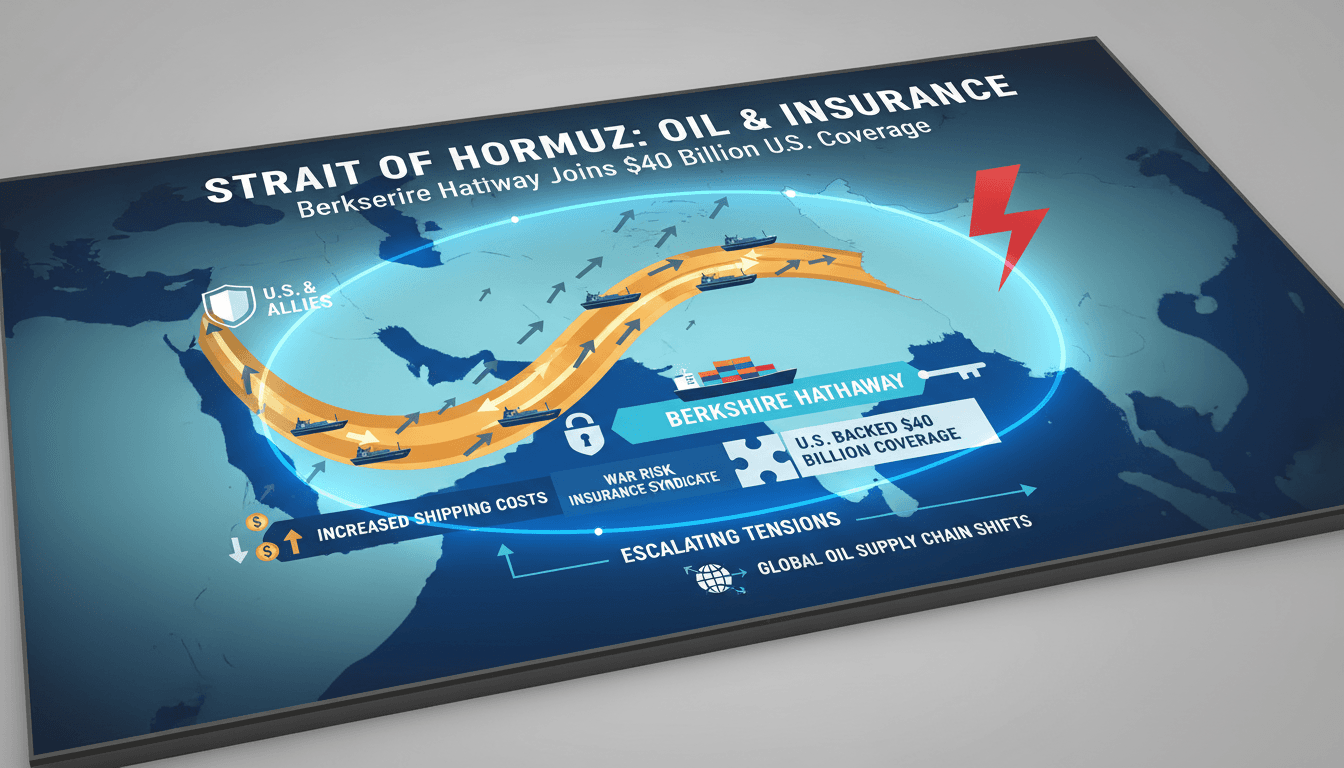
Berkshire Hathaway Joins $40 Billion U.S.-Backed Insurance Syndicate for Strait of Hormuz
Here's what it means for you.
If you rely on global oil markets, this move could impact fuel prices and shipping costs in your region.
Why it matters
This syndicate addresses significant geopolitical risks that threaten a critical global oil transit route, influencing energy prices worldwide.
What happened (in 30 seconds)
- Berkshire Hathaway joined a U.S.-backed insurance syndicate on April 3, 2026, providing $40 billion in war risk coverage for vessels in the Strait of Hormuz.
- Greg Abel, the new CEO, authorized this participation, marking a shift from Warren Buffett's previous strategy of avoiding large-scale war-risk underwriting.
- The syndicate, led by Chubb and supported by several major insurers, aims to mitigate disruptions caused by Iranian threats, which have already led to shipping delays and increased oil prices.
The context you actually need
- Warren Buffett retired as CEO of Berkshire Hathaway on December 31, 2025, passing the reins to Greg Abel, who inherited a substantial cash reserve and insurance float.
- U.S.-Iran tensions have escalated, particularly affecting the Strait of Hormuz, a vital chokepoint for 20% of global crude oil, leading to significant shipping disruptions.
- The U.S. International Development Finance Corporation (DFC) has committed substantial reinsurance support to encourage shipping through this perilous route, reflecting a strategic pivot in risk management.
What's really happening
Berkshire Hathaway's entry into the $40 billion insurance syndicate for the Strait of Hormuz marks a significant shift in its risk appetite under CEO Greg Abel. Historically, Warren Buffett's leadership was characterized by a cautious approach to underwriting in conflict zones, focusing on long-term stability over immediate gains. However, with escalating U.S.-Iran tensions and the critical nature of the Strait of Hormuz for global oil transit, Abel's decision reflects a strategic recalibration aimed at addressing immediate market needs.
The Strait of Hormuz is not just a geographical chokepoint; it is a linchpin for the global oil supply chain. Approximately 20% of the world's crude oil passes through this narrow passage, making it a focal point for geopolitical risk. The recent Iranian threats, including drone and missile attacks, have already caused significant disruptions, leading to a backlog of around 2,000 vessels. This situation has prompted the DFC to double its reinsurance capacity to $40 billion, facilitating the resumption of commerce in a high-risk environment.
By participating in this syndicate, Berkshire Hathaway is not only diversifying its insurance portfolio but also positioning itself as a key player in a market that is increasingly fraught with risk. The involvement of major insurers like Chubb, AIG, and Liberty Mutual indicates a collective recognition of the need for robust risk management solutions in the face of geopolitical instability. This move could also signal a broader trend where traditional risk-averse companies begin to embrace higher-risk underwriting as a response to market pressures.
The implications of this shift are multifaceted. For one, it could lead to increased premiums for shipping insurance, which would subsequently raise costs for consumers and businesses reliant on oil and goods transported through the Strait. Additionally, as oil prices rise—Brent crude recently closed at $109.03 per barrel—there is a potential for inflationary pressures to ripple through the economy, affecting everything from fuel costs to consumer goods.
Moreover, Abel's strategy may attract scrutiny from analysts who will be monitoring the claims exposure and overall financial health of Berkshire Hathaway as it navigates this riskier landscape. The company's ability to manage these risks effectively will be crucial in maintaining investor confidence and ensuring long-term profitability.
Who feels it first (and how)
- Shipping companies: Higher insurance premiums and potential delays will increase operational costs.
- Oil consumers: Rising fuel prices will impact households and businesses, especially in regions heavily reliant on oil imports.
- Investors: Market volatility may affect stock prices of companies involved in oil and shipping sectors, influencing investment strategies.
- Geopolitical analysts: Increased focus on U.S.-Iran relations and their implications for global trade and security.
What to watch next
- Oil price fluctuations: Monitor Brent crude prices as they may rise further, impacting global markets and consumer costs.
- Shipping traffic levels: Watch for changes in vessel traffic through the Strait of Hormuz, which will indicate the effectiveness of the insurance syndicate.
- Claims activity: Keep an eye on claims made against the syndicate, which will reveal the actual risk exposure and financial health of the participating insurers.
The syndicate provides $40 billion in war risk coverage for vessels in the Strait of Hormuz.
Oil prices will continue to rise due to increased geopolitical tensions and shipping disruptions.
The long-term financial impact on Berkshire Hathaway and its ability to manage increased risk exposure.
Frequently Asked Questions
- Why it matters?
- This syndicate addresses significant geopolitical risks that threaten a critical global oil transit route, influencing energy prices worldwide.
- What happened (in 30 seconds)?
- Berkshire Hathaway joined a U.S.-backed insurance syndicate on April 3, 2026, providing $40 billion in war risk coverage for vessels in the Strait of Hormuz. Greg Abel, the new CEO, authorized this participation, marking a shift from Warren Buffett's previous strategy of avoiding large-scale war-risk underwriting. The syndicate, led by Chubb and supported by several major insurers, aims to mitigate disruptions caused by Iranian threats, which have already led to shipping delays and increased
- What's really happening?
- Berkshire Hathaway's entry into the $40 billion insurance syndicate for the Strait of Hormuz marks a significant shift in its risk appetite under CEO Greg Abel. Historically, Warren Buffett's leadership was characterized by a cautious approach to underwriting in conflict zones, focusing on long-term stability over immediate gains. However, with escalating U.S.-Iran tensions and the critical nature of the Strait of Hormuz for global oil transit, Abel's decision reflects a strategic recalibration
- Who feels it first (and how)?
- Shipping companies: Higher insurance premiums and potential delays will increase operational costs. Oil consumers: Rising fuel prices will impact households and businesses, especially in regions heavily reliant on oil imports. Investors: Market volatility may affect stock prices of companies involved in oil and shipping sectors, influencing investment strategies. Geopolitical analysts: Increased focus on U.S.-Iran relations and their implications for global trade and security.
- What to watch next?
- Oil price fluctuations: Monitor Brent crude prices as they may rise further, impacting global markets and consumer costs. Shipping traffic levels: Watch for changes in vessel traffic through the Strait of Hormuz, which will indicate the effectiveness of the insurance syndicate. Claims activity: Keep an eye on claims made against the syndicate, which will reveal the actual risk exposure and financial health of the participating insurers.
Stock market news, investing ideas, and trading analysis.
"TheStreet provides market news and retail-investor-focused analysis."
— A47 Editor
Berkshire Hathaway’s new CEO just made a move Buffett never did
Greg Abel, who has been CEO of Berkshire Hathaway for just three months, has made significant moves including restarting share buybacks, investing his entire salary in company stock, and committing $1.8 billion to a Japanese insurance giant. These ac...
U.S. business news, corporate developments, and economy.
"The Wall Street Journal is respected for deep financial and economic reporting with a center-right editorial perspective."
— A47 Editor
Greg Abel Has Been Leading Berkshire for 100 Days. Things Are Already Changing.
Greg Abel has been at the helm of Berkshire Hathaway for 100 days, during which he has begun scrutinizing the company's businesses and investments that were established under Warren Buffett's leadership. This period marks a significant transition as ...
Markets desk coverage, trading insights, and investor updates.
"WSJ’s markets reporting provides in-depth analysis and context for investors."
— A47 Editor
Greg Abel Has Been Leading Berkshire for 100 Days. Things Are Already Changing.
Greg Abel has been at the helm of Berkshire Hathaway for 100 days, during which he has initiated significant changes, including a review of businesses and investments established under Warren Buffett's leadership. This period marks a transition in th...