
Indonesia Leads 73-Nation Call for UN Investigation into Deaths of Peacekeepers in Lebanon
Here's what it means for you.
If you’re involved in international operations or peacekeeping, the safety of personnel in conflict zones is now more critical than ever.
Why it matters
The escalation of violence against peacekeepers can destabilize international operations and impact global security frameworks.
What happened (in 30 seconds)
- Three Indonesian UNIFIL peacekeepers were killed in separate incidents in southern Lebanon on 29 and 30 March 2026.
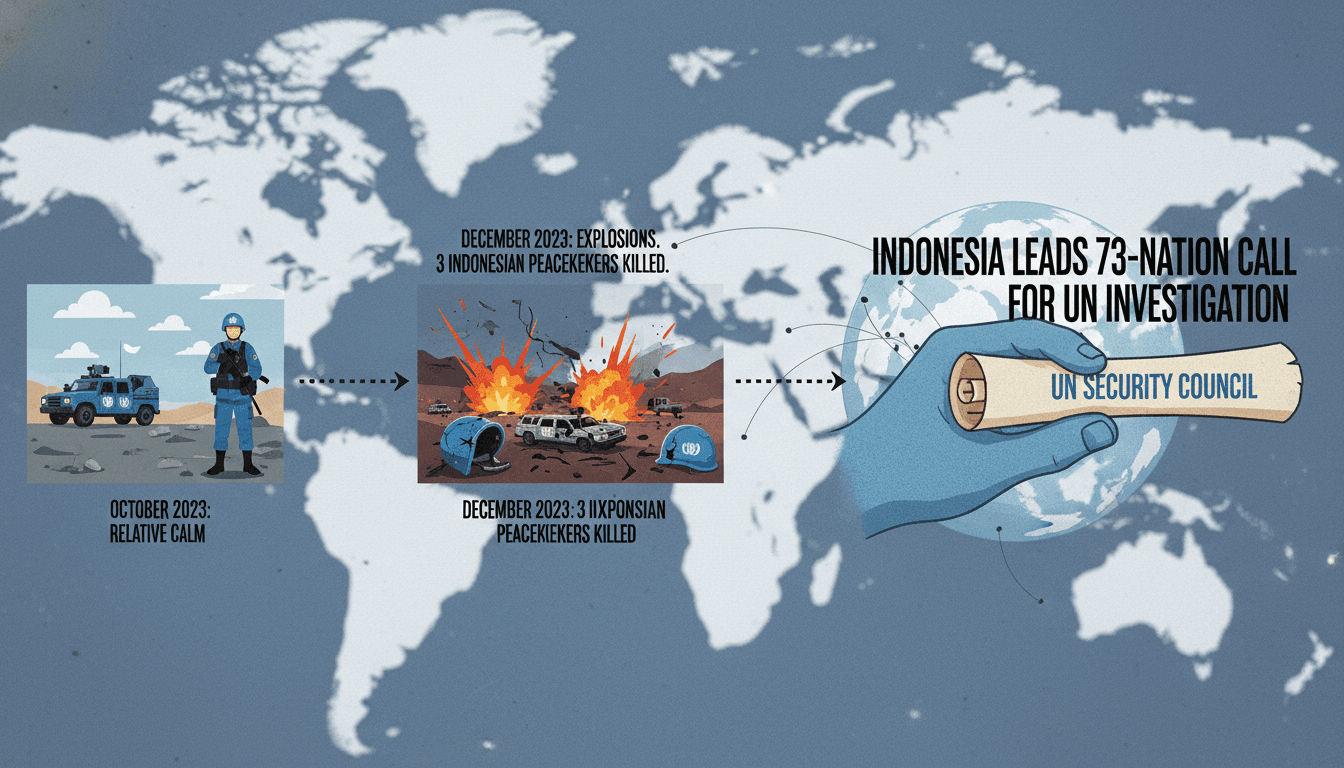
- Indonesia, alongside 72 other nations, submitted a joint statement to the UN Security Council on 10 April 2026, demanding a thorough investigation and enhanced protections for peacekeepers.
- Preliminary UN findings attribute one death to Israeli tank fire and two to a likely Hezbollah-placed IED, with ongoing investigations into the incidents.
The context you actually need
- Escalated hostilities between Israel and Hezbollah have increased risks for UN peacekeepers, undermining their operational effectiveness.
- Over one million displaced individuals in Lebanon complicate humanitarian efforts and increase tensions in the region.
- A faltering US-Iran ceasefire raises concerns about broader regional stability, affecting negotiations around Hezbollah disarmament and border security.
What's really happening
The deaths of the Indonesian peacekeepers occurred during a period of heightened conflict between Israel and Hezbollah, which has seen a resurgence of violence following a relatively stable period since the 2024 conflict. The UNIFIL mission, established to monitor the Israel-Lebanon border, is now facing significant operational challenges as hostilities escalate. The preliminary findings from the UN indicate that the first fatality was due to Israeli tank fire, while the subsequent deaths were attributed to an improvised explosive device likely placed by Hezbollah.
This situation is compounded by a broader context of instability in Lebanon, where over one million people have been displaced due to ongoing violence. The UN's role in this environment is critical, as it seeks to maintain peace and security in a region fraught with tension. Indonesia's leadership in calling for a joint statement from 73 countries underscores the international community's concern for the safety of peacekeepers and the need for accountability in these incidents.
The joint statement emphasizes the necessity of enhanced protections for peacekeepers, a call that reflects growing apprehension about the risks they face in conflict zones. The potential for these attacks to be classified as war crimes adds another layer of urgency to the situation, as it could lead to increased scrutiny and pressure on the involved parties.
As the investigation unfolds, the implications for international peacekeeping efforts could be significant. Countries contributing troops to UN missions may reassess their involvement in light of these risks, potentially leading to a reduction in personnel or a reevaluation of operational strategies. The Indonesian government, led by President Prabowo Subianto, has condemned the attacks as heinous, which may influence Indonesia's future role in international peacekeeping missions.
The situation remains fluid, with calls for de-escalation and accountability intensifying. The international community's response will be crucial in shaping the future of peacekeeping operations in Lebanon and beyond.
Who feels it first (and how)
- Peacekeepers: Increased risk and scrutiny regarding their safety and operational mandates.
- International organizations: Potential reevaluation of peacekeeping strategies and troop contributions.
- Governments of contributing nations: Pressure to ensure the safety of their personnel and accountability for attacks.
- Local populations in conflict zones: Heightened instability and humanitarian crises as peacekeeping efforts are jeopardized.
What to watch next
- UN Security Council actions: Look for resolutions or statements regarding peacekeeper safety and accountability, which could influence future operations.
- Responses from contributing nations: Monitor how countries adjust their troop commitments and operational strategies in light of these incidents.
- Regional negotiations: Watch for developments in US-Iran negotiations and their impact on Hezbollah's activities and overall regional stability.
Three Indonesian peacekeepers were killed in southern Lebanon amid escalating violence.
Increased scrutiny and calls for accountability regarding attacks on peacekeepers will emerge from the international community.
The long-term impact on UNIFIL operations and the future of peacekeeping missions in Lebanon remains uncertain.
Frequently Asked Questions
- Why it matters?
- The escalation of violence against peacekeepers can destabilize international operations and impact global security frameworks.
- What happened (in 30 seconds)?
- Three Indonesian UNIFIL peacekeepers were killed in separate incidents in southern Lebanon on 29 and 30 March 2026. Indonesia, alongside 72 other nations, submitted a joint statement to the UN Security Council on 10 April 2026, demanding a thorough investigation and enhanced protections for peacekeepers. Preliminary UN findings attribute one death to Israeli tank fire and two to a likely Hezbollah-placed IED, with ongoing investigations into the incidents.
- What's really happening?
- The deaths of the Indonesian peacekeepers occurred during a period of heightened conflict between Israel and Hezbollah, which has seen a resurgence of violence following a relatively stable period since the 2024 conflict. The UNIFIL mission, established to monitor the Israel-Lebanon border, is now facing significant operational challenges as hostilities escalate. The preliminary findings from the UN indicate that the first fatality was due to Israeli tank fire, while the subsequent deaths were a
- Who feels it first (and how)?
- Peacekeepers: Increased risk and scrutiny regarding their safety and operational mandates. International organizations: Potential reevaluation of peacekeeping strategies and troop contributions. Governments of contributing nations: Pressure to ensure the safety of their personnel and accountability for attacks. Local populations in conflict zones: Heightened instability and humanitarian crises as peacekeeping efforts are jeopardized.
- What to watch next?
- UN Security Council actions: Look for resolutions or statements regarding peacekeeper safety and accountability, which could influence future operations. Responses from contributing nations: Monitor how countries adjust their troop commitments and operational strategies in light of these incidents. Regional negotiations: Watch for developments in US-Iran negotiations and their impact on Hezbollah's activities and overall regional stability.
Regional and international reporting focused on Middle Eastern politics, diplomacy, and economics.
"Asharq Al-Awsat is a Saudi-owned international newspaper reflecting mainstream Gulf political perspectives."
— A47 Editor
Indonesia Urges 'Thorough' Probe on Lebanon Peacekeeper Deaths
Indonesia has called for a thorough investigation by the United Nations into the deaths of three Indonesian peacekeepers in Lebanon, who were killed amid escalating violence linked to military operations between Israel and Hezbollah. This request fol...
Regional coverage and analysis focused on politics, diplomacy, and business across the Middle East.
"Al-Monitor is known for analytical reporting on Middle East politics and policy developments."
— A47 Editor
Indonesia urges 'thorough' probe on Lebanon peacekeeper deaths
Indonesia has called for a thorough investigation by the United Nations into the deaths of three Indonesian peacekeepers in Lebanon, who were killed amid escalating violence linked to military operations between Israel and Hezbollah. The joint statem...