
OpenAI Launches GPT-5.4-Cyber Model for Cybersecurity Defenders
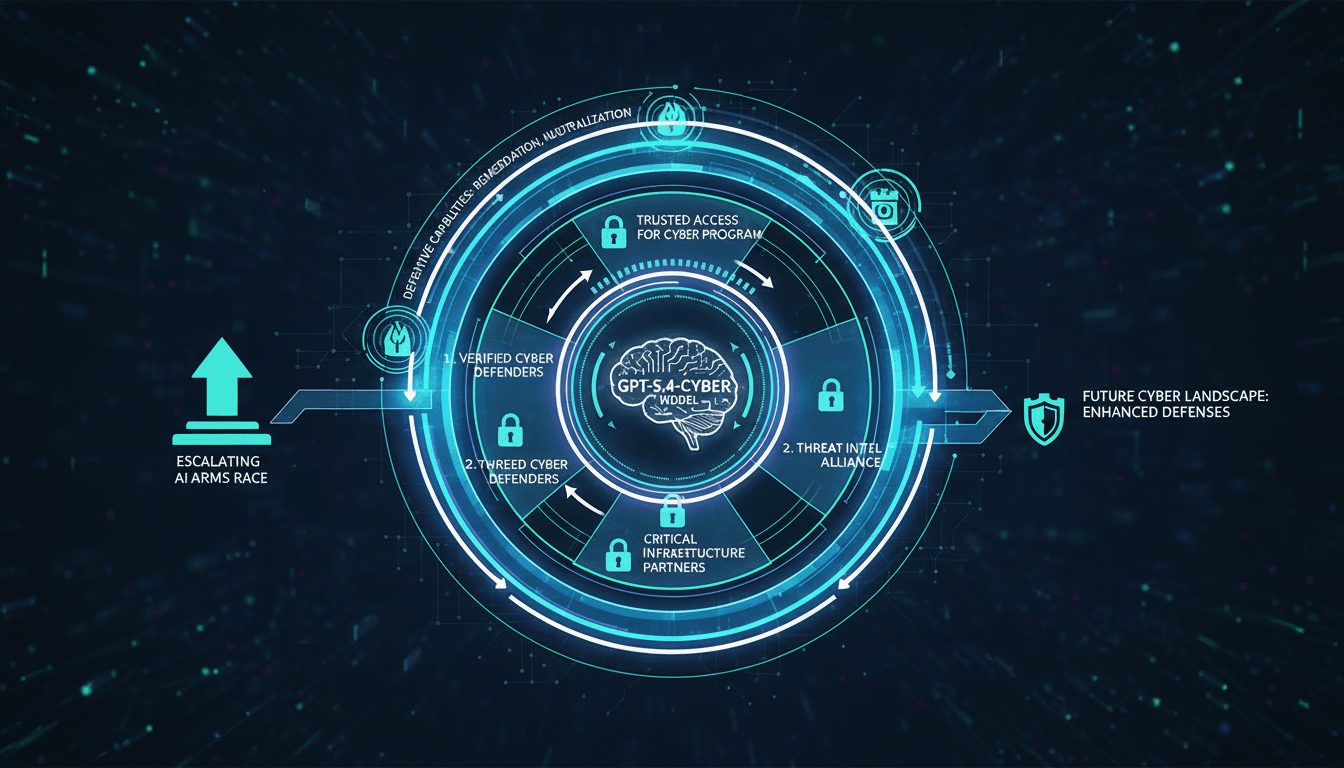
Here's what it means for you.
If you're in cybersecurity, this new model could enhance your defensive capabilities against evolving threats.
Why it matters
The release of GPT-5.4-Cyber reflects a critical shift in the cybersecurity landscape, as AI tools become essential for defending against increasingly sophisticated cyber threats.
What happened (in 30 seconds)
- On April 15, 2026, OpenAI announced the restricted release of its GPT-5.4-Cyber model to verified cybersecurity defenders.
- Access is limited to thousands of individual defenders and hundreds of teams through the Trusted Access for Cyber (TAC) program.
- This initiative aims to bolster defenses against an escalating AI-driven arms race between cybersecurity professionals and hackers.
The context you actually need
- Advancements in AI have led to significant improvements in code generation and vulnerability detection, necessitating safeguards against misuse.
- Anthropic's recent rollout of its AI model, Claude Mythos, to major tech firms highlighted the urgency of addressing previously undetected vulnerabilities.
- Geopolitical tensions have increased, particularly concerning AI threats to critical infrastructure, prompting proactive measures from organizations and governments.
What's really happening
OpenAI's introduction of the Trusted Access for Cyber (TAC) program in February 2026 set the stage for the release of GPT-5.4-Cyber. This model is specifically designed for defensive tasks, such as binary reverse engineering and vulnerability probing, which are crucial for identifying and mitigating potential threats before they can be exploited. By restricting access to verified cybersecurity defenders, OpenAI aims to create a controlled environment where the model can be utilized effectively without falling into the hands of malicious actors.
The TAC program serves as a vetting mechanism, ensuring that only those with a legitimate need and capability to use the technology can access it. This approach is a response to the growing concerns about an AI arms race, where both defenders and attackers leverage advanced AI tools to gain an upper hand. The decision to limit access to thousands of individuals and hundreds of teams underscores the importance of rapid flaw remediation in critical systems, prioritizing the protection of vital infrastructure.
As the cybersecurity landscape evolves, the introduction of AI models like GPT-5.4-Cyber represents a significant shift in how organizations approach threat detection and response. The model's fine-tuning for defensive tasks aims to reduce refusal rates during vulnerability probing, making it a valuable asset for cybersecurity professionals. However, the restricted rollout also raises questions about the balance between innovation and security, as the potential for misuse remains a concern.
The broader implications of this release extend beyond immediate cybersecurity applications. As organizations increasingly rely on AI to safeguard their digital assets, the demand for skilled cybersecurity professionals will likely rise. This shift could lead to a reevaluation of training programs and resources dedicated to developing expertise in AI-driven cybersecurity solutions. Furthermore, as more companies adopt similar models, the competitive landscape may shift, with those lacking access to advanced AI tools potentially falling behind in their defensive capabilities.
Who feels it first (and how)
- Cybersecurity professionals: Enhanced tools for vulnerability detection and remediation.
- Tech companies: Increased pressure to adopt AI-driven security measures.
- Financial institutions: Heightened vigilance due to potential threats to critical infrastructure.
- Government agencies: Need for updated strategies to address evolving cyber threats.
What to watch next
- Adoption rates of GPT-5.4-Cyber: Monitoring how quickly organizations integrate this model will indicate its effectiveness and influence on the cybersecurity landscape.
- Emergence of competing models: The response from other AI firms, particularly following Anthropic's rollout, will shape the market dynamics and innovation pace.
- Regulatory developments: Watch for potential regulations aimed at governing the use of AI in cybersecurity, as concerns about misuse and ethical implications grow.
OpenAI's GPT-5.4-Cyber is now available to a select group of cybersecurity defenders.
The demand for AI-driven cybersecurity solutions will increase as threats evolve.
The long-term impact of restricted access on the overall cybersecurity landscape remains to be seen.
Frequently Asked Questions
- Why it matters?
- The release of GPT-5.4-Cyber reflects a critical shift in the cybersecurity landscape, as AI tools become essential for defending against increasingly sophisticated cyber threats.
- What happened (in 30 seconds)?
- On April 15, 2026, OpenAI announced the restricted release of its GPT-5.4-Cyber model to verified cybersecurity defenders. Access is limited to thousands of individual defenders and hundreds of teams through the Trusted Access for Cyber (TAC) program. This initiative aims to bolster defenses against an escalating AI-driven arms race between cybersecurity professionals and hackers.
- What's really happening?
- OpenAI's introduction of the Trusted Access for Cyber (TAC) program in February 2026 set the stage for the release of GPT-5.4-Cyber. This model is specifically designed for defensive tasks, such as binary reverse engineering and vulnerability probing, which are crucial for identifying and mitigating potential threats before they can be exploited. By restricting access to verified cybersecurity defenders, OpenAI aims to create a controlled environment where the model can be utilized effectively w
- Who feels it first (and how)?
- Cybersecurity professionals: Enhanced tools for vulnerability detection and remediation. Tech companies: Increased pressure to adopt AI-driven security measures. Financial institutions: Heightened vigilance due to potential threats to critical infrastructure. Government agencies: Need for updated strategies to address evolving cyber threats.
- What to watch next?
- Adoption rates of GPT-5.4-Cyber: Monitoring how quickly organizations integrate this model will indicate its effectiveness and influence on the cybersecurity landscape. Emergence of competing models: The response from other AI firms, particularly following Anthropic's rollout, will shape the market dynamics and innovation pace. Regulatory developments: Watch for potential regulations aimed at governing the use of AI in cybersecurity, as concerns about misuse and ethical implications grow.
AI/ML research and technology news.
"Sister site to Phys.org focusing on tech research."
— A47 Editor
OpenAI announces restricted-access cybersecurity model
OpenAI has announced the limited release of its latest cybersecurity model, GPT-5.4-Cyber, to a select group of partners, following a similar move by competitor Anthropic with its AI tool, Claude Mythos. This decision reflects a strategic shift towar...
Market-moving headlines impacting equities, bonds, and related risk assets.
"Real-time catalysts and volatility drivers across indices and sectors."
— A47 Editor
OpenAI releases cyber model to limited group in race with Mythos
OpenAI has launched its new cybersecurity model, GPT-5.4-Cyber, to a limited group of customers, amid rising competition from Anthropic's AI model, Mythos, which has raised concerns due to its ability to identify software vulnerabilities. This releas...
Curated tech headlines including AI stories.
"Influential aggregator surfacing the day’s top tech/AI links."
— A47 Editor
OpenAI rolls out GPT-5.4-Cyber, a fine-tuned GPT-5.4 variant for defensive cybersecurity use cases, to some participants of its Trusted Access for Cyber program (Rachel Metz/Bloomberg)
OpenAI has launched GPT-5.4-Cyber, a specialized variant of its GPT-5.4 model, aimed at enhancing defensive cybersecurity capabilities. This rollout is limited to select participants in its Trusted Access for Cyber program, reflecting a strategic foc...